Research Article | | Peer-Reviewed

Effect of Fermentation Time on the Quality of Tea Samples Produced from Sweet Orange Peel Powder

Received: 13 November 2025     Accepted: 9 December 2025     Published: 30 December 2025
Views:       Downloads:
Abstract

This study investigated the effect of fermentation time on tea produced from sweet orange peel powder. Orange peels were processed into powder, with a portion fermented for 1 day and another for 2 days. Teas from fermented and unfermented powders were analyzed for proximate composition, phytochemicals, antioxidant activity (DPPH), sensory, and physicochemical properties. Lipton tea served as the control in sensory evaluation. Fermentation increased ash, fat, crude fiber, and protein, while reducing carbohydrate content. Moisture content increased slightly during fermentation compared with unfermented powder and was lowest in Lipton tea. Although some phytochemicals declined, fermentation increased flavonoid content and improved the tea's antioxidant activity, with DPPH values increasing across samples, though the day 2 sample showed a significant decrease. Fermentation also reduced pH and total soluble solids but increased total titratable acidity. Sensory scores for color, flavor, and mouthfeel improved, while taste and overall acceptability decreased with longer fermentation. Significant differences (p<0.05) were found only in taste and overall acceptability, where unfermented tea was preferred. The study concludes that sweet orange peel is suitable for producing fermented and unfermented teas. Tea fermented for 1 day is recommended for its higher phytochemical content and antioxidant activity, as a short fermentation period appears most suitable for balancing nutritional quality, bioactive compounds, and sensory appeal.

Published in Journal of Food and Nutrition Sciences (Volume 13, Issue 6)
DOI 10.11648/j.jfns.20251306.17
Page(s) 379-388
Creative Commons

This is an Open Access article, distributed under the terms of the Creative Commons Attribution 4.0 International License (http://creativecommons.org/licenses/by/4.0/), which permits unrestricted use, distribution and reproduction in any medium or format, provided the original work is properly cited.

Copyright

Copyright © The Author(s), 2025. Published by Science Publishing Group

Keywords

Sweet Orange Peel, Fermentation, Tea Powder, Phytochemical, Antioxidant Activity, DPPH Radical Scavenging

1. Introduction
Citrus (Citrus spp.) is one of the most abundant fruit crops globally, with an estimated annual production of over 115 million tonnes. Africa contributes substantially to this volume, and Nigeria remains one of the leading producers of citrus fruits in the region . The major species cultivated include sweet orange (Citrus sinensis), tangerine (Citrus reticulata), lemon (Citrus limon), lime species, and grapefruit (Citrus paradisi) . Citrus fruit processing generates large quantities of by-products, primarily peels, pulp residues, and seeds, which account for nearly 40–50% of the fruit mass . These materials are often discarded without proper utilization, contributing to environmental waste challenges, despite being rich in valuable compounds such as dietary fibre, phenolic acids, flavonoids, carotenoids, vitamins, and essential minerals .
Improper disposal of citrus peel contributes to fermentation odors, microbial proliferation, and waste management burdens for processing industries, underscoring the need for sustainable value-addition alternatives. Citrus peels themselves possess strong bioactive potential, with previous research demonstrating high levels of flavonoids, phenolic acids, vitamin C, pectin, and organic acids . Studies have further shown that extracts from citrus peels exhibit considerable antioxidant potential due to their phenolic constituents . Mahato et al. reported that phytochemicals from citrus peels exhibit diverse biological activities, mainly due to their flavonoid and phenolic composition . These findings highlight citrus peels as a promising raw material for the development of functional foods. Beyond their inherent bioactivity, citrus and other plant-based materials respond significantly to fermentation. Fermentation has been reported to modify the phytochemical composition, enhance the flavour and aroma compounds, increase the bioavailability of nutrients, and reduce antinutritional factors . Earlier studies on fermented fruit and vegetable products demonstrated improvements in antioxidant activity, mineral accessibility, and sensory characteristics, indicating that controlled fermentation can be a valuable tool for developing functional beverages. However, limited work has focused specifically on fermented citrus peel tea, and little is known about how fermentation time affects its nutritional, phytochemical, and sensory qualities.
A significant innovation of this research is the direct comparative evaluation of fermented sweet orange peel tea against a widely consumed commercial tea (Lipton). This benchmarking provides clear evidence of how citrus-based teas compare with established products in terms of antioxidant activity, sensory appeal, and chemical composition, thereby supporting their potential for market substitution or diversification. This study highlights fermentation as a low-cost, resource-efficient technique that can improve the nutritional and functional attributes of citrus peel products without specialized equipment or microbial starter cultures. Such simplicity makes it highly adaptable for small-scale processors and citrus-producing communities seeking value-added applications for fruit wastes.
Therefore, this study addresses a critical research gap by evaluating how fermentation influences the proximate composition, phytochemicals, antioxidant activity, physicochemical properties, and sensory attributes of tea produced from sweet orange peel. The objective was to compare fermented and unfermented sweet orange peel teas and assess their potential as value-added products derived from citrus processing waste.
2. Materials and Methods
2.1. Collection of Raw Materials
Fresh sweet oranges (Citrus sinensis) were procured from Oba market in Benin City, Edo State, Nigeria. All chemicals and reagents used for the analysis were of analytical grade and were obtained from the Department of Biological Sciences, Benson Idahosa University, Benin City, Edo State.
2.2. Production of Sweet Orange Peel Tea Powder
2.2.1. Peel Preparation and Pre-treatment
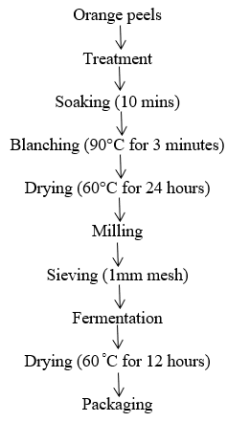
The oranges were manually peeled, and the peels were thoroughly washed under running water to remove dirt and residual sugars. The cleaned peels were chopped into small pieces and soaked in clean water for 10 minutes to reduce bitterness and residual sugars . The peels were then blanched in hot water at approximately 90°C for 3 minutes to inactivate enzymes and reduce microbial load.
2.2.2. Drying and Grinding
The blanched orange peels were dried using a cabinet dryer at 60°C for 24 hours until crisp. This was done to ensure safe moisture content and extend shelf life . The dried samples were milled using a laboratory blender and sieved through a 1 mm mesh to obtain uniform powder consistency.
2.2.3. Fermentation Treatment
The orange peel powder was divided into three portions: Unfermented Sample (AAA), which was packaged directly without fermentation. 1-Day Fermented Sample (BBB), for these samples, A portion of the powder was moistened and subjected to natural (semi-solid) fermentation at ambient temperature (~28°C) for 24 hours. Then the 2-Day Fermented Sample (CCC), where another portion of these samples was fermented for 48 hours under the same conditions.
Fermentation was carried out in covered containers to allow the activity of naturally occurring microorganisms, as described by Sani et al. . Throughout fermentation, the ambient temperature (27–29°C) was monitored at 6-hour intervals using a calibrated digital thermometer. Containers were kept in a shaded, ventilated area to maintain stable conditions. Temperature stability was necessary to support consistent microbial activity and prevent overheating, which could denature enzymes or inhibit beneficial fermentative microorganisms. After fermentation, the powders were re-dried at 60°C for 12 hours to reduce moisture to safe levels for storage and further analysis.
Fermentation periods of 1 day and 2 days were selected based on prior studies demonstrating that short-term natural fermentation effectively enhances phytochemical release, flavor development, and microbial enzymatic activity in plant materials while minimizing spoilage risk . Pilot trials showed that fermentation beyond 48 hours resulted in excessive acidification, off-flavors, and undesirable darkening of the substrate, consistent with previous observations in tropical fruit fermentations. Therefore, 24–48 hours was chosen as an optimal window to examine the biochemical and sensory modifications without compromising product safety and acceptability.
Fermentation was allowed to proceed naturally without inoculation to reflect traditional low-cost processing. While natural fermentation promotes diverse enzymatic activity, it also introduces variability in microbial populations. To minimize contamination, all equipment was sanitized, fermentation containers were tightly covered, and the substrate was moistened with boiled-and-cooled water. Although microbial counts were not quantified in this study, the re-drying of fermented material to ≤10% moisture and the acidic end-pH (<4.5) provided an additional safety margin by inhibiting spoilage organisms.
2.2.4. Packaging
All tea powders (fermented and unfermented) were stored in sterile, airtight containers at room temperature until analysis. (See Figure 1)
Figure 1. Flow Diagram of the Production of Sweet Orange (Citrus sinensis) Peel Tea Powder.
2.3. Analytical Procedures
2.3.1. Proximate Composition
Proximate parameters, including moisture, ash, crude fat, crude fiber, crude protein, and carbohydrate content, were determined using methods described by the Association of Official Analytical Chemists . Carbohydrates were calculated by difference:
Carbohydrate (%) =100− (Moisture + Ash + Fat + Fiber + Protein)
2.3.2. Phytochemical Analysis
Total Phenol Content: Determined using the Folin–Ciocalteu method, and results expressed in mg gallic acid equivalent per gram (mg GAE/g) . Flavonoid content was measured by the aluminum chloride colorimetric method, while the total alkaloid content (TAC) was determined using the gravimetric method adopted from .
2.3.3. Antioxidant Activity
The antioxidant properties of the samples were determined using the DPPH (2, 2-diphenyl-1-picrylhydrazyl) radical scavenging assay as described by Salem et al. . The absorbance was measured at 517 nm using a UV–VIS spectrophotometer, and the percentage of radical scavenging activity was calculated.
2.3.4. Physicochemical Properties of Tea Infusions
All tea infusions were prepared using potable distilled water heated to 100°C. Water quality was kept constant to avoid mineral or chlorine interference with flavor and phytochemical extraction. The steeping time (5 minutes) and tea-to-water ratio (2 g/100 ml) were standardized to ensure comparability across all tea samples. After filtration, the pH was measured using a digital pH meter according to the method. At the same time, Titratable Acidity (TTA) was determined by titration with 0.1 N NaOH using phenolphthalein as an indicator, with results expressed as % citric acid. The total soluble solids (TSS) were then measured in °Brix using a handheld refractometer according to the method of El-Adawy et al. .
2.3.5. Sensory Evaluation
Sensory evaluation of tea infusions was carried out by a 20-member semi-trained panel familiar with tea consumption. A semi-trained panel of 20 individuals (ages 18–45) who regularly consume tea products was recruited from the university community. Panelists were screened to exclude individuals with citrus allergies, colds, or impaired taste/smell. Each sample was evaluated in three independent tasting sessions to ensure replicability. Tea infusions were coded with random three-digit numbers and presented in balanced order to minimize positional bias. Palate cleansing was achieved with warm water between samples.
Evaluations were performed using a 9-point Hedonic scale (1 = Dislike extremely, 9 = Like extremely). Sensory parameters assessed included color, flavor, mouthfeel, taste, and overall acceptability. Commercial Lipton tea was used as the control. Randomized presentation and blind testing were employed to reduce bias .
2.4. Statistical Analysis
All experiments were conducted in triplicate, and results were expressed as mean ± standard deviation. Data were analyzed using one-way analysis of variance (ANOVA) to determine significant differences among samples. Where significant differences were detected (p < 0.05), means were separated using Tukey's HSD post-hoc test. Statistical analyses were performed using IBM SPSS Statistics. Graphical presentations were generated using Google Colab.
3. Results
3.1. Proximate Composition of Tea Samples
Table 1 shows the proximate composition of the tea samples; fermentation and sample type had a clear influence on the proximate composition. Moisture content increased slightly from 9.05% in AAA to 10.00–10.10% in BBB and CCC, while LLL showed a markedly lower value of 1.70%. Ash content followed a similar trend, rising from 5.00% in AAA to about 6.00% in the fermented samples, but dropping to 1.10% in LLL. Fat content decreased from 7.25% in AAA to 6.95% and 6.80% in BBB and CCC, respectively, with LLL having the lowest fat level at 2.65%. Crude fiber increased steadily from 4.95% in AAA to 7.00% and 9.05% in BBB and CCC, and peaked at 11.50% in LLL. Protein content rose from 8.45% in AAA to 12.41% in CCC, whereas LLL recorded a lower value of 5.89%. However, carbohydrate content reduced from 65.13% in AAA to 55.65% in CCC, while LLL exhibited the highest value at 87.52%. Overall, fermentation altered the nutrient profile of the experimental tea samples, while the commercial tea showed distinct compositional characteristics.
Table 1. Proximate composition (%) of Tea Samples.

Sample

Moisture

Ash

Fat

Crude fiber

Protein

Carbohydrate

AAA

9.05b±0.07

5.00b±0.00

7.25a±0.07

4.95d±0.07

8.45c±0.06

65.13b±0.13

BBB

10.00a±0.00

6.05a±0.07

6.95b±0.07

7.00c±0.00

8.66b±0.00

61.34c±0.14

CCC

10.10a±0.14

6.00a±0.00

6.80b±0.00

9.05b±0.07

12.41a±0.03

55.65d±0.25

LLL

1.70c±0.00

1.10c±0.00

2.65c±0.07

11.50a±0.07

5.89d±0.04

87.52a±0.18

Values are mean ± standard deviation (n=3). Means with the same superscript within a column are not significantly different (p>0.05). AAA = Unfermented sweet orange peel powder, BBB = Day 1 fermented sweet orange peel powder, CCC = Day 2 fermented sweet orange peel powder, LLL = Lipton tea.
3.2. Phytochemical Composition and Antioxidant Properties of Tea Samples
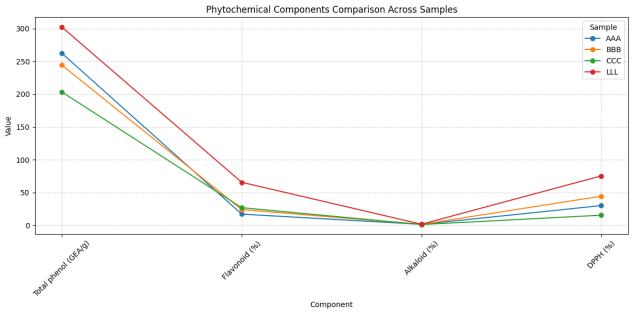
Table 2 shows the phytochemical and antioxidant properties of the tea samples. Total phenol content decreased progressively from 262.49 GAE/g in AAA to 244.34 GAE/g and 203.33 GAE/g in BBB and CCC, respectively, while LLL recorded the highest level at 302.50 GAE/g. Flavonoid content followed a similar pattern, increasing from 16.84% in AAA to 23.78% and 26.67% in BBB and CCC, and reaching a peak value of 65.45% in LLL. Alkaloid content remained relatively stable across the experimental samples, ranging from 1.24% in AAA to 1.21% and 0.97% in BBB and CCC, while LLL showed the highest value at 1.42%. DPPH activity varied considerably among the samples, rising from 29.86% in AAA to 44.21% in BBB, but dropping to 15.19% in CCC, whereas LLL showed the strongest antioxidant activity at 75.21%. Generally, fermentation influenced the phytochemical levels and antioxidant capacity of the tea samples, with the commercial tea exhibiting consistently higher values across most parameters.
Table 2. Phytochemical Composition and Antioxidant Properties of Tea Samples.

Sample

Total phenol (GAE/g)

Flavonoid (%)

Alkaloid (%)

DPPH (%)

AAA

262.49b±0.12

16.84d±0.08

1.24b±0.00

29.86c±0.11

BBB

244.34c±0.23

23.78c±0.16

1.21b±0.01

44.21b±0.11

CCC

203.33d±0.71

26.67b±0.16

0.97c±0.01

15.19d±0.11

LLL

302.50a±1.17

65.45a±0.16

1.42a±0.03

75.21a±0.98

Values are mean ± standard deviation (n=3). Means with the same superscript within a column are not significantly different (p>0.05). AAA = Unfermented sweet orange peel powder, BBB = Day 1 fermented sweet orange peel powder, CCC = Day 2 fermented sweet orange peel powder, LLL = Lipton tea.
3.3. Physicochemical Properties of Sweet Orange Peel Tea Extracts
Table 3 shows the physicochemical properties of the sweet orange peel tea extracts. Total titratable acidity increased steadily from 0.09% in AAA to 0.19% and 0.26% in BBB and CCC, respectively, while LLL showed a moderate value of 0.13%. pH values decreased with fermentation, dropping from 5.05 in AAA to 4.30 and 4.15 in BBB and CCC, whereas LLL had an intermediate pH of 4.70. Total soluble solids also declined progressively from 4.00 °Brix in AAA to 3.00 °Brix and 1.50 °Brix in BBB and CCC, with LLL exhibiting the lowest value at 0.50 °Brix. Generally, the results indicate that fermentation reduced pH and soluble solids while increasing acidity, with the commercial tea displaying distinct intermediate characteristics.
Table 3. Physicochemical Properties of Sweet Orange Peel Tea Extracts.

Sample

Total titratable acidity (%)

pH

Total soluble solids (oBrix)

AAA

0.09d±0.01

5.05a±0.01

4.00a±0.00

BBB

0.19b±0.01

4.30c±0.00

3.00b±0.00

CCC

0.26a±0.01

4.15d±0.07

1.50c±0.00

LLL

0.13c±0.00

4.70b±0.00

0.50d±0.00

Values are means ± standard deviation (n=3). Means with the same superscript within a column are not significantly different (p>0.05). AAA = Unfermented sweet orange peel powder, BBB = Day 1 fermented sweet orange peel powder, CCC = Day 2 fermented sweet orange peel powder, LLL = Lipton tea.
3.4. Mean Sensory Scores of Tea Samples from Sweet Orange Peel Powders
Table 4 shows the mean sensory score of the various tea samples. The color scores increased slightly across the experimental samples, ranging from 7.67 in AAA to 8.00 in CCC, while LLL received the highest rating of 8.47. Flavor and mouthfeel followed a similar pattern, with the experimental samples showing comparable scores between 7.47–7.60 for flavor and 7.20–7.60 for mouthfeel, whereas LLL consistently recorded higher values of 8.33 for both attributes. Taste scores declined slightly with fermentation, decreasing from 7.33 in AAA to 7.00 and 6.80 in BBB and CCC, while LLL showed the highest taste rating at 8.13. Overall acceptability also followed this trend, with values ranging from 7.27 to 7.60 among the experimental teas, and peaking at 8.53 in LLL. Generally, the commercial tea sample was preferred across all sensory parameters, while the experimental samples showed moderate acceptability and were comparable.
Table 4. Mean Sensory Scores of Tea Samples from Sweet Orange Peel Powders.

Sample

Color

Flavor

Mouthfeel

Taste

Overall acceptability

AAA

7.67b±0.89

7.60b±0.83

7.20b±1.26

7.33b±0.89

7.60b±0.83

BBB

7.73b±1.03

7.47b±1.12

7.20b±1.26

7.00c±1.56

7.47b±1.19

CCC

8.00b±0.76

7.53b±0.83

7.60b±1.06

6.80d±1.61

7.27b±1.33

LLL

8.47a±0.52

8.33a±0.82

8.33a±0.62

8.13a±1.06

8.53a±0.53

Values are mean ± standard deviation (n=3). Means with the same superscript within a column are not significantly different (p>0.05). AAA = Unfermented sweet orange peel powder, BBB = Day 1 fermented sweet orange peel powder, CCC = Day 2 fermented sweet orange peel powder, LLL = Lipton tea.
4. Discussion
4.1. Proximate Composition of Tea Powders
The moisture content of the tea powders varied significantly across samples, ranging from 1.70% to 10.10%. The slightly higher moisture content observed in the fermented powders may be attributed to water uptake during semi-solid fermentation, as well as to microbial activity that alters the substrate's structural components and increases its moisture-retention capacity. Moisture content plays a critical role in product stability, safety, and shelf life. Importantly, all samples were below the recommended 14% limit for safe storage, suggesting they would maintain good shelf stability and resist microbial spoilage by limiting biological activity through reduced water availability . In addition, the ash content of the tea samples increased with fermentation, suggesting an enhancement in the mineral concentration of the orange peel powders. This trend is consistent with earlier findings, El-Adawy on citrus fruits, which naturally contain considerable levels of essential minerals. Fermentation may further enhance or increase the bioavailability of these minerals. Since ash reflects the total inorganic content of a food, including key elements such as potassium, calcium, magnesium, and iron, higher ash levels indicate greater nutritional potential in the fermented samples.
A similar pattern was observed for crude fiber, which also increased following fermentation. Although fibre levels varied across samples, they remained comparable to values previously reported for other plant-based materials, water leaf, and red bell pepper by Ajah et al. , Odewole and Olaniyan , respectively. The presence of substantial dietary fibre in orange peel aligns with earlier recommendations supporting its use in food formulations to boost fibre intake and contribute additional bioactive compounds. Dietary fibre is well recognized for its benefits in promoting digestive health and reducing the risk of conditions such as cardiovascular disease, diabetes, and certain types of cancer .
The Lipton tea, which served as the control, had the highest fibre content (11.50%), while the unfermented sweet orange peel powder had the lowest crude fibre content (4.95%). The crude fibre content of the samples in this study was lower than the 12% reported for water leaf (Talinum triangulare) by Aja et al. and the 9.54% reported for red bell pepper by Odewole and Olaniyan . Olubinjo proposed the inclusion of 15% orange peel and pulp in biscuit production, emphasizing their suitability as a source of dietary fiber and their associated bioactive compounds, such as flavonoids and carotenoids. Crude fibre serves as a regulator of food excretion, where it helps in the acceleration of food remnants excretion through the digestive tract. Dietary fiber helps with digestion, prevents colon cancer, and protects against cardiovascular disease, colorectal cancer, diabetes, and obesity .
In addition to these changes in fibre content, fermentation also influenced the fat composition of the tea samples. The Lipton tea had the lowest fat content, while the unfermented sample had the highest fat content. This may be due to the breakdown of fat by the microorganisms present during fermentation. Dietary fat plays a vital role within food matrices beyond basic nutrition. It contributes to many sensory and quality properties of a food, including physical, textural, and olfactory factors, which all influence overall palatability. Excess dietary fat intake, notably from discretionary snack foods, is one of the key contributors to excess energy intake and therefore weight gain . Prevalence of overweight and obesity is rising worldwide, which is cause for concern as obesity is associated with increased risk of cardiovascular disease, type 2 diabetes mellitus, and some cancers .
Furthermore, fermentation increased the protein content of the tea samples from 5.89 to 12.41%. The increase in protein content might be due to microbial synthesis during fermentation. Proteins are important nutrients for the structural and functional performance of biomolecules in the human body, providing the essential amino acids required for metabolism . Meanwhile, variations in carbohydrate content may be due to carbohydrate degradation in sweet orange peel by microorganisms during fermentation. Voidarou reported that microorganisms and carbohydrates are abundant in nature, and fermentation occurs in every anaerobic environment. However, the high carbohydrate contents of the powders make them good sources of energy.
4.2. Phytochemical Composition and Antioxidant Properties of the Tea Sample
Phytochemicals are important bioactive compounds that contribute to the nutritional and functional qualities of plant-based foods. The phytochemical composition of unfermented and fermented sweet orange peel powders is shown in Figure 2. These constituents decreased significantly (p<0.05) with increasing fermentation time, except for the flavonoid content, which increased. The total phenol content ranged from 203.33 to 302.50 mg GAE/g, with Lipton tea exhibiting the highest value and the two-day fermented powder showing the lowest. The reduction in total phenols in the fermented sample relative to the unfermented powder may be attributed to phenolic degradation during fermentation. A similar decline in total phenol content in fermented sesame flour was reported by Olagunju and Ifesan . Nonetheless, fermentation has also been noted to enhance mineral bioavailability in foods with high oxalate levels .
In contrast to the general reduction in phenolic compounds, flavonoids exhibited a notable increase during fermentation. This enhancement may be attributed to the activity of cellulolytic, ligninolytic, and pectolytic enzymes produced by microorganisms during fermentation . These enzymes break down structural components of plant cell walls and hydrolyze the ester bonds that bind phenolic compounds to the cell matrix, thereby releasing free |and bound flavonoids. Flavonoids are essential bioactive compounds recognized for their potent antioxidant properties and their roles in reducing inflammation, lowering cholesterol levels, and providing protective effects against various chronic conditions, including cancer, cardiovascular diseases, and other health issues . The increase in flavonoids following fermentation, therefore, highlights the potential of orange peel tea as a functional beverage with enhanced health benefits.
Beyond these changes, fermentation also influenced the alkaloid content of the tea powders. A gradual reduction in alkaloids was observed, likely resulting from microbial hydrolysis and the leaching of water-soluble compounds during fermentation . Alkaloids are recognized for their pharmacological relevance and serve as the structural backbone of several drugs, including morphine, quinine, colchicine, and vincristine . However, they also impart bitterness due to their alkaline nature . The decrease in alkaloids during fermentation, therefore, reflects both biochemical modifications and potential improvements in sensory attributes, depending on the desired flavor profile.
These changes in phytochemical composition were also reflected in the antioxidant capacity of the tea samples, measured by DPPH radical scavenging activity. Overall, the sweet orange peel teas exhibited lower free radical-scavenging activity than Lipton, likely due to differences in the concentrations of bioactive compounds such as phenols, flavonoids, and alkaloids. Notably, short-term fermentation appeared to enhance antioxidant activity, which aligns with the increase in flavonoid content observed in earlier analyses . The strong correlation among flavonoids, phenolic compounds, and radical-scavenging activity underscores the functional significance of these phytochemicals. This observation is consistent with numerous studies demonstrating the role of antioxidants in mitigating oxidative stress and contributing to disease prevention and management (See Figure 2)
Figure 2. Phytochemical Composition and Antioxidant Properties of the Tea Sample.
4.3. Physicochemical Properties of Tea Extract
The physicochemical properties of the tea extracts produced from sweet orange peels are shown in Table 3. The unfermented tea powder (Sample AAA) exhibited the highest pH value (5.05), while Sample CCC (tea fermented for 2 days) recorded the lowest value (4.15). This progressive decline in pH during fermentation is due to the production of organic acids by microorganisms active in the process. Lactic acid bacteria, known for their aciduric nature, likely contributed substantially to the observed acidity increase. This trend aligns with the findings of Alavi et al. , who reported that an increase in viable cell counts during the fermentation of watermelon juice corresponded with a decrease in pH, thereby enhancing the product's overall acidity.
A similar trend was evident in the total titratable acidity (TTA), which also indicated increased acidification across the samples. The total titratable acidity (TTA) value ranged from 0.09 to 0.26%. There were significant (p<0.05) differences among the samples. The inverse relationship between pH and TTA indicated that a decrease in pH increased the acidity of the sweet orange peel extract. This agreed with the previous studies . Acidity plays a vital role in determining the quality of fermented drinks by aiding fermentation and enhancing the product's overall characteristics and balance. A lack of acidity will lead to poor fermentation. The pH was slightly acidic, which would confer stability to the produced tea extract . The increase in titratable acidity and decrease in pH could be due to the dominance of lactic acid bacteria in the environment, which degraded carbohydrates and caused acidification.
Additionally, the total soluble solids for the samples ranged from 0.50 to 4.00 °Brix. There were significant (p<0.05) differences among the samples with respect to total soluble solids. Fermentation decreased the total soluble solids of the tea extracts, as these were likely used by microorganisms for metabolic activity. This result was like those reported by El-Adawy et al. .
4.4. Sensory Properties of Tea Extracts
The sensory evaluation revealed clear differences between the experimental teas and the commercial control. As expected, Lipton tea received the highest ratings across all attributes, reflecting its familiarity and established consumer acceptance. Fermentation produced modest improvements in the colour and mouthfeel of the orange peel teas, indicating that microbial activity may have enhanced specific desirable sensory notes. However, flavour and taste scores showed mixed responses, with longer fermentation leading to reduced taste acceptability. This trend is consistent with earlier findings that fermentation can diminish sweetness and intensify bitterness due to microbial breakdown of sugars and the intrinsic bitterness of citrus peels . Overall acceptability followed a similar pattern, with the one-day fermented sample outperforming the two-day fermented sample and showing acceptance levels relatively close to the commercial control. These results suggest that short-term fermentation may optimize sensory quality, whereas prolonged fermentation may negatively affect consumer preference.
5. Conclusions
This study demonstrates that fermentation meaningfully alters the nutritional and phytochemical profile of sweet orange peel tea. Fermentation enhanced titratable acidity, ash, protein, moisture, and flavonoid content, while reducing pH, fat, crude fiber, total phenols, and alkaloids. These compositional shifts also influenced sensory quality: although Lipton tea remained the preferred control, the one-day fermented sample achieved the highest overall acceptability among the experimental teas. It was well received by panelists, indicating good consumer potential. Overall, the findings highlight sweet orange peel as a viable raw material for developing functional teas with improved antioxidant-linked phytochemicals, particularly after short-term fermentation. This offers an environmentally and economically meaningful way to convert citrus waste into value-added beverages. Future research should explore optimized fermentation conditions, microbial starter cultures, antioxidant mechanisms, and shelf-life stability to enhance product quality and commercial applicability further.
Abbreviations

CVD

Cardiovascular Disease

DPPH

2, 2-Diphenyl-1-Picrylhydrazyl

GAE/g

Gallic Acid Equivalent Per Gram

TAC

Total Alkaloid Content

TTA

Total Titratable Acid

TSS

Total Soluble Solids

Acknowledgments
The authors gratefully acknowledge the support and resources provided by their respective institutions. The technical assistance and valuable discussions contributed by colleagues during the research are sincerely appreciated.
Author Contributions
Joseph Buraimoh: Conceptualization, Data curation, Formal Analysis, Investigation, Methodology, Validation, Visualization, Writing – original draft, Writing – review & editing
Ufuoma Orieruo: Data curation, Formal Analysis, Investigation, Resources, Visualization, Writing – review & editing
Samuel Buraimoh: Software, Supervision, Validation, Writing – review & editing
Funding
This work is not supported by any external funding.
Data Availability Statement
The data is available from the corresponding author upon reasonable request.
Conflicts of Interest
The authors declare no conflicts of interest.
References
[1] Adeogun, E. F., O. M. Olude, and O. D. Abu. "Phenolic and antioxidant evaluation of the aqueous and ethanol extracts of unripe Citrus reticulata peels." Ife Journal of Science 21, no. 1 (2019): 187-194.
[2] Suri, S., Singh, A., & Nema, P. K. (2022). Current applications of citrus fruit processing waste: A scientific outlook. Applied Food Research, 2(1), 100050.
[3] Gómez-Mejía, E., Rosales-Conrado, N., León-González, M. E., & Madrid, Y. (2019). Citrus peels waste as a source of value-added compounds: Extraction and quantification of bioactive polyphenols. Food chemistry, 295, 289-299.
[4] Ezejiofor, T. I. N., Eke, N. V., Okechukwu, R. I., Nwoguikpe, R. N. and Duru, C. M., (2011). Waste to wealth: Industrial raw materials potential of peels of Nigerian sweet orange (Citrus sinensis). African Journal of Biotechnology Vol. 10 (33), 6257-6264.
[5] Li, P., Yao, X., Zhou, Q., Meng, X., Zhou, T., & Gu, Q. (2022). Citrus peel flavonoid extracts: Health-beneficial bioactivities and regulation of intestinal microecology in vitro. Frontiers in Nutrition, 9, 888745.
[6] Costanzo, G., Vitale, E., Iesce, M. R., Naviglio, D., Amoresano, A., Fontanarosa, C.,... & Arena, C. (2022). Antioxidant properties of pulp, peel and seeds of phlegrean mandarin (Citrus reticulata Blanco) at different stages of fruit ripening. Antioxidants, 11(2), 187.
[7] Gorinstein, S., Poovarodom, S., Leontowicz, H., Leontowicz, M., Namiesnik, J., Vearasilp, S.,... & Tashma, Z. (2011). Antioxidant properties and bioactive constituents of some rare exotic Thai fruits and comparison with conventional fruits: In vitro and in vivo studies. Food Research International, 44(7), 2222-2232.
[8] Mahato, N., Sharma, K., Sinha, M., & Cho, M. H. (2018). Citrus waste-derived nutra-/pharmaceuticals for health benefits: Current trends and future perspectives. Journal of functional foods, 40, 307-316.
[9] Özkan-Karabacak, A., Acoğlu-Çelik, B., Özdal, T., Yolci-Ömeroğlu, P., Çopur, Ö. U., Baştuğ- Koç, A., & Pandiselvam, R. (2023). Microwave‐assisted hot air drying of Orange snacks: Drying kinetics, thin layer modeling, quality attributes, and phenolic profiles. Journal of Food Biochemistry, 2023(1), 6531838.
[10] Samaila, J., Nwabueze, T. U., Usman, M. A., Ojo, S., Nwokocha, L., Yusuf, J. and Ibrahim, A. B. (2016). Comparative study of the proximate and mineral compositions of extruded African Breadfruit (Treculiaafricana) mix with some commercial pasta products. Journal of Scientific Research & Reports; 9(4): 1-9.
[11] Sani, N. A., Hassan, L. G., Dangoggo, S. M., Ladan, M. J., Ali-baba, I., and Umar, K. J. (2013). Effect of fermentation on the nutritional and antinutritional composition of Lagenaria siceraria seeds. J Appl Chem; 5: 1-6.
[12] AOAC. (2005). Official Methods of Analysis (18th ed.). Association of Official Analytical Chemists, Washington, D.C., USA.
[13] Onimawo, I. A. and Akubor, P. I. (2012). Food Chemistry: Integrated Approach with Biochemical Background. 2nd ed. Agbowo, Ibadan, Nigeria: Joytal Printing Press. p. 287-90.
[14] Harwoko, H., & Warsinah, W. (2020). Phytochemical analysis and evaluation of purified extract of Tinospora crispa stem for in vivo antihyperuricemic effect. Journal of Reports in Pharmaceutical Sciences, 9(1), 46-51.
[15] Saleem, M., Durani, A. I., Asari, A., Ahmed, M., Ahmad, M., Yousaf, N., & Muddassar, M. (2023). Investigation of antioxidant and antibacterial effects of citrus fruits peels extracts using different extracting agents: Phytochemical analysis with in silico studies. Heliyon, 9(4).
[16] El-Adawy, T. A., Rehman, E. H., El-Bedawy, A. A. and Gafar, A. M. (2019). Properties of some Citrus seeds. Evaluation as a new source of potential oil. J Plant Sci.; 43: 385-91.
[17] Aja, P. M., Okaka, A. N. C., Ibiam, U. A., Uraku, A. J. and Onu P. N. (2010). Proximate Analysis of Talinumtriangulare (Water Leaf) Leaves and its softening principle. Pakistan Journal of Nutrition 9(6) 524-526.
[18] Odewole, M. M. and Olaniyan A. M. (2016). Effect of osmotic Dehydration Pre-treatments on Drying rate and post-drying Quality Attributes of Red Bell Pepper (Capsicum annuum). AgricEngInt, CIGR, 18(1): 226-235.
[19] Olabinjo, O. O. (2025). Citrus Peels an Effective Sources of Bioactive Compounds. In Waste Management for a Sustainable Future-Technologies, Strategies and Global Perspectives. IntechOpen.
[20] Zheng, H., Lazarova, D. L., & Bordonaro, M. (2014). Mechanisms linking dietary fiber, gut microbiota and colon cancer prevention. World journal of gastrointestinal oncology, 6(2), 41.
[21] Alahmari, L. A. (2024). Dietary fiber influence on overall health, with an emphasis on CVD, diabetes, obesity, colon cancer, and inflammation. Frontiers in Nutrition, 11, 1510564.
[22] Colla, K., Costanzo, A., & Gamlath, S. (2018). Fat replacers in baked food products. Foods, 7(12), 192.
[23] Voidarou, C., Antoniadou, M., Rozos, G., Tzora, A., Skoufos, I., Varzakas, T.,... & Bezirtzoglou, E. (2020). Fermentative foods: Microbiology, biochemistry, potential human health benefits and public health issues. Foods, 10(1), 69.
[24] Olagunju, A. I. and Ifesan, B. O. (2013). Changes in nutrient and anti-nutrient contents of sesame seed during fermentation. Journal of Microbiology and Biotechnology of Food Science; 2: 2407-10.
[25] Sotade, G. A., Ojeaburu, S. I., Onimisi, O. S. A., U Otokiti, A., Duile, P. T., Azees, A. S.,... & AC Biodun, V. (2024). Proximate, phytochemical and gas chromatography-mass spectrometry (GC-MS) analysis of the carbonated drink (Soft Drink) extract of Enantia chlorantha stem bark. Asian Journal of Physical and Chemical Sciences, 12(2), 34-53.
[26] Valabhji, J., McColi, A. J., Richmond, W., Schachter, M., Rubens, M. B. and Elkeles, R. S. (2011). Antioxidant status and coronary artery calcification in Type1 diabetes. Diabetes Care 24 (9), 1608-1613.
[27] Alavi, Z., Razavi, S. H. and Pourahmad, R. (2012). Investigation of the possibility of fermented watermelon juice by lactic acid bacteria. International Journal of Food Science and Technology 12: 231-232.
[28] Hassan, L. G., Sani, N. A., Dangoggo, S. M., & Ladan, M. J. (2008). Nutritional value of bottle gourd (Lagenaria siceraria). Pakistan Journal of Nutrition, 7(5), 675–679.
[29] Hakim, I. A., Harris, R. B. and Ritenbaugh, C. (2013). Citrus peel use as associate with reduced risk of squamous cell carcinoma of the skin. J Nutr; 37: 16-8.
Cite This Article
  • APA Style

    Buraimoh, J. O., Orieruo, U. A., Buraimoh, S. O. (2025). Effect of Fermentation Time on the Quality of Tea Samples Produced from Sweet Orange Peel Powder. Journal of Food and Nutrition Sciences, 13(6), 379-388. https://doi.org/10.11648/j.jfns.20251306.17

    Copy | Download

    ACS Style

    Buraimoh, J. O.; Orieruo, U. A.; Buraimoh, S. O. Effect of Fermentation Time on the Quality of Tea Samples Produced from Sweet Orange Peel Powder. J. Food Nutr. Sci. 2025, 13(6), 379-388. doi: 10.11648/j.jfns.20251306.17

    Copy | Download

    AMA Style

    Buraimoh JO, Orieruo UA, Buraimoh SO. Effect of Fermentation Time on the Quality of Tea Samples Produced from Sweet Orange Peel Powder. J Food Nutr Sci. 2025;13(6):379-388. doi: 10.11648/j.jfns.20251306.17

    Copy | Download

  • @article{10.11648/j.jfns.20251306.17,
      author = {Joseph Omokodion Buraimoh and Ufuoma Akpezi Orieruo and Samuel Osaretin Buraimoh},
      title = {Effect of Fermentation Time on the Quality of Tea Samples Produced from Sweet Orange Peel Powder},
      journal = {Journal of Food and Nutrition Sciences},
      volume = {13},
      number = {6},
      pages = {379-388},
      doi = {10.11648/j.jfns.20251306.17},
      url = {https://doi.org/10.11648/j.jfns.20251306.17},
      eprint = {https://article.sciencepublishinggroup.com/pdf/10.11648.j.jfns.20251306.17},
      abstract = {This study investigated the effect of fermentation time on tea produced from sweet orange peel powder. Orange peels were processed into powder, with a portion fermented for 1 day and another for 2 days. Teas from fermented and unfermented powders were analyzed for proximate composition, phytochemicals, antioxidant activity (DPPH), sensory, and physicochemical properties. Lipton tea served as the control in sensory evaluation. Fermentation increased ash, fat, crude fiber, and protein, while reducing carbohydrate content. Moisture content increased slightly during fermentation compared with unfermented powder and was lowest in Lipton tea. Although some phytochemicals declined, fermentation increased flavonoid content and improved the tea's antioxidant activity, with DPPH values increasing across samples, though the day 2 sample showed a significant decrease. Fermentation also reduced pH and total soluble solids but increased total titratable acidity. Sensory scores for color, flavor, and mouthfeel improved, while taste and overall acceptability decreased with longer fermentation. Significant differences (p<0.05) were found only in taste and overall acceptability, where unfermented tea was preferred. The study concludes that sweet orange peel is suitable for producing fermented and unfermented teas. Tea fermented for 1 day is recommended for its higher phytochemical content and antioxidant activity, as a short fermentation period appears most suitable for balancing nutritional quality, bioactive compounds, and sensory appeal.},
     year = {2025}
    }
    

    Copy | Download

  • TY  - JOUR
    T1  - Effect of Fermentation Time on the Quality of Tea Samples Produced from Sweet Orange Peel Powder
    AU  - Joseph Omokodion Buraimoh
    AU  - Ufuoma Akpezi Orieruo
    AU  - Samuel Osaretin Buraimoh
    Y1  - 2025/12/30
    PY  - 2025
    N1  - https://doi.org/10.11648/j.jfns.20251306.17
    DO  - 10.11648/j.jfns.20251306.17
    T2  - Journal of Food and Nutrition Sciences
    JF  - Journal of Food and Nutrition Sciences
    JO  - Journal of Food and Nutrition Sciences
    SP  - 379
    EP  - 388
    PB  - Science Publishing Group
    SN  - 2330-7293
    UR  - https://doi.org/10.11648/j.jfns.20251306.17
    AB  - This study investigated the effect of fermentation time on tea produced from sweet orange peel powder. Orange peels were processed into powder, with a portion fermented for 1 day and another for 2 days. Teas from fermented and unfermented powders were analyzed for proximate composition, phytochemicals, antioxidant activity (DPPH), sensory, and physicochemical properties. Lipton tea served as the control in sensory evaluation. Fermentation increased ash, fat, crude fiber, and protein, while reducing carbohydrate content. Moisture content increased slightly during fermentation compared with unfermented powder and was lowest in Lipton tea. Although some phytochemicals declined, fermentation increased flavonoid content and improved the tea's antioxidant activity, with DPPH values increasing across samples, though the day 2 sample showed a significant decrease. Fermentation also reduced pH and total soluble solids but increased total titratable acidity. Sensory scores for color, flavor, and mouthfeel improved, while taste and overall acceptability decreased with longer fermentation. Significant differences (p<0.05) were found only in taste and overall acceptability, where unfermented tea was preferred. The study concludes that sweet orange peel is suitable for producing fermented and unfermented teas. Tea fermented for 1 day is recommended for its higher phytochemical content and antioxidant activity, as a short fermentation period appears most suitable for balancing nutritional quality, bioactive compounds, and sensory appeal.
    VL  - 13
    IS  - 6
    ER  - 

    Copy | Download

Author Information
  • Department of Biological Sciences, Benson Idahosa University, Benin City, Nigeria

    Biography: Joseph Omokodion Buraimoh, Department of Biological Sciences, Benson Idahosa University, Benin City, Nigeria. He is a graduate student in the Department of Biological Sciences at Benson Idahosa University, with interests in food and Industrial Microbiology, value-added processing, and functional product development. His work focuses on exploring underutilized biological resources, improving product quality, and assessing biochemical and nutritional properties of food materials. He has contributed to studies on plant-based ingredients, fermentation, and innovative food formulations to promote sustainable food systems and enhance consumer health.

    Research Fields: Food Waste Valorization, Food Product Development, Fermentation Technology, Functional Foods, Food Microbiology, Human Gut Microbiota.

  • Department of Biological Sciences, Benson Idahosa University, Benin City, Nigeria

    Biography: Ufuoma Akpezi Orieruo, Department of Biological Sciences, Benson Idahosa University, Benin City, Nigeria. She is a graduate student in the Department of Biological Sciences at Benson Idahosa University, specializing in food microbiology, food processing, and dairy technology. Her research contributions focus particularly on dairy development and quality enhancement, with interests in improving microbial safety, optimizing fermentation processes, and formulating value-added dairy products. She is committed to advancing innovative and sustainable approaches in dairy research and functional food production.

    Research Fields: Food Microbiology, Food Processing, Dairy Technology, Food Product Development, Fermentation Technology.

  • Department of Food Science, University of British Columbia, Vancouver, Canada

    Biography: Samuel Osaretin Buraimoh, Department of Food Science, University of British Columbia, Vancouver, Canada. He is a researcher at the Department of Food Science at the University of British Columbia, specializing in food chemistry, food safety, food preservation, agro-resource processing, and nutrition. His work focuses on improving food quality and safety, developing sustainable processing methods, and enhancing the nutritional value of food products. He has contributed to research on innovative food preservation techniques and the utilization of agricultural resources to promote healthful and sustainable food systems.

    Research Fields: Research Fields: Food Chemistry, Food Safety, Food Preservation, Agro-Resource Processing, Nutrition


  • Abstract
  • Keywords
  • Document Sections

    1. 1. Introduction
    2. 2. Materials and Methods
    3. 3. Results
    4. 4. Discussion
    5. 5. Conclusions
    Show Full Outline
  • Abbreviations
  • Acknowledgments
  • Author Contributions
  • Funding
  • Data Availability Statement
  • Conflicts of Interest
  • References
  • Cite This Article
  • Author Information