Abstract
This study aimed to determine the physicochemical and nutritional characteristics of raw milk. Of the thirty (30) samples included, density was measured by comparing the ratio of equal volumes of milk and water, Dornic acidity was measured by titration using Dornic soda, fat content was measured using the Soxhlet method, protein content was measured using the Kjeldahl method, and ash content was measured by incineration. The results revealed an average density of 1.029 with a compliance rate of 93.30% either 29/30 samples, and the lactic acid content was unsatisfactory at 26.70% either 8/30 samples with an average of 16.50°D. From a nutritional point of view, the protein content was satisfactory at 96.70% either 29/30, compared with an unsatisfactory proportion of 33.33% for the fat content. Total non-compliance (100%) was observed for the ash content; all the samples considered had an abnormally low total ash content. These analyses show that raw milk has relative physicochemical stability, but its nutritional qualities are compromised by its low ash and fat content. Supplementation measures should be put in place to restore this product to its expected virtues.
Keywords
Raw Milk, Physicochemical Quality, Nutritional Quality, Bongor, Chad
1. Introduction
Milk has significant nutritional and therapeutic properties. These qualities stem from its complex composition, its physical and chemical balance, its hedonic characteristics, and the many forms in which it can be consumed
| [1] | Renard J. 2014. A propos du lait cru. Filière Walonne lait et produits laitiers. |
| [2] | CELAGRI. 2022. Milk and dairy products in human nutrition and health. |
[1, 2]
.
As an agropastoral country, milk and dairy products occupy a prominent place in the diet in Chad
| [3] | Bechir M, Tidjani A, Makhlouf H, Abderahim I, Schelling E. 2016. Sécurité sanitaire du lait de dromadaire vendu à N’Djamena, Tchad. Revue Scientifique du Tchad: 97-116. |
| [4] | FAO. 2018. Recensement Général de l’Élevage au Tchad: publication des résultats. |
[3, 4]
. Located in the southern part of the country, Bongor, like other cities in Chad, is home to nomadic herders and their livestock in search of pastureland on its outskirts. This extra-urban location enables them to supply raw milk and dairy products to the urban population and to engage in other forms of cooperation, such as fertilizing fields for sedentary farmers
| [5] | Duteurtre G, Atteyeh A. 2000. Milk in Moundou, evidence of the market integration of pastoral systems in southern Chad. Revue Élev. Méd. Vét. Pays Trop., 53(3): 299-306. |
| [6] | Gouataine RS, Dadoum MD, Doubragne I. 2021. Riziculture irriguée et mutations socio-économiques dans la vallée du Logone à Bongor (Tchad). Canadian Journal of Tropical Geography., 8(2): 33-38. |
| [7] | Gondimo GE, Doutoum AA, Abdullahi HO, Djamalladine MD, Valery BM, Tidjani A. 2023a. Microbiological and Physicochemical Quality of Raw Milk Marketed in the City of Pala in Chad. Journal of Food Studies., 12(1): 13.
https://doi.org/10.5296/jfs.v12i1.21103 |
[5-7]
. Due to the availability of pasture and extensive livestock farming without supplementation measures, milk production is seasonal and takes place within a completely informal circuit
| [8] | Koussou MO. 2008. Dynamique des changements dans le secteur de l’élevage au Tchad: le cas de la filière laitière de N’Djamena. Thèse PhD, Agro Paris Tech, Paris, p. 242. |
| [9] | Gondimo GE, Doutoum AA, Nazal AM, Abdallah HO, Hamadou A, Djamalladine MD, Tidjani A. 2023b. Microbiological Quality of Raw Milk Produced and Marketed in the Town of Moundou, Chad. J. Food. Stab., 6(5): 27-37.
https://doi.org/10.36400/J.Food.Stab.6.5.2023-053 |
[8, 9]
. Milking is carried out in the open air in livestock pens, and milk is stored and transported in poor hygienic conditions without any thermal preservation measures
| [3] | Bechir M, Tidjani A, Makhlouf H, Abderahim I, Schelling E. 2016. Sécurité sanitaire du lait de dromadaire vendu à N’Djamena, Tchad. Revue Scientifique du Tchad: 97-116. |
| [10] | Doutoum AA, ERBI D, Al cherif HM, Hingue NV, Hamadou A, Nazal AM, Doutoum SAB, Tidjani A. 2023. Evaluation of the Hygienic and Microbiological Quality of Raw Milk from Cows Intended For Consumption or Processing in the Town of Abéche in Chad. Food Sci Nutr Res., 6(2): 1-9. |
[3, 10]
. Given that milk is a highly perishable commodity due to its complex composition, producing good quality milk requires the milker to apply a number of hygiene rules on the farm. Milk of good quality, due to its physical, chemical, and organoleptic characteristics, can therefore be easily processed and industrialized for human consumption
| [11] | Maïworé J, Baane MP, Toudjani AA, Daibe AO, Tatsadjieu LN, Montet D. 2018. Influence des conditions de la traite sur les qualités physico-chimiques et microbiologiques du lait cru collecté à Maroua, Cameroun. Afrique SCIENCE., 14(4): 235 – 248. |
| [12] | Agbo GM, Dokui F, Dedome SL, Salifou CFA, Toleba SS, Tchobo FP. 2023. Qualité physique et nutritionnelle du lait des vaches Borgou nourries avec des pierres à lécher mise au point au Bénin. Rev. Mar. Sci. Agron. Vét, 11(3): 346-350. |
| [13] | Silveira A, Pinheiro CJ, Loh LC, Benusic M. 2023. Risques pour la santé publique liés à la consommation de lait cru: leçons tirées d’un cas de syndrome hémolytique et urémique pédiatrique. Relevé des maladies transmissibles au Canada., 49(9): 413–7. |
[11-13]
. Unfortunately, the precarious situation in the milk sector in Chad described above seems to compromise its chances of safety and, above all, industrialization. This study therefore aims to determine the physical, chemical, and nutritional characteristics of raw milk produced in the Bongor area.
2. Material and Methods
Bongor, the- capital of the Mayo-Kebbi East province in Chad, was our study area. It is a city located in southwestern Chad, with a generally Sahelo-Sudanese climate. The population density was 40 inhabitants per square kilometer for a total population of 553,027, making it one of the most populous cities in the country according to the second General Population and Housing Census (RGPH2)
| [14] | Gouataine RS, Baohoutou L. Highlighting rainfall variability on the Mayo-Kebbi plain, southwest Chad. Rev. Ivoir. Sci. Technol. 2015; 25: 93–109. |
| [6] | Gouataine RS, Dadoum MD, Doubragne I. 2021. Riziculture irriguée et mutations socio-économiques dans la vallée du Logone à Bongor (Tchad). Canadian Journal of Tropical Geography., 8(2): 33-38. |
[14, 6]
.
2.1. Study Framework and Sampling
A total of thirty (30) samples of raw whole milk from small herds were collected from six (6) nomadic herders in the town of Bongor between July and August 2024. The samples were placed in sterile 300 mL bottles, labeled, and then stored in a cooler containing dry ice for transport and subsequent analysis. Physicochemical and nutritional analyses were performed at the Food Quality Control Center (CECOQDA) laboratory in N'Djamena.
2.2. Methods
Our study focused on the following parameters: density, titratable acidity, fat content, protein content, water content, total dry matter, and ash content.
Using an electronic scale (OHAUS), density was determined by the ratio between the same volume of milk (50 mL) and the same volume of water. The measurement was taken twice.
Acidity was determined using the titration technique. To do this, 10 mL of raw milk was taken and poured into an Erlenmeyer flask. Three drops of phenolphthalein were then added and the mixture was homogenized using stirring rods. Dornic soda (NaOH N/9), previously placed in a graduated burette, was added drop by drop until a pale pink color appeared. The total volume of soda poured in mL was noted and multiplied by 10 to express the Dornic acidity
| [15] | AOAC (Association of Official Analytical Chemists).2005. Official Methods of Analysis (18th Edn). AOAC: Gaithersburg, MD, USA, 8, 8-25. |
[15]
. The measurement was performed twice for each sample.
The fat content was determined using the Franz Von Soxhlet technique. This method involved weighing 10 g of milk in a cellulose capsule and placing it in the side elbow topped with a refrigerant in the Soxhlet system (Soxhlet Behr Labor Technik). A sufficient quantity of solvent (n-hexane in our case) was then added and the whole mixture was placed in a programmable reflux heating system at a temperature of 80°C for 8 hours. After this time, the solvent-fat mixture was transferred to a flask of known mass and placed on a RotaVap (Heidolph rotary evaporator). The temperature of the RotaVap was set to 80°C for a rotation speed of 20 revolutions per minute. We ensured that the water was circulating and then started the heating process until the solvent had been completely removed. The solvent was recovered in another flask connected to the RotaVap. The first flask, which now contains only the fat, was dried in an oven (DRY-line) at 105°C for one hour and then weighed to obtain the result. The result, expressed as a percentage, is given by the following formula:
In this formula:
1) MG represented the mass of fat as a percentage;
2) Pe represented the weight of the flask after passing through the oven;
3) Po represented the weight of the empty flask;
4) Mo represented the weight of the sample
| [16] | AOAC AOAC (Association of Official Analytical Chemists).1990. Official Methods of Analysis (15th Edn): Library of Congress Catalog Carl Number 85-647589. |
[16]
.
The Kjeldahl method was used to determine the protein content. This technique involved weighing 5 g of milk, mixing it with potassium sulfate and copper sulfate in quantities of 15 g and 0.6 g, respectively. Twenty milliliters of sulfuric acid were then carefully added to the mixture, which was then placed in a mineralization chamber for three hours (BUCHI Speed Digester K-439). To neutralize the solution, 50 mL of distilled water and 65 mL of 32% sodium hydroxide were added respectively. The solution resulting from the neutralization was placed in a distiller (BUCHI K-350) for 6 minutes and the proteins were extracted in another mixture prepared in parallel and composed of 50 mL of boric acid, 10 drops of bromocresol and 4 drops of methyl red. Extracted by distillation, the proteins were titrated with sulfuric acid, which was added drop by drop using a graduated burette until the solution turned pink. Two test runs were performed, and the result was given by the average of these two test runs multiplied by 6.25.
To determine the water content, the empty crucibles were weighed using an electronic balance after drying in an oven at 105°C for 30 minutes. Five grams of milk were weighed and the exact values were recorded to 10-4 (PE). The previously weighed test sample was placed in an oven at 105°C for 4 hours to dry, followed by cooling and weighing of the crucible containing the dry matter (DM). The water content expressed as a percentage is then given by the relationship:
In this formula:
1) Mcv represented the mass of the empty crucible;
2) PE represented the weight of the test sample;
3) Ms represented the weight of the dry crucible;
4) %water therefore corresponded to the water content
| [17] | AOAC (Association of Official Analytical Chemists).1999. Official Methods of Analysis (16th Edn). 16e édition, 5e révision, Association of Official Analytical Chemists, Washington DC. |
[17]
.
The total dry matter is directly calculated from the water content by subtracting the total composition of the milk minus the water content already measured.
Total dry matter = 100% of milk - % water
To determine the total ash content, the empty crucibles were weighed using an electronic scale (M0) after drying at 105°C for 30 minutes. We then took a sample (PE) by collecting 5 g of milk and recorded the exact values to 10-4. This was followed by drying in an oven at 105°C for 4 hours, then incineration in a muffle furnace for 8 hours at 550°C. After this period, the crucibles containing the ashes were cooled in a desiccator and weighed (PE'). The result is given by the equation:
In this formula:
1) PE’ corresponded to the weight of the crucible containing the ashes;
2) Mo corresponded to the weight of the empty crucible;
3) PE represented the weight of the test sample;
4) %ash corresponded to the ash content.
2.3. Statistical Analyses
The Excel workbook in Office 2019 was used to enter data and construct graphs. SPSS version 26.0 software was used to calculate statistical means and extremes.
3.Results
3.1. Average Physicochemical and Nutritional Parameters
For all parameters considered in this study, the average values are presented in
Table 1. This result shows that, except for P1, which has an average density value below the standard (1.027), the average density for all other producers was in line with the required standard (1.028-1.034). The lactic acid content expressed by titratable acidity was abnormal only in P5, with 15.87°D (16-18).
The average fat and protein contents were satisfactory for all samples considered, for each milk producer. The average ash content values were below the normal range for all six producers. The maximum average, obtained at P2 (0.5%), was itself below the legal standard (0.7-0.9%). However, the average water content, regardless of the producer considered, was acceptable according to the assessment standard for this physicochemical parameter.
Table 1. Average Physicochemical, and Nutritional Parameters.
Parameter | P1 | P2 | P3 | P4 | P5 | P6 | Standard |
Density | 1,027 | 1,029 | 1,029 | 1,029 | 1,030 | 1,030 | 1,028 – 1,034 |
Acidity (°D) | 16,83 | 16,47 | 17,03 | 16,54 | 15,87 | 16,29 | 16 – 18 |
Fat (%) | 3,45 | 3,32 | 3,184 | 3,264 | 3,154 | 3,100 | 3 – 4 |
Protéins (%) | 3,402 | 3,396 | 3,378 | 3,292 | 3,306 | 3,314 | 3,2 – 3,6 |
% water | 86,91 | 87,284 | 87,264 | 87,148 | 87,208 | 86,968 | 85 – 90 |
Total dry extract (%) | 13,09 | 12,71 | 12,84 | 12,85 | 12,79 | 13,03 | 12 – 13 |
% ashes | 0,505 | 0,513 | 0,505 | 0,502 | 0,504 | 0,498 | 0,7 – 0,9 |
P1: Leading producer; Acidity (°D): Titratable acidity; %Water: Water content; %Ash: Ash content.
3.2. Quality Assessment Based on Each Parameter
3.2.1. Density
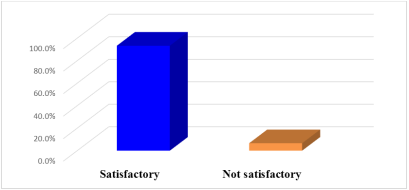
Of the thirty (30) samples included in this study, 28/30 showed density values in compliance with the legal standard (1.028-1.034), representing a satisfaction rate of 93.30%. Only 2/30 samples at P1 and P2 did not meet the density assessment criterion, representing a dissatisfaction rate of 6.70%.
Figure 1. Physicochemical Quality as a Function of Density.
3.2.2. Dornic Acidity
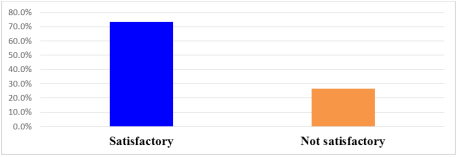
The extreme values of Dornic acidity ranged from 13.60°D to 18.20°D, with an average of 16.50°D. For this parameter, the following graph shows a satisfaction rate of 73.30% in our samples according to the assessment standard (16-18°D). On the other hand, an abnormally low lactic acid content was observed in 26.70% of cases, i.e., 8/30 samples.
Figure 2. Physicochemical Quality as a Function of Dornic Acidity.
3.2.3. Fat Content
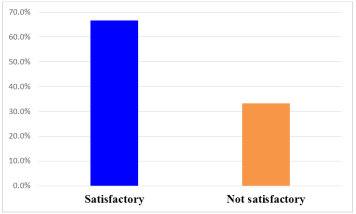
The fat content test showed abnormal results for 10/30 samples, representing a dissatisfaction rate of 33.33%. Among these results, some samples had abnormally low values and others had abnormally high values. However, the corresponding graph (
Figure 3) showed a satisfaction rate of 66.67%.
Figure 3. Nutritional Quality According to Fat Content.
3.2.4. Protein Content
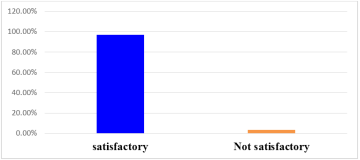
For the protein content measurement, only one sample showed a result below the normal value, as illustrated in the diagram below. The rest of our samples showed completely satisfactory results.
Figure 4. Nutritional Quality According to Protein Content.
3.2.5. Water Content
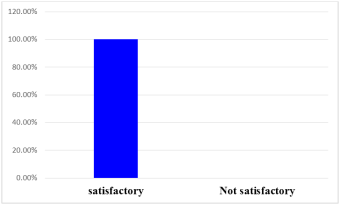
All samples considered in this study had a water content that complied with the quality standard recommendations.
Figure 5. Distribution According to Water Content.
3.2.6. Total Ash Content
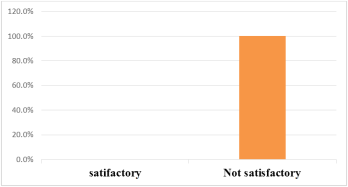
For all thirty samples and all producers, the total ash content was abnormally low, with a maximum value (statistical mode) even lower than the required standard for this parameter (0.51% ˂ 0.7%). This total dissatisfaction is reflected in
Figure 6.
Figure 6. Nutritional Quality According to Total Ash Content.
4. Discussion
This study focused on the physical and chemical analysis of thirty samples of raw milk produced and consumed in the Bongor area. The average density was 1.029, with an overall satisfaction rate of 93.30%, meaning that 28 out of 30 samples met the assessment criteria for this parameter. This result is significantly higher and even contrary to that of
| [18] | Gondimo GE, Nazal AM, Doutoum AA, N’Djekouanodji S, Djamalladine DM, Tidjani A. 2024. Évaluation de la qualité physico-chimique du lait cru produit et commercialisé à Moundou (Tchad). Int. J. Biol. Chem. Sci., 18(2): 430-438. https://dx.doi.org/10.4314/ijbcs.v18i2.9 |
[18]
in Chad, which, when evaluating the physicochemical quality of raw milk in the city of Moundou, obtained an average of 1.018 and a dissatisfaction rate of 93.30%. In Benin
| [12] | Agbo GM, Dokui F, Dedome SL, Salifou CFA, Toleba SS, Tchobo FP. 2023. Qualité physique et nutritionnelle du lait des vaches Borgou nourries avec des pierres à lécher mise au point au Bénin. Rev. Mar. Sci. Agron. Vét, 11(3): 346-350. |
[12]
, abnormally high raw milk densities were obtained in their study, under the influence of supplementation with salt licks. Our results are similar to those of
| [19] | Sissao M, Millogo V, Ouedraogo GA. 2015. Composition chimique et qualité bactériologique des laits crus et pasteurisés au Burkina Faso. Afrique SCIENCE., 11(1): 142 – 154. |
[19]
in Burkina Faso, who, working on the chemical composition of raw milk, obtained normal density values in samples taken in the morning as well as in the evening. Milk density provides information on its freshness and dry matter content; the high satisfaction with this parameter could be linked to the availability of pasture and the period during which the analyses were carried out, as it is known that density decreases during cold periods. Far superior to ours, the results of the work of
| [11] | Maïworé J, Baane MP, Toudjani AA, Daibe AO, Tatsadjieu LN, Montet D. 2018. Influence des conditions de la traite sur les qualités physico-chimiques et microbiologiques du lait cru collecté à Maroua, Cameroun. Afrique SCIENCE., 14(4): 235 – 248. |
[11]
on the physicochemical quality of raw milk from Maroua reported that 80% of samples had abnormally low density values.
The average Dornic acidity was 16.50°D, with 8/30 samples, or 26.70%, having a lactic acid level below normal (16-18°D). This result could be linked to the immediate refrigeration of our samples after milking, the health status of dairy cows, and/or a low content of lactic acid bacteria, especially homofermentative bacteria. Our observation is consistent with that of
| [18] | Gondimo GE, Nazal AM, Doutoum AA, N’Djekouanodji S, Djamalladine DM, Tidjani A. 2024. Évaluation de la qualité physico-chimique du lait cru produit et commercialisé à Moundou (Tchad). Int. J. Biol. Chem. Sci., 18(2): 430-438. https://dx.doi.org/10.4314/ijbcs.v18i2.9 |
[18]
in Benin, who, when evaluating the microbiological and physicochemical quality of raw milk, reported average Dornic acidity levels between 14 and 17°D and total satisfaction for all samples
| [20] | Nysrine M, Najat A, Abdelali B. 2023. microbiological and physicochemical quality of raw milk of Beni mellal-khenifra. Rocz Panstw Zakl Hig 2023., 74(3): 265-274. |
[20]
. However,
| [7] | Gondimo GE, Doutoum AA, Abdullahi HO, Djamalladine MD, Valery BM, Tidjani A. 2023a. Microbiological and Physicochemical Quality of Raw Milk Marketed in the City of Pala in Chad. Journal of Food Studies., 12(1): 13.
https://doi.org/10.5296/jfs.v12i1.21103 |
[7]
in Pala, Chad,
| [18] | Gondimo GE, Nazal AM, Doutoum AA, N’Djekouanodji S, Djamalladine DM, Tidjani A. 2024. Évaluation de la qualité physico-chimique du lait cru produit et commercialisé à Moundou (Tchad). Int. J. Biol. Chem. Sci., 18(2): 430-438. https://dx.doi.org/10.4314/ijbcs.v18i2.9 |
[18]
in Moundou, Chad, and
| [21] | Compaore CS, Bayili RG, Tapsoba FW, Parkouda C, Kompaore R, Diawara B, Sawadogo-lingani H. 2021. Biochemical and microbiological characteristics of raw milk and curdled milk originated from the central region of Burkina Faso. American Journal of Food and Nutrition., 9(1): 7-15. |
[21]
in Burkina Faso reported very high lactic acid content in all their samples and thus total dissatisfaction with the quality of this physicochemical parameter.
Reflecting the nutritional quality of the milk, the average fat content ranged from 3.1 to 3.4% (
Table 1), and 10 of the 30 samples had abnormal results, representing a dissatisfaction rate of 33.33%. According to
| [21] | Compaore CS, Bayili RG, Tapsoba FW, Parkouda C, Kompaore R, Diawara B, Sawadogo-lingani H. 2021. Biochemical and microbiological characteristics of raw milk and curdled milk originated from the central region of Burkina Faso. American Journal of Food and Nutrition., 9(1): 7-15. |
[21]
, certain lactic acid bacteria with lipases cause the hydrolysis of lipids into fatty acids and, consequently, a decrease in fat content. In addition, scientific literature reports that the variability in fat content depends on the diet, age, and breed of the dairy cow, as well as the season during which milking took place
| [22] | Kalandi M, Sow A, Guigma WVH, Zabre MZ, Bathily A, Sawadogo GJ. 2015. Évaluation de la qualité nutritionnelle du lait cru dans les élevages traditionnels de Kaolack au Sénégal. Int. J. Biol. Chem. Sci., 9(2): 901-909.
http://dx.doi.org/10.4314/ijbcs.v9i2.28 |
[22]
. In Moundou, Chad,
| [18] | Gondimo GE, Nazal AM, Doutoum AA, N’Djekouanodji S, Djamalladine DM, Tidjani A. 2024. Évaluation de la qualité physico-chimique du lait cru produit et commercialisé à Moundou (Tchad). Int. J. Biol. Chem. Sci., 18(2): 430-438. https://dx.doi.org/10.4314/ijbcs.v18i2.9 |
[18]
reported low fat content in their study of raw milk in 83.30% of cases. However, high fat content is sometimes a compromising factor from a health and nutritional point of view.
The average protein content values presented in
Table 1 are all within the normal range of 3.2 to 3.6%, and the nutritional quality assessment for each sample showed a dissatisfaction rate of 3.30%, i.e., only one sample. Our results are much lower than those obtained in Moundou in 2024 by
| [18] | Gondimo GE, Nazal AM, Doutoum AA, N’Djekouanodji S, Djamalladine DM, Tidjani A. 2024. Évaluation de la qualité physico-chimique du lait cru produit et commercialisé à Moundou (Tchad). Int. J. Biol. Chem. Sci., 18(2): 430-438. https://dx.doi.org/10.4314/ijbcs.v18i2.9 |
[18]
, who determined a non-compliance rate of 66.67%, i.e., 20/30 samples. In Senegal,
| [22] | Kalandi M, Sow A, Guigma WVH, Zabre MZ, Bathily A, Sawadogo GJ. 2015. Évaluation de la qualité nutritionnelle du lait cru dans les élevages traditionnels de Kaolack au Sénégal. Int. J. Biol. Chem. Sci., 9(2): 901-909.
http://dx.doi.org/10.4314/ijbcs.v9i2.28 |
[22]
, conducting investigations into the nutritional quality of raw milk in traditional farms, concluded that the nitrogen content of mixed milk tends to be normal compared to that of a single cow. Similarly, the stage of lactation, the breed of the dairy cow and, to a lesser extent, the diet are thought to influence the protein content of milk.
The ash content, which measures the amount of mineral matter contained in a given volume of milk, was below normal values for all samples considered in our study. It could be assumed that the rainy season and the high water content reported in this same study may have influenced the ash content. A similar result to ours was obtained in Algeria by
| [23] | Elhadj T, Samira B, Messaouda H, Nassira B. 2015. Etude de la qualité physicochimique et microbiologique de laits crus de vache dans deux fermes de la wilaya de Tissemsilt (Algérie). ElWahat pour les Recherches et les Études., 8(2): 26 – 33. |
[23]
, who reported an average ash content of 0.5% and a non-compliant result for all samples analyzed. However, a normal total ash content was observed in Tunisia by
| [24] | Gaddour A, Najari S, Abdennebi M, Arroum S, Assadi M. 2014. Physicochemical characterization of goat and cow milk collected locally in arid regions of Tunisia. CIHEAM / INRAM / FAO., p. 151-154. |
[24]
, who worked on the physicochemical characterization of raw bovine and goat milk.
5. Conclusion
The aim of this study was to determine the physicochemical and nutritional characteristics of raw milk. From a physicochemical point of view, raw milk had a generally normal density, confirming its freshness, although the lactic acid content was found to be low in some samples. The total ash content, reflecting the overall mineral content, was unsatisfactory for all samples considered. In addition, the fat content was unsatisfactory in some samples, although the nitrogenous substances showed an optimal concentration overall. In view of these results, raw milk has acceptable physicochemical quality with no suspicion of dilution. Unfortunately, the low total ash content observed, combined with disparities in fat content, compromise the expected nutritional quality of raw milk. Specific measurements of mineral ions such as calcium and phosphorus, as well as the carbohydrate lactose, could help to clearly establish the nutritional profile of raw milk.
Abbreviations
Labo-ReDES | Laboratory for Research, Diagnosis, and Scientific Expertise |
RGPH2 | Second General Census of Population and Housing |
CECOQDA | Food Quality Control Center |
AOAC | Association of Official Analytical Chemist |
P | Producer |
Acknowledgments
We, the authors of this article, would like to express our sincere thanks to the managers of CECOQDA, and in particular to those in the physical chemistry laboratory, who allowed the analyses to be carried out within their facility. We would like to express our deep gratitude to them in this paragraph.
Author Contributions
Gondimo Gabdibé Élysée: Conceptualization, Funding acquisition, Investigation, Methodology, writing original draft, writing review and editing
Abdelsalam Adoum Doutoum: Conceptualization, Investigation, Methodology, Resources, Validation
Nadjioroum Ngam-asra: Data curation, Investigation, Resources, Methodology
Kouyahbé Fadeunbo: Data curation, Formal analysis, Software
Kémoral Aristide: Investigation, Resources, Supervision
Abdelsalam Tidjani: Supervision, Validation
Conflicts of Interest
The authors of this article declare that there are no conflicts of interest.
References
| [1] |
Renard J. 2014. A propos du lait cru. Filière Walonne lait et produits laitiers.
|
| [2] |
CELAGRI. 2022. Milk and dairy products in human nutrition and health.
|
| [3] |
Bechir M, Tidjani A, Makhlouf H, Abderahim I, Schelling E. 2016. Sécurité sanitaire du lait de dromadaire vendu à N’Djamena, Tchad. Revue Scientifique du Tchad: 97-116.
|
| [4] |
FAO. 2018. Recensement Général de l’Élevage au Tchad: publication des résultats.
|
| [5] |
Duteurtre G, Atteyeh A. 2000. Milk in Moundou, evidence of the market integration of pastoral systems in southern Chad. Revue Élev. Méd. Vét. Pays Trop., 53(3): 299-306.
|
| [6] |
Gouataine RS, Dadoum MD, Doubragne I. 2021. Riziculture irriguée et mutations socio-économiques dans la vallée du Logone à Bongor (Tchad). Canadian Journal of Tropical Geography., 8(2): 33-38.
|
| [7] |
Gondimo GE, Doutoum AA, Abdullahi HO, Djamalladine MD, Valery BM, Tidjani A. 2023a. Microbiological and Physicochemical Quality of Raw Milk Marketed in the City of Pala in Chad. Journal of Food Studies., 12(1): 13.
https://doi.org/10.5296/jfs.v12i1.21103
|
| [8] |
Koussou MO. 2008. Dynamique des changements dans le secteur de l’élevage au Tchad: le cas de la filière laitière de N’Djamena. Thèse PhD, Agro Paris Tech, Paris, p. 242.
|
| [9] |
Gondimo GE, Doutoum AA, Nazal AM, Abdallah HO, Hamadou A, Djamalladine MD, Tidjani A. 2023b. Microbiological Quality of Raw Milk Produced and Marketed in the Town of Moundou, Chad. J. Food. Stab., 6(5): 27-37.
https://doi.org/10.36400/J.Food.Stab.6.5.2023-053
|
| [10] |
Doutoum AA, ERBI D, Al cherif HM, Hingue NV, Hamadou A, Nazal AM, Doutoum SAB, Tidjani A. 2023. Evaluation of the Hygienic and Microbiological Quality of Raw Milk from Cows Intended For Consumption or Processing in the Town of Abéche in Chad. Food Sci Nutr Res., 6(2): 1-9.
|
| [11] |
Maïworé J, Baane MP, Toudjani AA, Daibe AO, Tatsadjieu LN, Montet D. 2018. Influence des conditions de la traite sur les qualités physico-chimiques et microbiologiques du lait cru collecté à Maroua, Cameroun. Afrique SCIENCE., 14(4): 235 – 248.
|
| [12] |
Agbo GM, Dokui F, Dedome SL, Salifou CFA, Toleba SS, Tchobo FP. 2023. Qualité physique et nutritionnelle du lait des vaches Borgou nourries avec des pierres à lécher mise au point au Bénin. Rev. Mar. Sci. Agron. Vét, 11(3): 346-350.
|
| [13] |
Silveira A, Pinheiro CJ, Loh LC, Benusic M. 2023. Risques pour la santé publique liés à la consommation de lait cru: leçons tirées d’un cas de syndrome hémolytique et urémique pédiatrique. Relevé des maladies transmissibles au Canada., 49(9): 413–7.
|
| [14] |
Gouataine RS, Baohoutou L. Highlighting rainfall variability on the Mayo-Kebbi plain, southwest Chad. Rev. Ivoir. Sci. Technol. 2015; 25: 93–109.
|
| [15] |
AOAC (Association of Official Analytical Chemists).2005. Official Methods of Analysis (18th Edn). AOAC: Gaithersburg, MD, USA, 8, 8-25.
|
| [16] |
AOAC AOAC (Association of Official Analytical Chemists).1990. Official Methods of Analysis (15th Edn): Library of Congress Catalog Carl Number 85-647589.
|
| [17] |
AOAC (Association of Official Analytical Chemists).1999. Official Methods of Analysis (16th Edn). 16e édition, 5e révision, Association of Official Analytical Chemists, Washington DC.
|
| [18] |
Gondimo GE, Nazal AM, Doutoum AA, N’Djekouanodji S, Djamalladine DM, Tidjani A. 2024. Évaluation de la qualité physico-chimique du lait cru produit et commercialisé à Moundou (Tchad). Int. J. Biol. Chem. Sci., 18(2): 430-438.
https://dx.doi.org/10.4314/ijbcs.v18i2.9
|
| [19] |
Sissao M, Millogo V, Ouedraogo GA. 2015. Composition chimique et qualité bactériologique des laits crus et pasteurisés au Burkina Faso. Afrique SCIENCE., 11(1): 142 – 154.
|
| [20] |
Nysrine M, Najat A, Abdelali B. 2023. microbiological and physicochemical quality of raw milk of Beni mellal-khenifra. Rocz Panstw Zakl Hig 2023., 74(3): 265-274.
|
| [21] |
Compaore CS, Bayili RG, Tapsoba FW, Parkouda C, Kompaore R, Diawara B, Sawadogo-lingani H. 2021. Biochemical and microbiological characteristics of raw milk and curdled milk originated from the central region of Burkina Faso. American Journal of Food and Nutrition., 9(1): 7-15.
|
| [22] |
Kalandi M, Sow A, Guigma WVH, Zabre MZ, Bathily A, Sawadogo GJ. 2015. Évaluation de la qualité nutritionnelle du lait cru dans les élevages traditionnels de Kaolack au Sénégal. Int. J. Biol. Chem. Sci., 9(2): 901-909.
http://dx.doi.org/10.4314/ijbcs.v9i2.28
|
| [23] |
Elhadj T, Samira B, Messaouda H, Nassira B. 2015. Etude de la qualité physicochimique et microbiologique de laits crus de vache dans deux fermes de la wilaya de Tissemsilt (Algérie). ElWahat pour les Recherches et les Études., 8(2): 26 – 33.
|
| [24] |
Gaddour A, Najari S, Abdennebi M, Arroum S, Assadi M. 2014. Physicochemical characterization of goat and cow milk collected locally in arid regions of Tunisia. CIHEAM / INRAM / FAO., p. 151-154.
|
Cite This Article
-
APA Style
Élysée, G. G., Doutoum, A. A., Ngam-asra, N., Fadeunbo, K., Aristide, K., et al. (2025). Physicochemical and Nutritional Quality of Raw Milk Consumed in Bongor, Chad. Journal of Food and Nutrition Sciences, 13(6), 389-396. https://doi.org/10.11648/j.jfns.20251306.18
 Copy
|
Copy
|
 Download
ACS Style
Élysée, G. G.; Doutoum, A. A.; Ngam-asra, N.; Fadeunbo, K.; Aristide, K., et al. Physicochemical and Nutritional Quality of Raw Milk Consumed in Bongor, Chad. J. Food Nutr. Sci. 2025, 13(6), 389-396. doi: 10.11648/j.jfns.20251306.18
Copy
|
Download
AMA Style
Élysée GG, Doutoum AA, Ngam-asra N, Fadeunbo K, Aristide K, et al. Physicochemical and Nutritional Quality of Raw Milk Consumed in Bongor, Chad. J Food Nutr Sci. 2025;13(6):389-396. doi: 10.11648/j.jfns.20251306.18
Copy
|
Download
-
@article{10.11648/j.jfns.20251306.18,
  author = {Gondimo Gabdibé Élysée and Abdelsalam Adoum Doutoum and Nadjioroum Ngam-asra and Kouyahbé Fadeunbo and Kémoral Aristide and Abdelsalam Tidjani},
  title = {Physicochemical and Nutritional Quality of Raw Milk Consumed in Bongor, Chad},
  journal = {Journal of Food and Nutrition Sciences},
  volume = {13},
  number = {6},
  pages = {389-396},
  doi = {10.11648/j.jfns.20251306.18},
  url = {https://doi.org/10.11648/j.jfns.20251306.18},
  eprint = {https://article.sciencepublishinggroup.com/pdf/10.11648.j.jfns.20251306.18},
  abstract = {This study aimed to determine the physicochemical and nutritional characteristics of raw milk. Of the thirty (30) samples included, density was measured by comparing the ratio of equal volumes of milk and water, Dornic acidity was measured by titration using Dornic soda, fat content was measured using the Soxhlet method, protein content was measured using the Kjeldahl method, and ash content was measured by incineration. The results revealed an average density of 1.029 with a compliance rate of 93.30% either 29/30 samples, and the lactic acid content was unsatisfactory at 26.70% either 8/30 samples with an average of 16.50°D. From a nutritional point of view, the protein content was satisfactory at 96.70% either 29/30, compared with an unsatisfactory proportion of 33.33% for the fat content. Total non-compliance (100%) was observed for the ash content; all the samples considered had an abnormally low total ash content. These analyses show that raw milk has relative physicochemical stability, but its nutritional qualities are compromised by its low ash and fat content. Supplementation measures should be put in place to restore this product to its expected virtues.},
 year = {2025}
}
Copy
|
Download
-
TY  - JOUR
T1  - Physicochemical and Nutritional Quality of Raw Milk Consumed in Bongor, Chad
AU  - Gondimo Gabdibé Élysée
AU  - Abdelsalam Adoum Doutoum
AU  - Nadjioroum Ngam-asra
AU  - Kouyahbé Fadeunbo
AU  - Kémoral Aristide
AU  - Abdelsalam Tidjani
Y1  - 2025/12/30
PY  - 2025
N1  - https://doi.org/10.11648/j.jfns.20251306.18
DO  - 10.11648/j.jfns.20251306.18
T2  - Journal of Food and Nutrition Sciences
JF  - Journal of Food and Nutrition Sciences
JO  - Journal of Food and Nutrition Sciences
SP  - 389
EP  - 396
PB  - Science Publishing Group
SN  - 2330-7293
UR  - https://doi.org/10.11648/j.jfns.20251306.18
AB  - This study aimed to determine the physicochemical and nutritional characteristics of raw milk. Of the thirty (30) samples included, density was measured by comparing the ratio of equal volumes of milk and water, Dornic acidity was measured by titration using Dornic soda, fat content was measured using the Soxhlet method, protein content was measured using the Kjeldahl method, and ash content was measured by incineration. The results revealed an average density of 1.029 with a compliance rate of 93.30% either 29/30 samples, and the lactic acid content was unsatisfactory at 26.70% either 8/30 samples with an average of 16.50°D. From a nutritional point of view, the protein content was satisfactory at 96.70% either 29/30, compared with an unsatisfactory proportion of 33.33% for the fat content. Total non-compliance (100%) was observed for the ash content; all the samples considered had an abnormally low total ash content. These analyses show that raw milk has relative physicochemical stability, but its nutritional qualities are compromised by its low ash and fat content. Supplementation measures should be put in place to restore this product to its expected virtues.
VL  - 13
IS  - 6
ER  -
Copy
|
Download




 Share This Article
 Twitter
 Linked In
 Facebook