Research Article | | Peer-Reviewed

Optimisation of the “attiéké” Fermentation Process: Evaluation of the Efficiency of Various Starter Ferments

Received: 6 October 2024     Accepted: 28 October 2024     Published: 20 November 2024
Views:       Downloads:
Abstract

Standardising the production of “attiéké”, Côte d'Ivoire's traditional food requires optimisation of the fermentation process, which is essential to ensure the microbiological and organoleptic quality of the product. The overall aim is to standardise the production of “attiéké” by controlling the fermentation process through the use of starter ferments. This study compared the “attiéké” produced with various starter ferments (A, B, C, D, E, F) with a reference sample from Dabou. The effectiveness of the starters was assessed by measuring microbial loads (lactic acid bacteria, Bacillus, yeasts, moulds), analysing physicochemical parameters (pH, sugars, ethanol, and organic acids), and sensory evaluation of organoleptic characteristics. The results of the statistical tests (ANOVA and PCA) showed that “attiéké” from the starter F, containing strains of L. fermentum, W. confusa and Bacillus and Candidas, is closest to the reference sample. With 1.83± 0.01 log10 cfu/g of Bacillus, 1 ± 0.01 log10 cfu/g of lactic bacteria, a pH of 4.56 ± 0.01 and glucose concentrations of glucose (7.4 ± 0.02 g/L), lactic acid (4.33 ± 0.01 g/L) and acetic acid (1.36 ± 0.01 g/L), starter F was particularly effective. Sensory analyses also indicate that the “attiéké” made with this starter has appreciated organoleptic characteristics, such as yellow colour, shiny grains, less stickiness, and detachment. These results show that the use of specific starters can improve the quality, consistency, and organoleptic attributes of the quality, consistency, and organoleptic attributes of “attiéké” production, while respecting the environment.

Published in Journal of Food and Nutrition Sciences (Volume 12, Issue 6)
DOI 10.11648/j.jfns.20241206.12
Page(s) 261-269
Creative Commons

This is an Open Access article, distributed under the terms of the Creative Commons Attribution 4.0 International License (http://creativecommons.org/licenses/by/4.0/), which permits unrestricted use, distribution and reproduction in any medium or format, provided the original work is properly cited.

Copyright

Copyright © The Author(s), 2024. Published by Science Publishing Group

Keywords

“attiéké”, Starter, Fermentation, Standardisation, Microbiological Quality, Physicochemical Quality, Sensory Quality

1. Introduction
“Attiéké” is a product derived from cassava (manhiot esculenta Crantz). It can be obtained from several varieties of processed cassava “Attiéké” is a popular food in Africa .
In Côte d'Ivoire, “attiéké” is used primarily at home for a variety of purposes It accounts for 5% of food expenditure and 51% of calories in the diets of people who eat it. “Attiéké” is a source of income-generating activity in almost all producing and consuming regions. The annual production of fresh “attiéké” is estimated between 18965 and 40000 tonnes . Annual consumption of “attiéké” varies between 28 and 30 kg per capita “Attiéké” appears to be very well integrated in the marketing of food products such as roots and tubers (cassava, yams, and bananas) and cereals (rice and maize) in most markets in Côte d'Ivoire and the West African subregion
In the manufacture of “attiéké”, a ferment called “lidjrou” in the “adjioukrou” ethnic group or “magnan” in the “Ebrié” ethnic group is added to the granulated cassava paste in various amounts and quality as soon as the fermentation of the grated cassava paste begins. These ferments are specifically designed for cassava fermentation . They contain bacterial and yeast strains that promote fermentation. However, several technical aspects of ferment production can lead to inefficiency . To ensure the effectiveness of the ferment used in the production of “attiéké”, it is essential to pay attention to the quality of the ingredients and the fermentation conditions. Fermentation must be made from fresh and high quality cassava, as damaged cassava can compromise the fermentation process. It is also essential to use clean, contaminant-free water to help cultures develop. Fermentation conditions must also be ideal, with the right ambient temperature to encourage the activity of microorganisms and the right level of humidity to prevent potential fermentation problems.
To address the various drawbacks encountered during pasta fermentation, operators are now turning to starter ferments Preparing starter ferments for pasta fermentation offers several advantages, including better control of fermentation by introducing specific cultures, which reduces the risk of contamination It also provides consistency in the quality of the final product in terms of taste and texture. In addition, these ferments can enrich attiéké with probiotics and nutrients, speed up the fermentation process, and develop unique flavours. In summary, starter cultures are essential to optimise the quality, safety, and nutritional characteristics of “attiéké”.
Thus, taking into account these technical considerations and the advantages of starter ferments, it becomes clear that their use is crucial to guarantee successful and high-quality fermentation in “attiéké” production.
The general objective is to standardise the production of “attiéké” by controlling the fermentation process through the use of starter ferments, by (i) evaluating the evolution of the pH of cassava paste using starter ferments and (ii) analysing the physicochemical, microbiological and sensory quality of “attiéké”.
2. Materials and Methods
2.1. Materials
2.1.1. Biological Materials
Fresh and healthy ‘Manihot Esculenta CRANTZ’ cassava roots of the bitter IAC variety (Improved African Cassava) constituted the main plant raw material of the plant used for the study of fermentation, pressing and granulation of grated cassava. These cassava roots were matured (12 months), in the agricultural stations of the Nangui Abrogoua, Côte d'Ivoire. Tuberous cassava roots weigh between 100 and 1000 g.
2.1.2. Microbial Strains
Bacterial species such as Lactobacillus fermentum L8.1/4, Weissella confusa L8.1/2, Leuconostoc sp. L8.2/6, Bacillus amyloliquefaciens E2 / 1-4, G2 / 1-4, G2 / 1-3, Candida tropicalis b4/3-2, Galactomyces geotricum D3/4-1 and the mould Trametes hursuta A2/4-1 isolated from traditional cassava ferment were used for controlled fermentation. Additionally, Saccharomyces cerevisae LME 2275 and Escherichia coli XL1 blue were used as negative reference strains, Humicola grisea DSM 2691 and Bacillus amyloliquefaciens E2 / 4 as positive reference strains for the control of starch, cellulose, and pectin degradation. These strains are available in the microbial strain bank (ETHZ, Switzerland).
2.2. Methods
2.2.1. Preparation of Starter Cultures
The different strains of the strain bank were each revived in 10 ml of appropriate liquid media for 24 hours: Bacillus amyloliquefasciens was revived in Luria Bertani broth, while Lactobacillus Fermentum, Weissella confusa, and Leuconostoc were revived in De Man Rogosa Sharp broth (MRS, Biolife, Switzerland). The strains of Candida tropicalis, Galactomyces geotrichum and Trametes hirsuta were revived in yeast mould medium. The hirsita mycelium was harvested after culture in yeast & Mould gelose, then transferred to a sterile test tube. A suspension was made using 10 ml of each of the revived cultures in 90 mL of the appropriate liquid medium. The mixture was incubated for 15 to 24 hours. Each of the bacterial and fungal suspensions obtained was centrifuged (Kendro Germany) for 10 min at 6,000 rpm. The pellets were washed once in 45 ml of a sterile aqueous diluent composed of 0.85% NaCl and 0.1% casein peptone (Becton dickinson) and recentlyrifuged for 5 min at 6000 rpm. The pellets were diluted 1:100 with the same aqueous diluent and homogenised.
2.2.2. Preparation of the Controlled Ferment (or Starter)
To prepare the various starters, the diluted pellets are inoculated into sterile cassava roots. Cassava roots are inoculated with the suspension of Bacillus amyloliquefasciens in a proportion of 0.3 ml per 100 g of cassava; Candida tropicalis and Galactomyces geotrichum in a proportion of 0.05 ml and 0.07 mL respectively per 100 g of cassava each and with 50 mL of Trametes hirsuta mycelium; Leuconostoc was inoculated at a rate of 0.3 mL per 100 g of cassava, while Lactobacillus fermentum was inoculated at a rate of 0.1 mL per 100 g (Table 1). Each of the inoculated roots was transferred aseptically to sterile stomachers and then incubated for 12 to 24 h at 30°C.
Table 1. Quantity of inoculum (mL/100g) used in the preparation of starter cultures.

Starters

Combinaison de souches

Lb

Le

We

Ba

Ba3

Ba4

Ca

Ge

Ta

A

0.1

0.3

0.1

-

0.3

-

-

-

-

B

0.1

0.3

0.1

0.3

-

0.05

0.07

-

C

0.1

0.3

0.1

0.3

0.3

0.3

0.05

0.07

-

D

0.1

0.3

0.1

0.3

-

0.3

-

0.07

-

E

0,1

-

0.1

0.3

-

0.3

0.05

-

-

F

0,1

-

0.1

0.3

-

0.3

0.05

-

0.05

*Souche non utilisée. Lb: Lactobaccillus fermentum L8.1/4; Le: Leuconostoc L8.2/6; We: Weissella confusa L8.1/2; Ba: Baccillus amyloliquefaciens E2/1-4; Ba3: Baccillus amyloliquefaciens G2/1-3; Ba4: Baccillus amyloliquefaciens G2/1-4; Ca: Candida tropicalis b2/1-3; Ge: Galactomyces geotricum D3/4-1; Ta Trametes hirsuta. A2/4-1
2.2.3. Preparation of the Cassava Paste
Cassava roots (approximately 5280 g) were harvested, peeled, washed, cut, and reduced to cossettes. The obtained cossettes were grated to make the cassava paste. The cassava was grated using an electric hammer mill (TDA, Côte d'Ivoire) fitted with a 2 mm diameter metal sieve. A quantity of 22,500 g of cassava paste was sampled in 15 batches of 1,500 g each, mixed with 0.8% (w/v) bleached palm oil after heating at 100°C for 5 min.
2.2.4. Fermentation of Cassava Paste
Fermentation is initiated when the starter ferments are added to the cassava paste. The starters are added at a rate of 10% to 1500 g of previously prepared cassava paste. The paste was left to ferment for 6 and 12 hours. Samples of cassava paste (and the corresponding “attiéké”) were taken during fermentation for microbiological and physicochemical analysis. The results obtained are the average of 3 repetitions.
2.2.5. Preparing “attiéké”
Once fermentation is complete, the fermented pasta is wrapped in a clean cloth and carefully pressed individually to extract the water. After dehydration, the fermented pasta is shaped into small balls. The balls formed are then dried in the shade for 10 minutes and steamed in a steamer for 30 minutes. After cooking, the “attiéké” is removed from the steamer, cooled, and packed in soumaquer bags. The “attiéké” produced in comparison with the attiéké from Dabou was used as samples for microbiological, physicochemical, and sensory analyses. The “attiéké” produced in the Dabou area is known for their good quality.
2.3. Microbiological Analysis of Cassava Paste and “attiéké”
To isolate the microorganisms, 10 g of each cassava and attiéké ferments were added to 90 ml of sterile buffered peptone water in a Stomacher bag (AES laboratory, France). The mixture was mixed for 1 minute. The suspension obtained was considered to be the parent suspension. Then successive decimal dilutions were made at 10-6 with 9 mL of sterile peptone water. Yeasts and moulds were counted according to FN ISO 6611: 2004 on Sabouraud's chloramphenicol agar, lactic acid bacteria according to ISO 15214: 1998 on Man Rogosa Sharpe agar, and Bacillus according to the method described by Buttiaux et al. on Plate Count Agar The microbial loads were expressed in CFU / g (colony-forming units per gramme).
2.4. Physicochemical Analysis of Cassava Paste and “attiéké”
2.4.1. Hydrogen Potential (pH)
The pH was determined using a Hanna-type pH-metre (HI991001, Romania) The instrument was calibrated using two buffer solutions at pH 7.0 and 4.0, and this was done systematically prior to pH measurements.
2.4.2. Determination of Organic Acids
The determination of the organic acids in each sample was carried out according to the method of Saska and Zapata, using a high performance liquid chromatograph (Shimadzu Corporation, Japan) consisting of a pump (Shimadzu LC-20A liquid chromatograph) and a UV detector (Shimadzu SPD-20A UV spectrophotometric detector) All separations were carried out in an isocratic mode. The chromatographic separation of the organic acids was carried out using an ICSep ICE ORH-801 ion exclusion column (40 cm x 5 μm, Interchom, France) maintained at 35°C using a Meta ThermTM oven (Interchrom, France). The eluent was sulfuric acid (0.004 N). The elution flow rate was 0.6 ml/min. The detector was selected at 210 nm. A 20 μl aliquot of the previously obtained was injected. The peaks on the HPLC chromatogram were identified by comparison with those obtained with the standards and on the basis of the retention time of the molecules analysed. The peak areas were automatically calculated from reference solutions of known content. The results of the quantitative analysis are expressed in g of substance per 100 g of cassava paste or ‘attiéké’.
2.4.3. Determination of Sugars
The determination of glucose, fructose and sucrose in each sample was carried out according to the method of Hui et al., using a model 600 high-performance liquid chromatograph (Waters, USA) with a model 24 refractive index detector The sugar in the samples was extracted in purified water and then filtered through a 0.45 µm membrane filter. A series of standard solutions of glucose, fructose, and sucrose of 1%, 3%, 6%, 9% and 12% (w / v) were prepared for the development of sugar standard curves. All of the standard solutions were dissolved in distilled water. They were then filtered using a 0.45 µm Millipore membrane filter. The amount of glucose, fructose, and sucrose in the samples was quantified by comparing the area of the peaks.
2.4.4. Ethanol Determination
The ethanol content of the samples was determined using an Agilent 6890N capillary gas chromatograph connected to an Agilent G5977 mass spectrometer and a PAL 3 autosampler. The method used was that of Tsenang et al. Separation was carried out on a standard DBALC1 bipolar capillary column (30 m long, 0.32 mm internal diameter and 0.25 µm film thickness). The injections were carried out in fractionated mode using a general purpose sheath, with or without fractionation, filled with glass wool. The gas chromatography oven temperature programme was started at 35 ° C and held for 2.5 minutes, then increased to 90 ° C at a rate of 10 ° C min-1 and held for 4 minutes, then increased to 220 ° C at a rate of 10°C, giving a total run time of 23 minutes. Sample volumes of 1 µL were injected into the instrument in a 50:1 split ratio using helium as the carrier gas. The helium flow rate was set at a constant of 0.5 ml min -1. The injector and mass transfer line temperatures were set at 220 ° C and 280°C, respectively.
2.4.5. Descriptive Test
The sensory profile of the “attiéké” was obtained using a descriptive analysis method . The stages of the descriptive analysis included the development of lexicons (colour, brightness, stickiness of the grains, compactness of the grains, acidity, and presence of fibre), training on the use of reference standards, and the meaning of the attributes used. During the lexicon development sessions, panelists were exposed to the full range of products and assessed the differences between them. Descriptors, reference standards, and definitions were identified by consensus. For sensory evaluation, all attiéké samples were placed in plastic containers covered with cling film to control moisture loss, then stored in the steamer to maintain the attiéké temperature around 60 ± 5°C until used. The trained panelists (n = 15) evaluated the four attiéké samples. The samples were presented one at a time with three-digit codes. A numerical scale was used, where 0 = none and 5 = extremely strong.
2.5. Statistical Analysis
The results obtained from the various experiments on the fermentation and granulation of grated cassava and attiéké are the average of three (3) replicates. The results of the analyses were subjected to an analysis of variance (ANOVA) at a significance level of 0.05 using JMP Pro 17 software. The Turkey test was used to determine significant differences between samples. A principal component analysis (PCA) was also performed to discriminate between the different samples.
3. Results
3.1. Variation of pH in Cassava Pastes
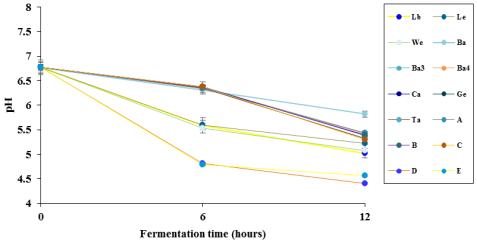
Figure 1 shows the pH variation of different starter-fermented pastes. The results showed a significant reduction (P˂ 0.001) in the pH of the starter fermented pastes during fermentation. The pH values with the lowest records in the pastes during fermentation were obtained with states D, E and F. At 12 h of fermentation, these pastes recorded pH values of 4.41 ± 0.02; 4.56 ± 0.03; and 4.61 ± 0.01 respectively.
Figure 1. Variation in pH of different pastes fermented with starters. Lb: Lactobaccillus fermentum L8.1/4; Le: Leuconostoc L8.2/6; We: Weissella confusa L8.1/2; Ba: Baccillus amyloliquefaciens E2/1-4; Ba3: Baccillus amyloliquefaciens G2/1-3; Ba4: Baccillus amyloliquefaciens G2/1-4; Ca: Candida tropicalis b2/1-3; Ge: Galactomyces geotricum D3/4-1; Ta Trametes hirsuta. A2/4-1; A: StarterA; B: Starter B; C: Starter C; D: Starter D; E: Starter E, F: Starter F.
3.2. Influence of Starters on the Microbiological, Physicochemical, and Organoleptic Quality of “attiéké”
3.2.1. Microbiological Quality
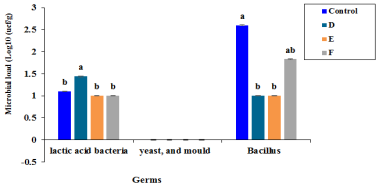
Figure 2 shows the lactic acid bacteria, Bacillus, yeast, and mould loads of “attiéké” from different fermentations. The results show that there are significant differences (P˂ 0.001) in the lactic acid bacteria and Bacillus loads between the different samples. Lactic acid bacteria loads in the attiéké with starter D were significantly higher (P˂ 0.001) than those of the control attiéké and in the attiéké fermented with starter E and F. In terms of Bacillus, the microbial loads in the fermented attiéké by starter F were significantly identical (P> 0.05) to the control. However, compared to the control, the fermented Bacillus loads in the attiéké of starter D and E were lower (P˂ 0.001).
Figure 2. Microbial load of attiéké according to starter cultures. D: Starter D; E: Starter E, F: Starter F.
3.2.2. Physicochemical Quality
The concentrations of sucrose, glucose, fructose, lactic acid, acetic acid and ethanol, as well as the pH of the “attiéké” obtained from different fermentations compared to the traditional “attiéké” from Dabou, are shown in Table 2. Compared to the control, the pH and the concentrations of sucrose, lactic acid, and acetic acid in “attiéké” F were significantly identical to and different from those of “attiéké” D and E. Unlike the other physicochemical parameters, the concentrations of glucose and fructose in “attiéké” F were zero. Ethanol concentrations were recorded in “attiéké” D, E, and F, but not in the control.
Table 2. Physicochemical characteristics of “attiéké” produced from starters.

Physicochemical parameters

“Attiéké” samples

Control

Starter D

Starter E

Starter F

pH

4.60± 0.01a

4.09±0.01b

4.11±0.01b

4.56±0.01a

Sucrose (g/L)

4.8 ± 0.01a

24.4±1.56a

20.24±1.88a

7.43±0.02b

Glucose (g/L)

6.35± 0.01a

6.25±0.01a

5.00±0.01a

0

Fructose (g/L)

0

0

0

0

Ethanol (g/L)

0

0.30±0.01a

0.2±0.01a

0.1±0.01a

Lactic acid (g/L)

4.45± 0.01a

0.20±0.01b

0.70± 0.01b

4.33±0.01a

Acetic acid (g/L)

1.35±0.01b

2.61±0.01a

2.21± 0.01a

1.36±0.01b

Values in the same line with the same letter are not significantly different from each other according to Tukey's multiple comparison test at the 5% threshold. Values are expressed as Mean ± Standard Deviation (n = 3 trials). D: Starter D; E: Starter E; F: Starter F.
3.2.3. Discrimination of the Different "attiéké" Products
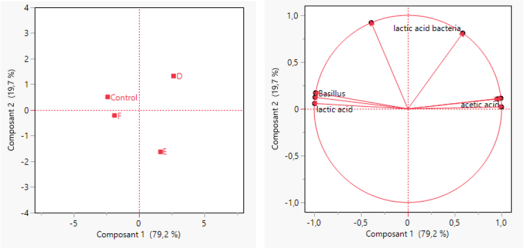
The biochemical variability of the fruits was described using principal component analysis (PCA). The analysis of the principal components carried out with all the biochemical variables measured allowed the distribution of the “attiéké” and placed them according to their nutritional potential in the plane formed by the F1 and F2 axes, as shown in Figure 3. The main axes noted F1 and F2 have a contribution of 98.90% to the total variability, i.e. an individual contribution of 79.20% for the Fl axis and 19.70% for the F2 axis. The representation of the “attiéké” in the plane formed by the FI and F2 axes showed a strong correlation between the control “attiéké” and that prepared with the F starter. These “attiéké” are characterised by low concentrations of sugar and organic acid and a high load of lactic bacteria and Baccillus. They are also characterised by high pH.
Figure 3. Principal component analysis of biochemical and microbiological variables of attiéké in the plan. D: Starter D; E: Starter E, F: Starter F.
3.3. Organoleptic Quality
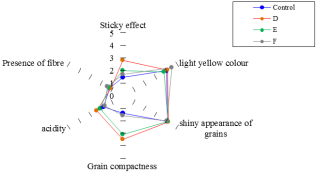
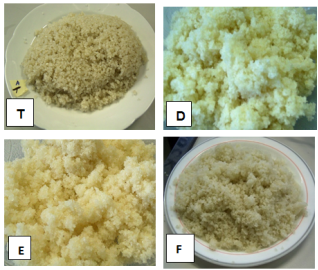
Figure 4 represents the sensory profile of the fermented starter “attiéké” compared to the traditional attiéké of Dabou. The results obtained showed a variability in the sensory profiles of the different attiéké. The fermented attiéké with starter F and the control attiéké are significantly close to all the descriptors evaluated. These “attiéké” were characterised by a yellow color, shiny grains, less sticky and detached. They contained less fibre and had less acidic tastes. Unlike these attiéké, the “attiéké” fermented with starter D is stickier and less detached while that obtained with starter E is also less detached. The physical appearance of all the “attiéké” is presented in Figure 5.
Figure 4. Sensory profile of “attiéké” according to starters. D: Starter D; E: Starter E; F: Starter F.
Figure 5. Aspect of the Attiéké » of the “attiéké” according to the starters. T: Control, D: Starter D; E: Starter E; F: Starter F.
4. Discussion
To control cassava dough, starters were used and the resulting fermentation product was used to obtain “attiéké’. It should be noted that starter F leads to fermentation of cassava dough and makes it possible to obtain an "attiéké" close to the control "attiéké", from a sensory and physicochemical point of view. The effectiveness of this starter lies in the nature and behaviour of the strains that make up it. In fact, the lactic strains of starter F (L. fermentum L8.1/4 and W. confusa L8.1/2) produce an acid pH of 4.61 ± 0.25 in 12 hours of fermentation. This pH is favourable for the growth of lactic strains, but also of Bacillus strains (B. amyloliquefaciens E2 / 4-4, B. amyloliquefaciens G2/1-4, C) and yeast mould strains (T. tropicalis b2 / 3 and T. hirsuta. A2/4-1) throughout the duration of the fermentation process .
One of the most critical aspects of the quality of “attiéké” is the microbial load, which determines not only the food safety, but also the organoleptic properties of the product. Starter F, composed of lactic strains such as L. fermentum L8.1/4 and W. confusa L8.1 / 2 promotes an acid environment during fermentation, which is crucial to inhibit the growth of pathogens and unwanted microorganisms. Weissella has been identified as an identity strain of Dabou “attiéké” ferments compared to those of the Ebrié people whose dominant strain is Leuconostoc The Bacillus strains present in the starter, including B. amyloliquefaciens, also provide beneficial enzymes, which facilitate the degradation of polysaccharides and increase the availability of nutrients during the fermentation process .
Furthermore, the respective loads of lactic acid bacteria, Bacillus, and yeast, measured in the final product, indicate a balanced microbiology that promotes a high-quality attiéké. This balance is essential to ensure not only microbiological safety, but also the enrichment of flavours and aromas. In the study conducted by Krabi et al., the load of lactic acid bacteria in attiéké was less than 10 cfu/g This load is close to that recorded in our study with a load of 10 cfu/g.
Physicochemical parameters, such as pH, acid concentration (lactic acid and acetic acid), and sugar content, are crucial indicators of the quality of “attiéké”. In the case of starter F, the pH of attiéké was 4.56 after 12 hours of fermentation, indicating a favourable acidification that does not harm the probiotic strains. This level of acidity contributes to the flavour, preservation, and texture of the product. An optimal pH also promotes the solubility of nutrients and the absorption of aromas, thus complementing the organoleptic characteristics of “attiéké” According to these authors, the optimal pH for a good attiéké is between 4 and 5.
Regarding other physicochemical parameters, the acid concentrations (lactic and acetic) were in line with those of the reference “attiéké”, suggesting a balanced fermentation that preserves traditional organoleptic qualities while providing new nuances that are acceptable to consumers. The sensory quality of “attiéké” is a factor that greatly influences acceptability The sensory analyses carried out show that “attiéké” produced with starter F has sensory characteristics very close to those of Dabou “attiéké”, both in taste and texture and aroma. The fermentation process, optimised by the use of this starter, promotes the formation of volatile compounds and acids that contribute to the aromatization of the product. For its part, it is also influenced by the degradation of complex polysaccharides by yeast and mould enzymes. The softening of cassava tissues contributes to a more pleasant mouthfeel and better palatability
5. Conclusion
It emerges from this study that the use of starter F for the production of “attiéké” presents an innovative approach that promotes a microbiological, physicochemical and sensory quality perfectly aligned with the standards of Dabou “attiéké”. This starter contains strains of Lactobaccillus fermentum, Leuconostoc, Weissella confusa, Baccillus amyloliquefaciens, Candida tropicalis, Galactomyces geotricum, and Trametes hirsuta. The “attiéké” produced with this starter is yellow in colour, has shiny grains, and is less sticky and detached. The use of this starter not only guarantees food safety, but also improves flavour, helping to meet consumer expectations while preserving traditional know-how. Therefore, this standardisation could facilitate large-scale production without compromising product quality, opening new perspectives for the Ivorian food industry.
Abbreviations

FAO

Food and Agricultural Organizations

HPLC

High-Performance Liquid Chromatography

IAC

Improved African Cassava

ISO

International Organization for Standardization

MRS

Man Rogosa Sharp broth

NF

Norme Français

PCA

Principal Component Analysis

pH

Hydrogen Potential

Author Contributions
Pierre Martial Thierry Akely: Conceptualization, Formal Analysis, Methodology
Kouakoua Yapi Elisée: Investigation, Data curation, Writing - original draft
Abouo N’Guessan Verdier: Writing - review & editing, Validation
N’Guessan Georges Amani: Validation, Visualization, Supervision
Conflicts of Interest
The authors declare no conflicts of interest.
References
[1] Djeni, N. T., Toka, D. M., Kouame, K. A., & DJE, K. M. Quality of attiéké (a fermented cassava product) from the three main processing zones in Côte d'Ivoire. Food Research International. 2011, 44, 410-416.
[2] Krabi, E. R., Assamoi, A. A., Ehon, A. F., Bréhima, D., Niamké, L. S., & Thonart, P. Production d’attieke (couscous à base de manioc fermenté) dans la ville d’Abidjan. European Scientific Journal. 2015, 11(15). ISSN: 1857-7881 (Print) e-ISSN 1857-7431.
[3] Assanvo, J. B., Agbo, G. N., Coulin, P., Monsan, V., Heuberger, C., Kati-Coulibaly, S., & Farah, Z. Influence of microbiological and chemical quality of traditional starter made from cassava on “attiéké” produced from four cassava varieties. Food Control. 2017, 78, 286-296.
[4] Alamu, E. O., Abass, A., Maziya-Dixon, B., Diallo, T. A., Sangodoyin, M. A., Kolawole, P., Tran, T., Awoyale, W., Kulakow, P., Parkes, E., Kouame, K. A., Kouame, K., Amani, K., Appi, A., & Dixon, A. Report on the status of attiéké production in Côte d’Ivoire. IITA, Ibadan, Nigeria. 2019. 37 pp.
[5] Trazié, B. A. Y. Préférence des consommateurs et filière de l’attiéké en Côte d’Ivoire: Impacts d’une démarche d’indication géographique. Revue Internationale des Etudes du Développement. 2019, 3, 89-114. CSRS, 2016, Rapport d’activité 2014-2015, Rapport bimensuel, Abidjan, Côte d’Ivoire: Centre Suisse de Recherches Scientifiques en Côte d’Ivoire, 305p.
[6] Recensement Général de la Population et de l’Habitat, 2021, résultats globaux. INS. 2022, 37 p.
[7] FAO. Global cassava market study - Business opportunities for the use of cassava chips industry. Food and Agricultural Organisation, Rome, Italy. 2004, 4 p.
[8] FAO. Perspectives de l’alimentation 2007. Analyse des marchés mondiaux. Système mondial d’information et d’alerte rapide sur l’alimentation et l’agriculture (SMIAR), Division du commerce international et des marchés (EST). FIAT/PANIS, Food and Agricultural Organisation, Rome, Italy. 2006, 1-71.
[9] Boli Zamblé Bi Irié, Bouatenin Koffi Maïzan Jean-Paul, Kouamé Kohi Alfred, Coulibaly Wahauwouele Hermann, Kakou Abodjo Celah, Rose Koffi-Nevry, & Dje Koffi Marcellin. Technical Sheet of the Preparation of Traditional Cassava Starters Used for Attieke Production in Côte d’Ivoire. Biotechnology Journal International. 2020, 24(4), 11-20.
[10] Sharma, R., Garg, P., Kumar, P., Bhatia, S. K., & Kulshrestha, S. Microbial Fermentation and Its Role in Quality Improvement of Fermented Foods. Fermentation. 2020, 6(4), 106.
[11] Fraqueza, M. J., Patarata, L., & Lauková, A. Protective starter cultures and bacteriocins in fermented meats. In Zdolec, N. (ed.), Fermented meat products: health aspects. CRC Press, New York, 2016, 228-269.
[12] Sulieman, A. M. E. Starter Cultures: Nature, Types, Characteristics, Preparation and Maintenance. In Elhadi Sulieman, A. M., & Adam Mariod, A. (eds), African Fermented Food Products - New Trends. Springer, Cham. 2022.
[13] Holzapfel, W. H. Appropriate starter culture technologies for small-scale fermentation in developing countries. International Journal of Food Microbiology. 2002, 75(3), 197-212.
[14] Buttiaux, R., Beerens, H., & Taquet, A. Manuels de techniques bactériologiques (4ème éd.). Flammarion, Paris. 1974, 70 p.
[15] AOAC (Association of Official Analytical Chemists). Official methods of analysis (15th ed.). Washington, DC. 1990.
[16] Saska, M., & Zapata, N. G. Some observations on feasibility of recovering aconitic acid from low purity sugarcane liquors. International Sugar Journal. 2006, 108, 203-208.
[17] Wang, H., Li, L. H., Peng, Z., Li, O., Bo, C., Ying, L., Yaya, C., Yan, Z., & Jinsha, Z. Simultaneous determination of fructose, glucose and sucrose by solid phase extraction-liquid chromatography-tandem mass spectrometry and its application to source and adulteration analysis of sucrose in tea. Journal of Food Composition and Analysis. 2021, 96, 103730.
[18] Tsenang, M., Pheko-Ofitlhile, T., Mokgadi, J., Masamba, W., & Phokedi, G. N. Quantification of ethanol and identification of other chemical constituents in homemade morula beer using gas chromatography-mass spectrometry (GC-MS). African Journal of Food Science. 2023, 17(7), 148-153.
[19] Lawless, H. T., & Heymann, H. Sensory Evaluation of Food: Principles and Practices (2nd ed.). Springer. 2010, XXIII, 596.
[20] Ogunbanwo, S. T., & Odugbemi, T. Effect of inoculum size on the production of lactic acid by Lactobacillus plantarum. African Journal of Biotechnology, 2009, 8(17), 4196-4200.
[21] Kouadio, E. J., & N’Guessan, K. (2015). Effect of inoculum size on the fermentation of cassava into attiéké. African Journal of Microbiology Research, 9(25), 1683-1689.
[22] Toka Marie Djégba, Jean-Paul Koffi Maïzan Bouatenin, Alfred Kohi Kouamé, & Marcellin Koffi Djè. Dynamique des Bactéries Lactiques des ferments traditionnels de manioc (Manihot Ecsulenta, Crantz) destinée à la production de l’attieke Adjoukrou, Ahizi et Ebrié, en Côte d’Ivoire. Journal of Applied Biosciences. 2018, 125, 12531-12541.
[23] Gänzle, M. G. (2015). Lactic metabolism revisited: metabolism of lactic acid bacteria in food fermentations and food spoilage. Current Opinion in Food Science, 2, 106-117.
[24] Yéboué, K. H., Amoikon, K. E., Kouamé, K. G., & Kati-Coulibaly, S. Valeur nutritive et propriétés organoleptiques de l’attiéké, de l’attoukpou et du placali, trois mets à base de manioc, couramment consommés en Côte d’Ivoire. Journal of Applied Biosciences. 2017, 113, 11184-11191.
Cite This Article
  • APA Style

    Thierry, A. P. M., Kouakoua, Y. E., Abouo, N. V., Coulibaly, A., Amani, N. G. (2024). Optimisation of the “attiéké” Fermentation Process: Evaluation of the Efficiency of Various Starter Ferments. Journal of Food and Nutrition Sciences, 12(6), 261-269. https://doi.org/10.11648/j.jfns.20241206.12

    Copy | Download

    ACS Style

    Thierry, A. P. M.; Kouakoua, Y. E.; Abouo, N. V.; Coulibaly, A.; Amani, N. G. Optimisation of the “attiéké” Fermentation Process: Evaluation of the Efficiency of Various Starter Ferments. J. Food Nutr. Sci. 2024, 12(6), 261-269. doi: 10.11648/j.jfns.20241206.12

    Copy | Download

    AMA Style

    Thierry APM, Kouakoua YE, Abouo NV, Coulibaly A, Amani NG. Optimisation of the “attiéké” Fermentation Process: Evaluation of the Efficiency of Various Starter Ferments. J Food Nutr Sci. 2024;12(6):261-269. doi: 10.11648/j.jfns.20241206.12

    Copy | Download

  • @article{10.11648/j.jfns.20241206.12,
      author = {Akely Pierre Martial Thierry and Yapi Elisée Kouakoua and N’Guessan Verdier Abouo and Aïssatou Coulibaly and N’Guessan Georges Amani},
      title = {Optimisation of the “attiéké” Fermentation Process: Evaluation of the Efficiency of Various Starter Ferments
    },
      journal = {Journal of Food and Nutrition Sciences},
      volume = {12},
      number = {6},
      pages = {261-269},
      doi = {10.11648/j.jfns.20241206.12},
      url = {https://doi.org/10.11648/j.jfns.20241206.12},
      eprint = {https://article.sciencepublishinggroup.com/pdf/10.11648.j.jfns.20241206.12},
      abstract = {Standardising the production of “attiéké”, Côte d'Ivoire's traditional food requires optimisation of the fermentation process, which is essential to ensure the microbiological and organoleptic quality of the product. The overall aim is to standardise the production of “attiéké” by controlling the fermentation process through the use of starter ferments. This study compared the “attiéké” produced with various starter ferments (A, B, C, D, E, F) with a reference sample from Dabou. The effectiveness of the starters was assessed by measuring microbial loads (lactic acid bacteria, Bacillus, yeasts, moulds), analysing physicochemical parameters (pH, sugars, ethanol, and organic acids), and sensory evaluation of organoleptic characteristics. The results of the statistical tests (ANOVA and PCA) showed that “attiéké” from the starter F, containing strains of L. fermentum, W. confusa and Bacillus and Candidas, is closest to the reference sample. With 1.83± 0.01 log10 cfu/g of Bacillus, 1 ± 0.01 log10 cfu/g of lactic bacteria, a pH of 4.56 ± 0.01 and glucose concentrations of glucose (7.4 ± 0.02 g/L), lactic acid (4.33 ± 0.01 g/L) and acetic acid (1.36 ± 0.01 g/L), starter F was particularly effective. Sensory analyses also indicate that the “attiéké” made with this starter has appreciated organoleptic characteristics, such as yellow colour, shiny grains, less stickiness, and detachment. These results show that the use of specific starters can improve the quality, consistency, and organoleptic attributes of the quality, consistency, and organoleptic attributes of “attiéké” production, while respecting the environment.
    },
     year = {2024}
    }
    

    Copy | Download

  • TY  - JOUR
    T1  - Optimisation of the “attiéké” Fermentation Process: Evaluation of the Efficiency of Various Starter Ferments
    
    AU  - Akely Pierre Martial Thierry
    AU  - Yapi Elisée Kouakoua
    AU  - N’Guessan Verdier Abouo
    AU  - Aïssatou Coulibaly
    AU  - N’Guessan Georges Amani
    Y1  - 2024/11/20
    PY  - 2024
    N1  - https://doi.org/10.11648/j.jfns.20241206.12
    DO  - 10.11648/j.jfns.20241206.12
    T2  - Journal of Food and Nutrition Sciences
    JF  - Journal of Food and Nutrition Sciences
    JO  - Journal of Food and Nutrition Sciences
    SP  - 261
    EP  - 269
    PB  - Science Publishing Group
    SN  - 2330-7293
    UR  - https://doi.org/10.11648/j.jfns.20241206.12
    AB  - Standardising the production of “attiéké”, Côte d'Ivoire's traditional food requires optimisation of the fermentation process, which is essential to ensure the microbiological and organoleptic quality of the product. The overall aim is to standardise the production of “attiéké” by controlling the fermentation process through the use of starter ferments. This study compared the “attiéké” produced with various starter ferments (A, B, C, D, E, F) with a reference sample from Dabou. The effectiveness of the starters was assessed by measuring microbial loads (lactic acid bacteria, Bacillus, yeasts, moulds), analysing physicochemical parameters (pH, sugars, ethanol, and organic acids), and sensory evaluation of organoleptic characteristics. The results of the statistical tests (ANOVA and PCA) showed that “attiéké” from the starter F, containing strains of L. fermentum, W. confusa and Bacillus and Candidas, is closest to the reference sample. With 1.83± 0.01 log10 cfu/g of Bacillus, 1 ± 0.01 log10 cfu/g of lactic bacteria, a pH of 4.56 ± 0.01 and glucose concentrations of glucose (7.4 ± 0.02 g/L), lactic acid (4.33 ± 0.01 g/L) and acetic acid (1.36 ± 0.01 g/L), starter F was particularly effective. Sensory analyses also indicate that the “attiéké” made with this starter has appreciated organoleptic characteristics, such as yellow colour, shiny grains, less stickiness, and detachment. These results show that the use of specific starters can improve the quality, consistency, and organoleptic attributes of the quality, consistency, and organoleptic attributes of “attiéké” production, while respecting the environment.
    
    VL  - 12
    IS  - 6
    ER  - 

    Copy | Download

Author Information
  • Science and Technology, Section (SVT), Ecole Normale Supérieure, Abidjan, Côte d'Ivoire

  • Laboratory of Food Biochemistry and Transformation of Tropical Products, Nangui Abrogoua University, Abidjan, Côte d’Ivoire
  • Biotechnology, Agriculture and Biological Resources Development Laboratory, Félix Houphouët-Boigny University, Abidjan, Côte d’Ivoire; Laboratory for Industrial Processes for Synthesis of the Environment and New Energies, Félix Houphouët-Boigny National Polytechnic Institute, Yamoussoukro, Côte d’Ivoire

  • Laboratory of Food Biochemistry and Transformation of Tropical Products, Nangui Abrogoua University, Abidjan, Côte d’Ivoire

  • Laboratory of Food Biochemistry and Transformation of Tropical Products, Nangui Abrogoua University, Abidjan, Côte d’Ivoire

  • Abstract
  • Keywords
  • Document Sections

    1. 1. Introduction
    2. 2. Materials and Methods
    3. 3. Results
    4. 4. Discussion
    5. 5. Conclusion
    Show Full Outline
  • Abbreviations
  • Author Contributions
  • Conflicts of Interest
  • References
  • Cite This Article
  • Author Information