Research Article | | Peer-Reviewed

Neuroprotective Effect of a Nutraceutical Formulated with Pouteria campechiana’s and Lannea microcarpa’s Fruits on Alzheimer’s Disease

Received: 27 October 2025     Accepted: 11 November 2025     Published: 29 December 2025
Views:       Downloads:
Abstract

Oxidative stress is a famous factor that may trigger Alzheimer’s disease through the disruption of the redox balance to result to free radicals species, harmful for the brain. Fruits harbor antioxidant compounds that may preserve the brain against Alzheimer’s disease. Some include phenolic compounds, unsaturated fatty acids and triterpenoids. This work was aimed at evaluating the neuroprotective activity of a nutraceutical made with Lannea microcarpa’s and Pouteria campechiana’s fruits on a model of oxidative stress-induced Alzheimer’s disease rats. Lannea microcarpa’s ethyl acetate and Pouteria campechiana’s hexanic fractions were made by partitioning the hydroethanolic extract (20:80) of Lannea microcarpa’s fruit pulp and the ethanolic extract of Pouteria campechiana’s pulp fruit in ethyl acetate and n-hexane respectively. Antioxidant activities of both fractions were determined by DPPH and FRAP assays. A simplex lattice mixture design was done and the selected mixture was used as nutraceutical. Gas chromatography-mass spectrometry was performed to determine the phytochemical composition of fractions. AlCl3 at 15 mg/kg bw was administered to 3 months rats; and the different treatments were administered every day by oral route. Behavioral assessment was carried out by Morris water maze and Open field tests. Malondialdehyde, nitric oxide, catalase, reduced glutathione, γ-aminobutyric acid, and acetylcholinesterase were determined in the brain. Red congo was used for brain analysis. Data were analyzed with SPSS 22.0 using one-way ANOVA and MINITAB 20.0. The mixture L. microcarpa’s fraction/P. campechiana’s fraction (62.5: 37.5) was selected. Major compounds detected in Lannea microcarpa’s and Pouteria campechiana’s fractions were phenolic compounds, triterpenoids and fatty acids. Treatment of animals with the nutraceutical increased the spatial and learning memory in the Morris water and open field mazes. Levels of malondialhedyde (1.969 ± 0.09) × 10-6 µM), nitric oxide (9.551 ± 0.296a µM), acetylcholinesterase ((4.515 ± 0.268) × 10-6 µM/mg protein) reduced, and γ-aminobyturic acid (36.238 ± 1.833 µg/ml) increased. The non-treated group showed amyloid plaques and neurodegenerative features like cell pyknosis, cell vacuolation and neuron loss. Bioactive compounds contained in the nutraceutical could be targeted as acetylcholinesterase inhibitors and anti-amyloidogenic therapeutics.

Published in Journal of Food and Nutrition Sciences (Volume 13, Issue 6)
DOI 10.11648/j.jfns.20251306.15
Page(s) 353-370
Creative Commons

This is an Open Access article, distributed under the terms of the Creative Commons Attribution 4.0 International License (http://creativecommons.org/licenses/by/4.0/), which permits unrestricted use, distribution and reproduction in any medium or format, provided the original work is properly cited.

Copyright

Copyright © The Author(s), 2025. Published by Science Publishing Group

Keywords

Lannea microcarpa, Pouteria campechiana, Antioxidant, Neuroprotective, Alzheimer’s Disease

1. Introduction
Alzheimer’s disease (AD) is a neurodegenerative disease that affects the brain cortex and lead to memory loss. It is currently the most common dementia that affects people in the world, with a worldly prevalence of 50 million . Predicting factors that may lead to the onset of AD are toughly understood. Nevertheless, oxidative stress (OS) through several pathways is reported as an enhancer of the disease. The mechanism underlying OS is the generation of free radicals harmful for the brain, ending up with AD’s hallmarkers formation . Commonly treatments used in AD are acetylcholinesterase inhibitors (AChEIs) such as donepezil, galantamine, and rivastigmine; and N-methyl-D-aspartate receptor antagonist (memantine). Due to the huge economic burden related to their use, and their inability to bring about a complete healing, other ways to overcome AD are highly recommended . In this line, food remains a good alternative. Besides the nutritive requirements necessary for body growth it provides, it also harbors health enhancers that are beneficial for the brain as they can prevent oxidative damage; and by so doing, enhance neuroprotection. Resveratrol is a polyphenol highly contained in fruits and nuts that has an activity against β-amyloid plaques formation . Stigmasterol is a phytosterol capable of counteracting neuron damage and enhancing neurogenesis in the brain . Sitosterol is a phytosterol that has been reported to improve cognitive decline in AD . As shown above, these compounds act by different mechanisms in neuroprotection, so make a product that would contain varied types of these compounds might increase the product’s efficacy on AD. Lannea mcrocarpa’s and Pouteria campechiana’s fruits are two interesting candidates. The first harbors phenolic compounds with antioxidant and anti-cholinesterasic properties ; while the second revealed the presence of carotenoids, triterpenoids and polyunsaturated fatty acids (PUFAs) with antioxidant and anti-amyloidogenic properties . These compounds may not be regularly available for human welfare since fruits are seasonal; hence they can be used to manufacture nutraceuticals. These refer to compounds contained in food that enhance health by preventing or curing diseases, beyond the food nutritive value . In our previous studies, we found out that Lannea microcarpa’s flesh hydroethanolic extract had the highest antioxidant activity , and Pouteria campechiana’s flesh ethanolic extract had the best antioxidant activity compared to the other extracts analyzed. This was related to bioactive phenolic compounds occurring in the extracts and conferring them a neuroprotective activity. Nevertheless, we lack knowledge on the specific compounds responsible for this activity in the extracts. Besides, we would like to find out whether the association of compounds from the two different fruits’ extracts could increase the neuroprotective activity on AD’s related parameters. This study was therefore designed to evaluate the neuroprotective activity of a nutraceutical made with Lannea microcarpa’s and Pouteria campechiana’s fleshes on AD’s physiopathology.
2. Material and Methods
2.1. The Plant Material
2.1.1. Extraction in Solvents
Lannea microcarpa’s hydroethanolic extract was obtained by macerating the fruit flesh powder in a mixture ethanol-water (80:20) (1w: 10v) for 48 hours; and Pouteria campechiana’s ethanolic extract by macerating the fruit flesh powder in ethanol (1w: l0v) for 48 hours. After the mixture was filtered with the Whatman paper No 4, the residue was once again macerated in the same solvent (1w: 6v) for 24 hours to increase the yield of extraction . The filtrate obtained was air-dried at 45°C for 48 hours an oven. The crude extracts obtained were each dissolved in ethanol, and then partitioned in a ternary solvent system composed of n-hexane, ethyl acetate and n-butanol. The n-hexanic filtrate was evaporated at 70°C, the ethyl acetate filtrate at 78°C, and the n-butanolic filtrate at 120°C after the partition. The remaining residues obtained after the evaporation was air-dried in the oven at 45°C to obtain the crude fractions.
2.1.2. Antioxidant Activity of the Fruits’ Fractions
(i). DPPH Scavenging Test
This test is based on the transfer of hydrogen atom from an antioxidant compound to DPPH radical. The antioxidant power of a solution is observed when the blue-coloured solution turns to pale yellow . The samples were prepared at different concentrations (2000 µg/ml, 1000 µg/ml, 500 µg/ml, 250 µg/ml, and 125 µg/ml). The percentage of inhibition of fruits’ fractions was calculated using the following formula:
Inhibition%=ADPPH-Asample ADPPH ×100
The antioxidant capacity of fruits’ fractions was expressed by the concentration of the fruit’s fraction necessary to scavenge DPPH radical by 50%. This was determined from the equation y = ax + b obtained from the standard curve.
(ii). Ferric Reducing Antioxidant Power (Frap) Assay
This test is based on the transfer of electrons from the sample to Fe3+-TPTZ (2,4,6-tripyridyls-triazine) complex. The latter generates a blue-coloured compound which maximally absorbs at 593nm. The fruit sample’s capacity to reduce ferric ion to ferrous ion was expressed as Fe2+ equivalent which are µM or FRAP value . This was determined from the equation y = ax + b obtained from the standard curve.
2.1.3. Analysis of Compounds by Chromatography Coupled to Mass Spectrometry
Volatile compounds are separated based on their affinity with either phase. The more volatile compounds highly interact with the gas mobile phase and move faster through the column; whereas the less volatile compounds interact more with the silicone grease stationary phase and move slowly through the column. The detector generates different peaks of the compounds present in the sample based on their retention time (RT). Compounds that move rapidly in the column appear fast on the chromatogram and compounds that move slowly take more time to appear. The compound’s name is given based on already available data of compounds’ RT.
For chromatography, 1g of the fruit fraction was mixed with 5 ml of methanol. Thereafter, the mixture was vigourously homogenized. The resulting solution was then used for chromatography. GC-MS apparatus was an Agilent 8890N GC coupled to a single Agilent 5977N quadrupole mass spectrometer. The GC was fitted with an Rtx-5MS capillary column (30 m x 0.25 mm ID x 0.25 m df) composed of 5% diphenyl / 95% dimethyl poly siloxane stationary phase. The carrier gas used was Helium at a column flow rate of 1 mL/min. The inlet line temperature was 290°C and the pressure 22.33 psi. An Agilent 7683 autosampler was used to inject 2 µL of the sample in the splitting mode 10:1. Oven temperature was initially set at 110°C, increased 10°C/min-no hold to 200°C, then increased at a rate of 5°C/min-12 min hold to a final temperature of 280°C. The total GC running time was 40.5 min. The mass spectrometer was operated in the electron impact (EI) mode at 70 eV ionization energy. The MS inlet line temperature was set at 290°C, and the MS source temperature was at 250°C. The total MS running time was 40.5 min.
2.1.4. Mixture Design
(i). Type of the Mixture Design
The simplex lattice design was used. The sum of the proportions of both mixed components used was 100%. The components of the mixture were chosen based on compounds present in the fractions known to have antioxidant properties. The selected factors were Lannea microcarpa’s ethyl acetate fraction (LMEA) and Pouteria campechiana’s hexanic fraction (PCH). LMEA was targeted for fruit’s availability and phenolic compounds’ content. Likewise, PCH was selected based on its fruit’s availability and phytosterols’ content.
(ii). Choice of the Domain of Factors
The choice of the domain of variation of each factor was based on previous works performed as well as preliminary tests done in the laboratory (Table 1).
Table 1. Definition of the experimental design.

Factors

Range (%)

Lowest level (%)

Highest level (%)

LMEA

60 - 70

60

70

PCH

30 - 40

30

40

LMEA: Lannea microcarpa’s ethyl acetate fraction, PCH: Pouteria campechiana’s hexanic fraction.
(iii). Generation of the Matrix of Real and Coded Values
After the determination of the domain of variation of both factors, Minitab 20.0 was used to generate the number of assays according to the simplex lattice design based on two factors (Table 2).
Table 2. Matrix of real and coded values obtained from a simplex lattice design mixture at two factors.

Order Std

Order Assay

Type Pt

Blocks

LMEA

PCH

5

1

-1

1

47.5

52.5

3

2

0

1

55

45

4

3

-1

1

62.5

37.5

2

4

1

1

40

60

1

5

1

1

70

30

LMEA: Lannea microcarpa’s ethyl acetate fraction, PCH: Pouteria campechiana’s hexanic fraction.
(vi). Evaluation of Responses
Both fractions used in this study harbor bioactive compounds such as polyphenols, flavonoids, phytosterols, PUFAs and terpenoids; which may be dotted with significant antioxidant activity. The responses of this mixture were therefore generated by evaluating the antioxidant activity of the different assays by DPPH scavenging and FRAP assays.
(v). Formulation of the Nutraceutical
The mixture that gave the best response was used to formulate the nutraceutical. The paraffin oil was used to dissolve and stabilize the mixture of fractions at the concentration of 10 mg of mixture / ml of oil (10w: 1v).
2.2. The Animal Material
2.2.1. Allotment of Animals and Different Treatments Administered
Female wistar rats of 3 months weighing 180 to 200 g, were randomly allotted into 07 groups of 5 rats to start the experiment. In this model, the experiment lasted 15 weeks, and aluminum chloride (AlCl3) 15 mg/kg b.w prepared in a saline solution 0.9% was administered five times per week by intraperitoneal injection to induce oxidative stress in rats except the normal control. The induction was done by administering AlCl3 to rats over 8 weeks. One week was used to carry out behavioural assessment with the animals before the treatment starts. The fruits’ fractions (50 mg/kg bw), the nutraceutical (50 mg/kg bw) and the excipient (5ml/kg bw) were then used to treat animals. Donepezil (0.35 mg/kg bw) was used as standard drug. They were treated by oral route every day for 6 weeks.
2.2.2. Behavioural Assessment
(i). Morris Water Maze
Rodents are warm-blooded animals that naturally dislike cold. So this test is based on the tendency of rodents to remember and deposit upon a visible platform put in a waterpool containing cold water. The Morris water maze (MWM) apparatus was set up as described by . The waterpool was an apparatus of 60 cm in length with a diameter of 180 cm, divided into four quadrants with one containing a platform at its center, found 1 cm below the water level. Four different cues were found in the different quadrants, just above the water level to allow animals to easily find themselves during each passage. Each rat was given 60 s in the pool until it has found the platform. Before the test, all animals underwent two trials along which they were trained to develop spatial memory to easily recognize the position of the platform. During the training, each rat was given 90s to deposit on the platform, and 10 s once on the platform. Rats that did not succeed the task after 90 s, were delicately guided by the experimenter to the platform and were allowed 10 s upon it. A camera was used to record videos during the experiment and the data collected were the escape latency and the percent time spent in the quadrant containing the platform.
(ii). Open Field Test
The Open field test (OFT) was first described by to evaluate anxiety in rodents. This test is based on the locomotion of animals in an open field where they cannot escape. The rate of animal’s mobility in the field helps to evaluate anxiety and brain dysfunction as well. The open field apparatus was square-shaped measuring 70 cm in length with a height of 30 cm. At the floor base, the surface of the tool was marked by a central part (central square) and peripheral parts, and was covered with a transparent glass. During the test, each animal was placed at the central square of the tool, and was allowed 5 min to explore the apparatus. The passage of the animal was recorded by a camera. Data recorded were the number of defecations and the tendency to escape the field.
2.2.3. Sacrifice of Animals and Sample Collection
On the 106th day, animals were sacrificed by ketamine/diazepam injection. The brain was collected by cervical dislocation. The brain after being removed from the animal was immerged and cleaned in physiological water (NaCl 0.9%) before it was kept in the fridge at 0°C.
2.2.4. Sample Preparation for Biochemical Analysis
The brain homogenate was made by crushing 0.5 g of the brain tissue in 5 ml of phosphate buffer (0.1 M, 7.4) prepared in NaCl 0.9%; using a porcelain mortar and pestle. Thereafter, centrifugation at 3000 g for 15 min was carried out and the filtrate was carefully collected using a micropipette. Brain homogenate collected was put in Eppendorf tubes and kept in the freezer at -20°C.
2.2.5. Biochemical Parameters
(i). Determination of Catalase Activity
Catalase activity was determined as described by . The method is based on the reduction of dichromate prepared in acetic acid to chromic acetate when heated in the presence of hydrogen peroxide (H2O2) with the formation of perchloric acid as an unstable intermediate. The chromic acetate thus produced is measured colorimetrically at 570 nm.
(ii). Determination of Reduced Glutathione
Reduced glutathione (GSH) content was determined by the method described by . GSH reacts with thiol reagent DTNB (5,5-dithiobis (2-nitrobenzoic acid)) to form GSSG and TNB yellow color chromophore (5-thionitrobenzoic acid), which has a maximal absorbance at 412 nm.
(iii). Determination of Malondialdehyde
Malondialdehyde (MDA) was determined according to the method described by . Carbonylated compounds like MDA react with thiobarbuturic acid (TBA) to form pink chromophore compounds that have a maximum absorption at 532 nm. MDA is one of many end-products of lipid peroxidation. The test is based on the reaction of MDA with two molecules of TBA at high temperature (80-100°C) and low PH (pH 2).
(iv). Determination of Nitric Oxide
Nitric oxide was determined according to the method of . Nitrite is reduced to nitrogen oxide using Griess Reagent I (sulphanilamide). Then, Nitrogen Oxide reacts with Griess Reagent II (N-(1 Naphthyl) ethylene diamine dihydrochloride), forming a stable product that can be detected by its absorbance at 546 nm.
(v). Evaluation of Acetylcholinesterase Activity
Acetylcholinesterase (AChE) activity was determined according to the method of . The substrate acetylthiocholine (ACh) is added to the sample containing the enzyme AChE. The reaction between ACh and AChE releases thiocholine (Ch) and acetic acid. The released thiocholine reacts with 5,5' dithiobisnitrobenzoate (DTNB) (Ellman reagent) to form a yellow chromatophore 5- thio 2- nitrobenzoic acid (TNB) compound that is highly absorbed at 412 nm.
(vi). Evaluation of GABA
The determination of gamma-aminobutyric acid (GABA) concentration in the biological samples was done calorimetrically according to the method of . In basic conditions, the reaction between ninhydrin and gamma aminobutyric acid (GABA) gives rise to a purple colour, whose intensity is proportional to GABA concentration in the sample.
2.2.6. Histopathological Analysis
The brain was collected from each group of rats. It was then immerged in formaldehyde 10% (v/v) prepared in a saline solution 0.9%, and sent to the laboratory for analysis. Histopathological analysis of the brain was performed as described by . The staining of brain tissue was done using a classic dye hematoxylin/eosin (HE) and then a specific dye red congo.
2.3. Statistical Analysis
All data were analyzed with SPSS 22.0. One-way analysis of variance (ANOVA) with Duncan test was used to compare the sample mean and to classify the treatments in case of significance (P ≤ 0.05). A Post hoc analysis was also used to perform multiple comparisons between the means of two samples after One-ANOVA test was deemed significant. Minitab 20.0 was also used to establish the different mixtures of the mixture design.
2.4. Ethics Approval and Consent to Participate
All experiments carried out on animals in the course of this study were approved by the Animal house care of the University of Dschang (Cameroon); and were in accordance with the internationally accepted standard ethical guidelines for laboratory animals use and care as stipulated in the guidelines of the European Union Institutional Ethics Committee on Animal Care (Council EEC 86/609/EEC of the 24th November 1986). All sections of this report are in line with ARRIVE Guidelines for reporting animal research.
3. Results
3.1. Antioxidant Activity of the Fruits’ Fractions
3.1.1. DPPH Scavenging Test
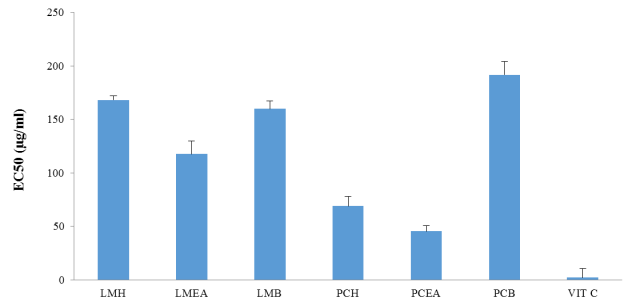
For the fruit P. campechiana, PCEA showed the lowest IC 50 (45.46 ± 5.402 µg/ml), and for L. microcarpa, LMEA gave the lowest IC 50 (117.61 ± 12.108 µg/ml) (Figure 1).
Figure 1. Capacity of plants’ fractions to scavenge DPPH radical.
LMH: Lannea microcarpa’s hexanic fraction, LMEA: Lannea microcarpa’s ethyl acetate fraction, LMB: Lannea microcarpa’s butanolic fraction, PCH: Pouteria campechiana’s hexanic fraction, PCEA: Pouteria campechiana’s ethyl acetate fraction, PCB: Pouteria campechiana’s butanolic fraction, VIT C: Vitamin C.
3.1.2. Ferric Reducing Antioxidant Power (Frap) Assay
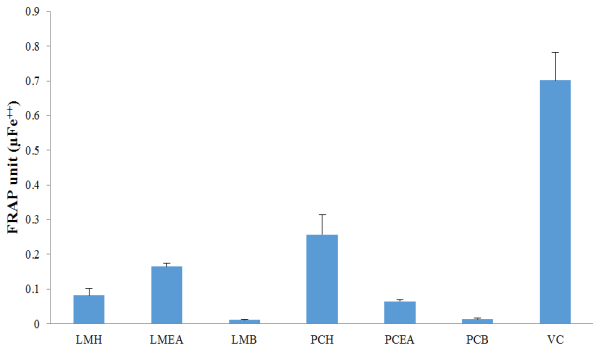
For the fruit P. campechiana, PCH showed the highest FRAP value (0.256 ± 0.057 µM Fe2+), and for L. microcarpa, LMEA gave the highest IC 50 (0.164 ± 0.09 µM Fe2+) (Figure 2).
Figure 2. Capacity of fruits’ fractions to reduce ferric ion.
LMH: Lannea microcarpa’s hexanic fraction, LMEA: Lannea microcarpa’s ethyl acetate fraction, LMB: Lannea microcarpa’s butanolic fraction, PCH: Pouteria campechiana’s hexanic fraction, PCEA: Pouteria campechiana’s ethyl acetate fraction, PCB: Pouteria campechiana’s butanolic fraction, VC: Vitamin C.
3.1.3. Presentation of the Score of Antioxidant Activity of the Different Fruits’ Fractions
Two antioxidant tests were performed in order to choose the fruits’ fractions to be used for In vivo tests. Overall, PCH showed the highest antioxidant activity for P. campechiana’s fruit; and LMEA presented the highest activity for L. microcarpa’s fruit. In this regard, LMEA and PCH were chosen to continue the study (Table 3).
Table 3. Overview of antioxidant activities of the different fruits’ fractions.

DPPH assay

FRAP assay

LMH

++

++++

LMEA

++++

+++++

LMB

+++

+

PCH

+++++

++++++

PCEA

++++++

+++

PCB

+

++

LMH: Lannea microcarpa’s hexanic fraction, LMEA: Lannea microcarpa’s ethyl acetate fraction, LMB: Lannea microcarpa’s butanolic fraction, PCH: Pouteria campechiana’s hexanic fraction, PCEA: Pouteria campechiana’s ethyl acetate fraction, PCB: Pouteria campechiana’s butanolic fraction.
3.2. Compounds Revealed by Gas Chromatography-mass Spectrometry
The chemical analysis of LMEA revealed 49 compounds. Among the major compounds contained in the fraction, were phenolic compounds like catechol, syringol, 2,4-Di-tert-butylphenol (2,4-DTBP), (Z)-3-(Heptadec-10-en-1-yl)phenol and Phenol, 3-(10Z)-10-nonadecen-1-yl; and the phytosterol gamma-sitosterol (Table 4).
PCH fraction revealed 59 compounds and the major compounds contained in the fraction included unsaturated fatty acids such as palmitoleic acid, cis-Vaccenic acid, oleic acid and linolenic acid; and triterpenoids like chondrillasterol, loliolide, α-amyrin and β-amyrin (Table 5).
Table 4. Compounds of LMEA fraction revealed under GC-MS.

No

Compound Name

Retention time (min)

Molecular weight

Area (%)

1

2-(Cyclohexylmethylidene)hydrazine-1-carbothioamide

4.0221

185.1

0.34

2

9-[2-Deoxy-.beta.-d-ribohexopyranosyl]purin-6(1H)-one

4.3426

282.1

0.40

3

Cyclododecane

4.7717

168.2

2.20

4

Catechol

4.8862

110

3.37

5

4-Vinylphenol

5.2123

120.1

0.98

6

1,2-Benzenediol, 3-methyl-

6.3453

124.1

0.96

7

Hydrocinnamic acid

6.9976

150.1

2.55

8

Phenol, 2,6-dimethoxy-

7.3409

154.1

3.35

9

1-Tetradecene

7.8616

196.2

3.42

10

beta.-D-Glucopyranose

9.0690

180.1

0.31

11

6-Benzyloxy-2,6-dimethyl-octa-2,7-dien-1-ol

9.2349

260.2

0.26

12

2,4-Di-tert-butylphenol

9.5611

206.2

2.95

13

Geranyl isovalerate

9.9216

238.2

0.12

14

Cetene

10.5624

224.3

3.96

15

Ethyl.alpha.-d-glucopyranoside

10.8027

208.1

1.57

16

Tetracyclo[4.4.1.1(7,10).0(2,5)]dodec-3-en-11-ol

11.0946

176.1

0.13

17

Malonodinitrile, 2-(5-dimethylaminopenta-2,4-dienylideno)-

11.2090

173.1

0.09

18

2,2-Diphenylacetamide, N-[2-(1H-indol-3-yl)-1-methylethyl]-

11.4265

368.2

0.21

19

Cyclohexanol, 3-ethenyl-3-methyl-2-(1-methylethenyl)- 6-(1-methylethyl)-, [1R (1.alpha.,2.alpha.,3.beta.,6.alpha.)]-

12.1360

222.2

0.20

20

Tetradecanoic acid

12.5022

228.2

0.30

21

6-Hydroxy-4,4,7a-trimethyl-5,6,7,7a- tetrahydrobenzofuran-2(4H)-one

12.7368

196.1

0.27

22

1-Octadecene

12.8913

252.3

3.68

23

2,6-Dihydroxybenzaldehyde, carbamoylhydrazone

12.9600

195.1

0.16

24

E-10-Dodecen-1-ol propionate

13.2175

240.2

0.16

25

9-Eicosyne

13.4406

278.3

0.20

26

Phthalic acid, butyl 5-ethyl-1,3-dioxan-5-yl ester

13.8240

350.2

0.55

27

E-6-Octadecen-1-ol acetate

13.9499

310.3

0.16

28

Hexadecanoic acid, methyl ester

14.4649

270.3

0.71

29

n-Hexadecanoic acid

14.8711

256.2

1.82

30

1,4-Dibutyl benzene-1,4-dicarboxylate

14.9741

278.2

3.10

31

Hexadecanoic acid, ethyl ester

15.3003

284.3

4.81

32

8,11,14-Eicosatrienoic acid, (Z,Z,Z)-

16.6392

306.3

0.34

33

Phytol

16.8910

296.3

0.22

34

cis-9-Tetradecenoic acid, isobutyl ester

17.2629

282.3

0.41

35

Linoleic acid ethyl ester

17.5605

308.3

0.98

36

9,12-Octadecadienoyl chloride, (Z,Z)-

17.6463

298.2

0.85

37

Methyl 7,9-tridecadienyl ether

17.9725

210.2

1.87

38

Butyl citrate

19.0139

360.2

0.24

39

3-Chloropropionic acid, heptadecyl ester

20.8049

346.3

0.80

40

4-(2,2,6-Trimethyl-bicyclo[4.1.0]hept-1-yl)-butan-2-one

21.9150

208.2

0.19

41

Glycerol 1-palmitate

22.4299

330.3

0.40

42

Bis (2-ethylhexyl) phthalate

23.0365

390.3

8.40

43

E-2-Methyl-3-tetradecen-1-ol acetate

23.6602

268.2

0.44

44

(Z)-3-(Heptadec-10-en-1-yl)phenol

25.0621

330.3

2.00

45

Phenol, 3-(10Z)-10-nonadecen-1-yl-

27.9059

358.3

5.11

46

Stigmasta-3,5-diene

30.6125

396.4

1.42

47

Campesterol

32.9757

400.4

1.77

48

Stigmasterol

33.6509

412.4

1.89

49

.gamma.-Sitosterol

34.9440

414.4

29.39

Table 5. Compounds of PCH revealed under GC-MS.

No

Compound Name

Retention time (min)

Molecular weight

Area (%)

1

trans-2,3-Epoxydecane

7.0262

156.2

0.07

2

n-Decanoic acid

7.4153

172.1

0.11

3

d-Mannitol, 1,4-anhydro-

8.2793

164.1

0.22

4

Cyclododecane

9.0232

168.2

0.12

5

Dodecanoic acid

10.1676

200.2

0.26

6

Cetene

10.5624

224.3

0.05

7

1-Tetradecanol

11.5809

214.2

0.06

8

13-Tetradecenal

11.8556

210.2

0.18

9

Heptadecanal

12.0558

254.3

0.10

10

Tetradecanoic acid

12.5594

228.2

1.63

11

Loliolide

12.7310

196.1

0.14

12

1,2-Benzenedicarboxylic acid, bis (2-methylpropyl) ester

13.8297

278.2

0.07

13

Hexadecanoic acid, methyl este

14.4591

270.3

0.32

14

Palmitoleic acid

14.6823

254.2

2.22

15

n-Hexadecanoic acid

15.0199

256.2

8.84

16

Hexadecanoic acid, ethyl ester

15.3117

284.3

0.58

17

Isopropyl palmitate

15.7065

298.3

0.05

18

8,11-Octadecadienoic acid, methyl ester

16.6506

294.3

0.06

19

9-Octadecenoic acid, methyl ester, (E)-

16.7307

296.3

0.37

20

cis-Vaccenic acid

17.4002

282.3

14.70

21

Ethyl Oleate

17.6520

310.3

1.36

22

E-15-Heptadecenal

17.9839

252.2

0.26

23

Heptadecane, 9-hexyl-

19.4544

324.4

0.27

24

Oxirane, heptadecyl-

19.8664

282.3

0.21

25

i-Propyl 9-octadecenoate (Z)

19.9236

324.3

0.09

26

9,12,15-Octadecatrienoic acid, methyl ester, (Z,Z,Z)-

19.9694

292.2

0.16

27

1-Hexadecanol, 2-methyl-

20.8106

256.3

0.20

28

Tetracosane

20.8792

338.4

0.07

29

1,21-Docosadiene

21.3141

306.3

0.16

30

9-Octadecenoic acid (Z)-, oxiranylmethyl ester

21.9950

338.3

0.09

31

7Z,10Z,13Z,16Z,19Z-Docosapentaenoic acid

22.0408

330.3

0.17

32

cis-9-Hexadecenoic acid, heptyl ester

22.1839

352.3

0.31

33

Pentacosane

22.3097

352.4

0.32

34

Hexadecanoic acid, 2-hydroxy-1-(hydroxymethyl)ethyl ester

22.4642

330.3

1.93

35

Oxirane, hexadecyl-

22.7732

268.3

0.44

36

2,6,10-trimethylundecanoic Acid, 2,2,2- trifluoroethyl ester

22.9277

310.2

0.10

37

4-Chlorobutyric acid, eicosyl ester

23.6487

402.3

0.15

38

2-Oxabicyclo[2.2.2]octan-6-ol, 1,3,3-trimethyl-

24.0550

170.1

0.47

39

17-Pentatriacontene

24.2037

490.5

0.11

40

9-Octadecenoic acid (Z)-, 2,3-dihydroxypropyl ester

25.0392

356.3

2.01

41

9,12,15-Octadecatrienoic acid, 2,3-dihydroxypropyl ester, (Z,Z,Z)-

25.1135

352.3

2.63

42

9-Octadecenoic acid (Z)-, 2,3-dihydroxypropyl ester

25.2509

356.3

0.29

43

Octadecanoic acid, 2,3-dihydroxypropyl ester

25.3539

358.3

0.36

44

Octacosanol

26.4296

410.4

0.09

45

1-Benzoxirene, 5a-[3-oxo-1-butenyl]perhydro-2- hydroxy-1a,5,5-trimethyl-, acetate

26.4926

266.2

0.16

46

4-(2-Methyl-cyclohex-1-enyl)-but-3-en-2-one

26.6528

164.1

0.31

47

Squalene

26.9160

410.4

1.78

48

Nonacosane

27.8258

408.5

1.42

49

3-Buten-2-one, 4-(4-hydroxy-2,2,6-trimethyl-7- oxabicyclo[4.1.0]hept-1-yl)-

29.2735

224.1

0.17

50

Loliolide acetate

30.5781

238.1

4.99

51

Hentriacontane

30.6639

436.5

0.30

52

Vitamin E

31.3162

430.4

1.06

53

Chondrillasterol

34. 9211

412.4

3.65

54

.beta.-Amyrin

35.7108

426.4

1.94

55

Stigmast-7-en-3-ol, (3.beta.,5.alpha.)-

36.3345

414.4

1.08

56

9,19-Cyclolanost-24-en-3-ol, (3.beta.)-

36.8151

426.4

0.37

57

12-Oleanen-3-yl acetate, (3.alpha.)-

38.8579

468.4

37.64

58

Lup-20(29)-en-3-ol, acetate, (3.beta.)-

39.9966

468.4

1.83

59

Lanosta-8,24-dien-3-ol, acetate, (3.beta.)-

40.1511

468.4

0.90

3.3. Different Responses to the Formulation of the Nutraceutical
3.3.1. Responses of Antioxidant Activities
(i). DPPH Scavenging Test
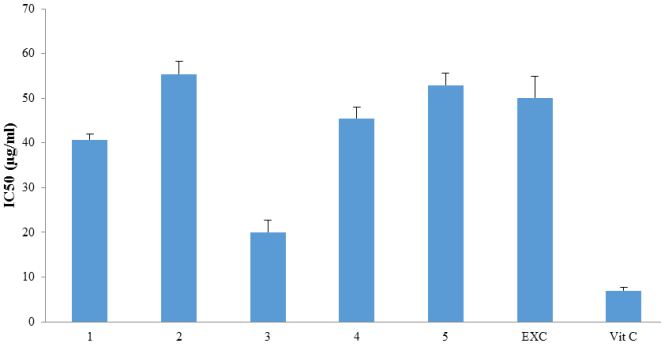
Among all the mixtures, the mixture LMEA/PCH 3 (62.5/37.5) gave the best response characterized by the lowest IC 50 (20 ± 2.754 µg/ml) (Figure 3).
Figure 3. Capacity of the different mixtures to scavenge DPPH radical.
1: LMEA/PCH (47.5/52.5), 2: LMEA/PCH (55/45), 3: LMEA/PCH (62.5/37.5), 4: LMEA/PCH (40/60), 5: LMEA/PCH (70/30), EXC: excipient, VIT C: Vitamin C, LMEA: Lannea microcarpa’s ethyl acetate fraction, PCH: Pouteria campechiana’s hexanic fraction.
(ii). Ferric Reducing Antioxidant Power (Frap) Assay
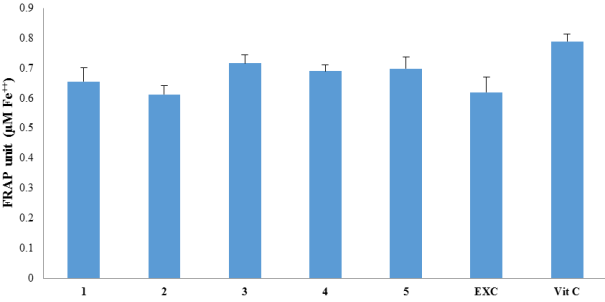
The mixture LMEA/PCH 3 gave the highest response among the mixtures shown by the highest capacity to reduce the ferric ion (0.715 ± 0.028 µM Fe2+). This activity was close to that of vitamin C used as standard (0.788 ± 0.023 µM Fe2+) (Figure 4).
Figure 4. Capacity of plants’ extracts to reduce ferric ion.
1: LMEA/PCH (47.5/52.5), 2: LMEA/PCH (55/45), 3: LMEA/PCH (62.5/37.5), 4: LMEA/PCH (40/60), 5: LMEA/PCH (70/30), EXC: excipient, Vit C: Vitamin C, LMEA: Lannea microcarpa’s ethyl acetate fraction, PCH: Pouteria campechiana’s hexanic fraction.
3.3.2. Presentation of the Score of Antioxidant Activity of the Different Mixtures
Two antioxidant tests were performed in order to choose the best mixture to make the nutraceutical for In vivo tests. Overall, the mixture 3 gave the best response by displaying the highest antioxidant activity (Table 6).
Table 6. Overview of antioxidant activities of the different mixtures.

Mixtures

DPPH assay

FRAP assay

1

++++

++

2

+

+

3

+++++

+++++

4

+++

+++

5

++

++++

1: LMEA/PCH (47.5/52.5), 2: LMEA/PCH (55/45), 3: LMEA/PCH (62.5/37.5), 4: LMEA/PCH (40/60), 5: LMEA/PCH (70/30), LMEA: Lannea microcarpa’s ethyl acetate fraction, PCH: Pouteria campechiana’s hexanic fraction.
3.4. Effect of the Treatment on the Animals’ Behaviour
3.4.1. In the Morris Water Maze
The time to find the platform varied from one group to another. Among the groups treated with the fruits, the lowest escape latency was observed in the group that was administered the nutraceutical (trial 1: 14 ± 1.87 s, trial 2: 13.4 ± 3.91 s, trial 3: 13.2 ± 2.58 s) (Table 7).
Table 7. Effect of the treatment on the escape latency in the MWM.

TRIAL 1 (s)

TRIAL 2 (s)

TRIAL 3 (s)

CG

57.6 ± 4.66

19.2 ± 7.72

21.6 ± 1.51

DPZ

59.25 ± 5.25

18 ± 7.07

32.25 ± 8.99

NC

29.8 ± 4.96

35.4 ± 4.72

57.4 ± 4.61

LMF

52 ± 8.83

60.2 ± 1.78

25.8 ± 6.9

PCF

11.75 ± 4.03

26.5 ± 5.74

22.25 ± 4.57

LM/PC

14 ± 1.87

13.4 ± 3.91

13.2 ± 2.58

EXC

40.66 ± 5.13

35.66 ± 6.65

55 ± 4.58

CG: normal control that received only a saline water (0.9%); DPZ: group that received the standard drug donepezil, NC: negative group that was administered only AlCl3; LMF: group that received L. microcarpa’s fruit fraction at 50 mg/kg bw, PCF: group that received P. campechiana’s fruit fraction at 50 mg/kg bw, LM/PC: group that received the nutraceutical at 50 mg/kg bw, EXC: group that received the excipient (paraffin oil) at 5 ml/kg.
The percent time spent in the quadrant containing the platform was also evaluated. The findings showed that among the groups treated with fruits, the group treated with the nutraceutical showed the highest percent time (42.85%). However the group treated with the excipient presented the lowest (4.84%) (Table 8).
Table 8. Effect of the treatment on the time spent in the quadrant containing the platform in the MWM.

TRIAL 1 (s)

TRIAL 2 (s)

TRIAL 3 (s)

CG

7.29

29.16

26.85

DPZ

10.12

47.22

29.45

NC

22.81

19.20

8.01

LMF

8.84

3.65

30.23

PCF

21.27

26.41

15.73

LM/PC

42.85

41.79

36.36

EXC

16.39

19.62

4.84

CG: normal control that received only a saline water (0.9%); DPZ: group that received the standard drug donepezil, NC: negative group that was administered only AlCl3; LMF: group that received L. microcarpa’s fruit fraction at 50 mg/kg bw, PCF: group that received P. campechiana’s fruit fraction at 50 mg/kg bw, LM/PC: group that received the nutraceutical at 50 mg/kg bw, EXC: group that received the excipient (paraffin oil) at 5 ml/kg.
3.4.2. In the Open Field
The general trend showed that the group that received DPZ spent the highest time in the central square of the open field (10 ± 2.49 s); the normal control group presented the highest tendency to escape the field (1.25 ± 0.5); and the non-treated group presented the highest number of floor crossings (20.25 ± 3.86) compared to the other groups (Table 9).
Table 9. Effect of the treatment on the locomotory activity in the Open field.

TSCS

NTE

NFC

CG

1.25

9

14.25

DPZ

10

4.25

16

NC

1.75

5

20.25

LMF

3.25

8.25

8

PCF

4.75

4.25

8.25

LM/PC

3.75

8.25

11.75

EXC

4

6.75

11.75

TSCS: time spent in the central square, NTE: number of trials of escaping the field, NFC: number of floor crossings, CG: normal control that received only a saline water (0.9%); DPZ: group that received the standard drug donepezil, NC: negative group that was administered only AlCl3; LMF: group that received L. microcarpa’s fruit fraction at 50 mg/kg bw, PCF: group that received P. campechiana’s fruit fraction at 50 mg/kg bw, LM/PC: group that received the nutraceutical at 50 mg/kg bw, EXC: group that received the excipient (paraffin oil) at 5 ml/kg.
3.5. Effect of Treatment on Biochemical Parameters
The non-treated group showed the lowest catalase activity (6.37 ± 0.52 µM H2O2/min/mg of protein) and the group that was administered PCH the highest activity (8.63 ± 1.00 µM H2O2/min/mg of protein). However, the group that received the nutraceutical showed an activity close to that of PCH compared to the other groups. The group treated with the nutraceutical, LMF and PCF had the lowest MDA level ((1.96 ± 0.09) × 10-6 µM), and the non-treated group showed the highest MDA level ((4.07 ± 0.22) × 10-6 µM). The groups treated with the excipient, LMEA and the non-treated group showed the lowest GSH concentration (1.47 ± 0.00 mol/mg proteins), whereas the group treated with the nutraceutical had the highest GSH level (2.20 ± 0.00 mol/mg proteins). The nutraceutical reduced the level of NO (9.55 ± 0.29 µM) compared to all the other groups. The group that was given the standard drug DPZ had the lowest AChE activity ((2.10 ± 0.12) × 10-6 µM/min/mg protein) and the group that received the excipient and the non-treated group the highest activity ((8.55 ± 0.73) × 10-6 µM/min/mg protein). GABA concentration significantly varied between the different groups. The normal control and the non-treated groups showed the lowest GABA content (28.21 ± 0.45 µg/ml) and the group treated LMEA the highest content (37.57 ± 1.89 µg/ml) (Table 10).
Table 10. Effect of the treatment on biochemical parameters.

BRAIN

AChE (10-6 µM/min/mg protein)

GABA (µg/ml)

Catalase (µMH2O2/min/mg proteins)

MDA (µM)

Glutathione (mol/mg proteins)

NO (µM)

CG

4.00 ± 0.15b

28.21 ± 0.45a

8.12 ± 1.06cd

2.02 ± 0.02a

1.96 ± 0.21c

12.25 ± 0.11d

DPZ

2.10 ± 0.12a

29.85 ± 1.57b

6.29 ± 0.74a

2.04 ± 0.08a

1.71 ± 0.21b

12.36 ± 0.09e

NC

8.07 ± 1.96de

28.25 ± 1.20a

6.37 ± 0.52a

4.07 ± 0.22c

1.47 ± 0.00a

12.06 ± 0.33d

LMF

5.30 ± 0.07c

37.57 ± 1.89e

7.58 ± 0.52bc

1.96 ± 0.09a

1.47 ± 0.00a

11.26 ± 0.34c

PCF

4.49 ± 0.25bc

31.58 ± 0.04c

8.63 ± 1.00d

1.97 ± 0.15a

1.54 ± 0.12ab

11.06 ± 0.72c

LM/PC

4.51 ± 0.26bc

36.23 ± 1.83d

7.81 ± 0.31bc

1.96 ± 0.09a

2.20 ± 0.00d

9.55 ± 0.29a

EXC

8.55 ± 0.73e

29.79 ± 2.05ab

7.08 ± 0.58ab

2.50 ± 0.11b

1.37 ± 0.08a

10.17 ± 0.11b

CG: normal control that received only a saline water (0.9%); DPZ: group that received the standard drug donepezil, NC: negative group that was administered only AlCl3; LMF: group that received L. microcarpa’s fruit fraction at 50 mg/kg bw, PCF: group that received P. campechiana’s fruit fraction at 50 mg/kg bw, LM/PC: group that received the nutraceutical at 50 mg/kg bw, EXC: group that received the excipient (paraffin oil) at 5ml/kg.
3.6. Histopathological Analysis
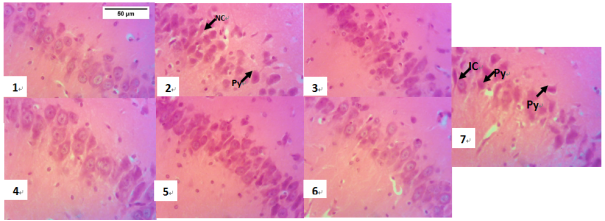
Figure 5. Microphotographs of the Ammon’s Horn 2 (X250) of the hippocampus stained with hematoxylin-eosin (HE).
1 = Normal control group; 2 = Non-treated group; 3 = Positive control; 4 = Group treated with the fruit powder; 5 = Group treated with LMEA fraction; 6 = Group treated with PCH fraction; 7 = Group treated with the excipient; PC = Pyramidal cells; Py = Pyknosis; NC = Neuron cytolysis; IC = Impaired cell.
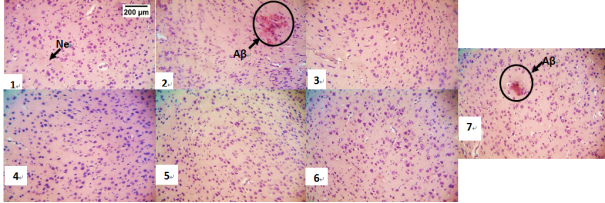
Figure 6. Microphotographs of the brain (X100) stained with red congo.

1 = Normal control group; 2 = Non-treated group; 3 = Positive control; 4 = Group treated with the fruit powder; 5 = Group treated with LMEA fraction; 6 = Group treated with PCH fraction; 7 = Group treated with the excipient; Ne = Neuron; Aβ = Amyloid β plaque.
4. Discussion
Catechol, 2,4-Di-tert-butylphenol (2,4-DTBP) present in LMEA are phenolic compounds generally found in vegetables and fruits, which have remarkable antioxidant properties . LMEA also revealed sitosterol which is a phytosterol with neuroprotective activity . The fruits of the genus Lannea have previously been reported to harbor bioactive compounds such as PUFAs, phytposterols, prenylated flavonoids, and flavonoids which tie with some compounds detected in LMEA. GC-MS also revealed the presence of PUFAs and phytosterols in PCH. β-Amyrin is a triterpenoid with antioxidant and neuroprotective activities . This confers PCF a lot of interesting properties that can be investigated in many biological mechanisms including antioxidant mechanisms to maintain the redox balance and cognitive processes.
As reported by , the antioxidant activity of scavenging DPPH radical is considered high (IC50 < 20 µg/ml), moderate (20 < IC50 < 75 µg/ml) or low (IC50 > 75 µg/ml). This therefore means that PCEA which gave the highest activity upon DPPH scavenging test had a moderate activity, and LMEA a low activity. However, it was observed that mixing the fractions LMEA and PCH at a proportion of 62.5/37.5 gave a more important activity than that of each fraction tested singly. The mixture LMEA/PCH 62.5/37.5 gave the highest activity to scavenge DPPH radical and that activity was high according to . Likewise, the activity to reduce ferric ion increased when the fractions were mixed and the highest activity was shown by the mixture LMEA/PCH (62.5: 37.5). This could be explained by the presence of triterpenoids, PUFAs and phenolic compounds in the mixture as well as the synergistic effect they could have. Phenolic compounds possess hydroxyl groups which are involved in protons and electrons transfer to reduce oxidant compounds or free radicals .
The spatial and learning memories were assessed in the Morris water maze. The group treated with the nutraceutical displayed the lowest escape latency (EL) and the highest time in the quadrant containing the platform. In the MWM, when searching the platform, the animal uses some signals like cues in the water maze that help it to recognize the quadrant that contains the platform. This memory develops with time as a long-term memory as the animal is constantly trained, and informs on the state of the Ammon’s Horn 2 involved in the memory process . The more the animal stays in the quadrant containing the platform, the more the spatial memory develops. Loliolide a triterpenoid contained in the nutraceutical has been reported to enhance neuroprotection by maintaining mitochondrial integrity, reducing cell apoptosis and inhibiting NF-Kb pathway .
The open field test is used to test brain regions to know whether they function well or not . The group treated with the nutraceutical was more or less anxious regarding the highest tendency of escaping the open field they showed. An elevated number of floor crossings was also noted in the non-treated group. However, Anxiety becomes more pronounced in old rats and administering them Al may augment the level of anxiety .
Catalase is a widely distributed antioxidant enzyme present in all aerobic organisms for antioxidant defense mechanism. The nutraceutical highly increased catalase activity. Catechol and phytosterols contained in the nutraceutical especially gamma-sitosterol and campesterol, might have acted using their conjugated bonds and hydroxyl groups to enhance catalase production in the brain . Catalase contains four iron-containing heme groups that allow it to react with the hydrogen peroxide. Deficiency in catalase is postulated to be related to redox stress. Curcumin a polyphenolic compound triggered the increase of catalase activity to reduce the incidence of oxidative stress in breast cancer .
The brain is a vital organ made up of PUFAs. A significant increase in MDA in the non-treated group could be due to the reaction of Al with fatty acids. Al may promote ROS production through Fenton reactions, where Al converts anion superoxide (O2-•) and hydrogen peroxide (H2O2) to hydroxyl radical (HO-) species, destabilizing conjugated bonds; leading to lipid peroxidation with release of final oxidative products such as carbonyls, peroxynitrites, and MDA within neurons . However, treating animals with the nutraceutical has significantly lowered MDA production, showing that the nutraceutical may contain bioactive compounds that prevent lipid peroxidation in living tissues. Oxidative stress is considered as one of the major causes of neurodegenerative diseases, by generating lipid peroxides. In AD dementia, these final products of lipid peroxidation enhance the activation of amyloid precursor protein (APP) with as consequence an overproduction of amyloid-β protein; the extracellular hallmarker involved in AD’s pathogenesis . Likewise, reported a decrease in MDA when assessing Anacardium Occidentale’s fruit extract on the brain of a model of AD’s rat. An increase of lipid peroxidation was also highlighted in patients with temporal progression of chronic spinal cord injury . The nutraceutical formulated in this study contains a lot of bioactive components including phenols and triterpenoids. They both carry hydroxyl groups and conjugated bonds, which render them excellent electron donors to balance redox reactions, thus preventing lipid peroxidation. One might opine that stigmasterol, a phytosterol that easily crosses the BBB, could have triggered antioxidant mechanisms in the brain to hinder MDA production.
The conversion of H2O2 to water requires a peroxidase which works with glutathione. Reduced glutathione (GSH) serves as an antioxidant in living organisms. The group treated with the nutraceutical showed an increase in GSH. Catechol is a phenolic compound with antioxidant properties. It promotes antioxidant defense mechanisms through genes’ expression of antioxidant enzymes like catalase and glutathione peroxidase. This latter needs GSH to perform its antioxidant activity . The high GSH concentration in the group that was given the nutraceutical shows that the nutraceutical certainly contains compounds that can enhance GSH production to counteract ROS and RNS formation.
In this study, it could be stated that the reduction of nitric oxide (NO) in the group that received the nutraceutical is brought about by bioactive compounds contained in the nutraceutical. Campesterol is a phytosterol that possesses the capacity to scavenge free radicals, hence to reduce the production of NO in the brain. It may activate many signaling pathways involved in NO production. It is strongly believed that campesterol reduces S-nitrosylation status of cytoskeletal proteins α- and β-spectrin which is a post-translational process involved in NO genesis .
Acetylcholine (Ach) is an important neurotransmitter involved in memory process. The lower activity of AChE observed in the group that was administered the nutraceutical compared to the non-treated group, showed that the nutraceutical obviously lowered AChE activity to prolong nerve impulse transmission. This anti-cholinesterasic activity might be attributed to stigmasterol and sitosterol. Stigmasterol has been reported to counteract neurodegeneration by promoting neurogenesis and cholinergic transmission. This could be done by the activation of SIRT 1 gene to promote antioxidant defense mechanisms and impulse transmission as well . Besides, catechol is a phenolic compound that has been reported a powerful antioxidant by its conjugated bonds and its hydroxyl functional group. Like other phenolic compounds such as catechin, gallic acid and reverastrol, catechol may hamper production of ROS and RNS in the brain to enable acetylcholine synthesis and cholinergic transmission .
GABA is the most abundant inhibitory neurotransmitter in the central nervous system that acts by activating ion channels during action potential propagation through the synaptic cleft . Highest level of GABA in the group that was administered the nutraceutical could be due to bioactive compounds that could have triggered GABA synthesis. Subsequently to this, GABA might have brought about inhibition of the membrane excitability. This mechanism maintains K+ channels open to enable efflux of K+, chloride channels open to enable influx of chloride ions during depolarization or hyperpolarisation, and Ca++ channels close to keep the membrane non excitable during the refractory period . However, the lowest GABA level shown by the non-treated group could probably be due to the neurotoxic effect of Al which triggers senile plaques formation in the brain. Many studies reported reduction of GABA in the brain of AD’s patients .
Features such as brain cell pyknosis, neuron loss, neuron cytolysis, and impaired cell displayed by the microphotograph of the brain Ammon’s horn 2 of the group non-treated and that received the excipient, showed that exposing animals to a heavy metal like Al triggers OS that brings about brain cell damage and death . ROS target molecules such as proteins, lipids and nucleic acids which are denatured, leading to cell rupture or impairment. Besides, in those groups, antioxidant enzymes production was low to hinder the deleterious effect of ROS. Nevertheless, treating rodents with the nutraceutical increased levels of antioxidant enzymes and compounds which counteracted ROS production to protect the brain against damage. The Ammon’s horn 2 is a region of the hippocampus that possesses anatomical connectivity and signaling molecules involved in cognition, particularly in the spatial, learning, short and long term memory formation . Senile amyloid β plaques displayed by the red congo stain in the negative control and the group treated with the excipient could be due to the amyloidogenic efect of Al that once accumulated in the brain cortex, may denature proteins and enzymes in the brain to promote the activity of amyloid precursor protein (APP), leading to amyloid β protein synthesis and its accumulation in the extracellular space. Al may also disrupt amyloid β protein metabolism by inhibiting its catabolism, thus enhancing its assemblage into senile amyloid β plaques . This activity could be related to triterpenoids. Previously published works have shown the anti-amyloidogenic property of terpenoids .
5. Conclusion
In summary, the phytochemical composition of Lannea microcarpa’s ethyl acetate and Pouteria campechiana’s hexanic fractions that made up the nutraceutical revealed the presence of phenolic compounds, phytosterols (stigmasterol, γ-sitosterol and campesterol), triterpenoids (loliolide, β-amyin), and unsaturated fatty acids; that can be exploited as antioxidant enhancers. Treating animals with the nutraceutical improved spatial and learning memories, augmented antioxidant defense mechanisms by an increase of catalase, superoxide dismutase, reduced glutathione and reduction of malondialdehyde and nitric oxide production, lowered acetylcholinesterase activity, and Alzheimer’s disease hallmarkers in the hippocampus. The anti-oxidant, anti-amyloidogenic and anti-cholinesterasic actvities the nutraceutical showed place Lannea microcarpa’s and Pouteria campechiana’s fruits as potential sources to exploit for search of therapeutics against Alzheimer’s disease.
Abbreviations

Ach

Acetylthiocholine

AChE

Acetylcholinesterase

AChEIs

Acetylcholinesterase Inhibitors

AD

Alzheimer’s Disease

AH

Ammon’s Horn

APP

Amyloid Precursor Protein

BBB

Blood Brain Barrier

DPZ

Donepezil

EL

Escape latency

FRAP

Ferric Reducing Antioxidant Power

GABA

gamma-aminobutyric Acid

GC-MS

Gas Chromatography-Mass Spectrometry

GSH

Reduced Glutathione

HE

Hematoxylin/Eosin

LMEA

Lannea microcarpa’s Ethyl Acetate Fraction

MDA

Malondialdehyde

MWM

Morris Water Maze

OFT

Open Field Test

OS

Oxidative stress

PCH

Pouteria campechiana’s Hexanic Fraction

PUFAs

Polyunsaturated Fatty Acids

RNS

Reactive Nitrogen Species

ROS

Reactive Oxygen Species

RT

Retention Time

TBA

Thiobarbuturic Acid

Acknowledgments
All the authors are thankful to Professor Nzeufiet of the Laboratory of Animal Physiology of the University of Yaounde I, for its great support during the histopathological analysis of the brain; to Dr. Tekou Florian Armel and Mr. Akago Vanis for their availability during experiments on animal.
Author Contributions
Geradin Joel Tagne Tueguem: Conceptualization, Data curation, Formal Analysis, Investigation, Methodology, Resources, Software, Writing – original draft, Writing – review & editing
Hermine Tsafack Doungue: Conceptualization, Project administration, Validation, Writing – review & editing
Justine Odelonne Kenfack: Investigation, Methodology, Software
Stephano Tambo Tene: Investigation, Methodology, Software
Anne Pascale Kengne Nouemsi: Conceptualization, Project administration, Resources, Software, Supervision, Validation
Donatien Gatsing: Conceptualization, Project administration, Resources, Software, Supervision, Validation, Visualization
Funding
This research did not receive any specific grant from funding agencies in the public, commercial, or not-for-profit sectors.
Data Availability Statement
Data will be available by authors on request.
Conflicts of Interest
All contributors declare that they have no competing interests in this study.
References
[1] Alzheimer’s Association. Alzheimer’s Disease Facts and Figures. National Library of Medicine. 2023; 19(4): 1598-1695,
[2] Martini S, Castellini L, Parladori R, Paoletti V, Aceti A, Corvaglia L. Free Radicals and Neonatal Brain Injury: From Underlying Pathophysiology to Antioxidant Treatment Perspectives. Antioxidants. 2021; 10(12): 2012,
[3] Alzheimer’s disease international and World Health Organization. Dementia: a public health priority.
[4] Li F, Gong Q, Dong H, Shi J. Resveratrol, a neuroprotective supplement for Alzheimer's disease. Current Pharmaceutical Design. 2012; 18: 27-33,
[5] Pratiwi R, Nantasenamat C, Ruankham W, Suwanjang W, Prachayasittikul V, Prachayasittikul S, Phopin K. Mechanisms and Neuroprotective Activities of Stigmasterol Against Oxidative Stress-Induced Neuronal Cell Death via Sirtuin Family. Frontiers in Nutrition. 2021; 8: 648995,
[6] Mohd Sajad, Rafat Ali, Rajesh Kumar, Nida Jamil Khan, Shadma Wahab, Saad Ali Alshehri, Sonu Chand Thakur. β-Sitosterol ameliorates the cognitive deficits and neuropathological hallmarks in an Alzheimer’s disease model. Arabian Journal of Chemistry. 2025; 18(1): 106072,
[7] Eude Ore, Adediran Goudegnon, Fifanou G. Vodouhê Gerard Nounagnon Gouwakinnou, Valère Kolawole Salako, Madjidou Oumorou. Ethnic and generational differences in traditional knowledge and cultural importance of Lannea microcarpa Engl. & K. Krause in Benin’s Sudanian savannah. Bois et forêts des tropiques. 2017; 334(4): 49,
[8] Thi Van Thanh Do, Wildan Suhartini, Chi Uyen Phan, Zhengwei Zhang, Gulden Goksen, Jose Lorenzo M. Nutritional value, phytochemistry, health benefits, and potential food applications of Pouteria campechiana (Kunth) Baehni: A comprehensive review. Journal of Functional Foods. 2023; 103: 105481,
[9] Zeisel SH. Regulation of Nutraceuticals. Science. 1999; 285(5435): 1853-5,
[10] Tagne Tueguem Geradin Joel, Hermine Tsafack Doungue, Aurelie Dahlia Yemeli Piankeu, Josias Djenguemtar, Michel Pegui Kemtsop, Anne Pascale Nouemsi Kengne, Donatien Gatsing. Potential of the Hydroethanolic Extract of Lannea microcarpa’s Fruit on Oxidative Stress Induced Alzheimer’s Disease. Asian Journal of Research in Biochemistry. 2024; 14(5): 143-56,
[11] Tagne Tueguem Geradin Joel, Anne Pascale Nouemsi Kengne, Hermine Tsafack Doungue, Michel Pegui Kemtsop, Julius Oben Enyong. Evaluation of the effect of Pouteria Campechiana’s fruit powder and ethanolic extract on aluminumchloride induced Alzheimer’s disease. Journal of Food Science and Nutrition Research. 2020; 3: 083-091.
[12] Iqbal KA, Salim Lim LBL. Phytochemical screening, total phenolics and antioxidant activities of bark and leaf extracts of Goniothalamus velutinus (Airy Shaw) from Brunei Darussalam. Journal of King Saud University-Science. 2015; 27(3): 224-232,
[13] Alam MN, Bristi Rafi NJ, Quzzaman M. Phytochemical and Biological Investigations of Salvia microphylla leaf extracts using LC-MS/MS. Saudi Pharmaceutical Journal. 2013; 21: 2.
[14] Pellegrini N, Serafini M, Colombi B, Del Rio D, Salvatore S, Bianchi M, Brighenti F. Total Antioxidant Capacity of Plant Foods, Beverages and Oils Consumed in Italy Assessed by Three Different In Vitro Assays. Journal of Nutrition. 2003; 133(9): 2812-9,
[15] Pritchett David, Amy Taylor M, Christopher Barkus, Sandra Engle J, Nicholas Brandon J, Trevor Sharp, Russell Foster G, Paul Harrison J, Stuart Peirson N, David Bannerman M. Searching for cognitive enhancement in the Morris water maze: better and worse performance in D-amino acid oxidase knockout (Dao-/-) mice. European Journal of Neuroscience. 2016; 43(7): 979–989,
[16] Belovicova Kristina, Eszter Bogi, Kristina Csatlosova, Michal Dubovicky. Animal tests for anxiety-like and depression-like behavior in rats. Interdisciplinary Toxicology. 2017; 10(1): 40-43,
[17] Sinha AK. Colorimetric Assay of catalase. Analytical Biochemistry. 1972; 47(2): 389–94,
[18] Ellman GL. Original determination. Arch. Biochem. Biophys. 1959; 82(1): 70-7,
[19] Schmedes A, Helmer G. A new thiobarbituric acid (TBA) method for determining free malondialdehyde (MDA) and hydroperoxides selectively as a measure of lipid peroxidation. Journal of the American Oil Chemists' Society. 1989; 66: 6,
[20] Szonntagh EL. Colorimetric azo dye methods for the atmospheric analysis of nitrogen dioxide; historical development. Periodica Polytechnica Chemical Engineering. 1979; 23(3): 207-215.
[21] Ellman GL, Courtney KD, Andres V, Featherstone RM. A new and rapid colorimetric determination of acetylcholinesterase activity. Biochemical Pharmacology and Physiology. 1961; 7(2): 84-90,
[22] Nayak P, Chatterjee A. Effects of aluminium exposure on brain glutamate and GABA systems: an experimental study in rats. Food Chemistry and Toxicology. 2001; 39(12): 1285–1289,
[23] Suvarna Kim, Christopher Layton, John Bancroft D. Bancroft’s theory and practice of histological techniques. 9th edition. Elsevier; 2019. P. 557.
[24] Knezevic Sara, Asma Ghafoor, Samaneh Mehri, Ali Barazi, Maksymilian Dziura, John Trant F, Christopher Dieni A. Catechin and other catechol-containing secondary metabolites: Bacterial biotransformation and regulation of carbohydrate metabolism. Pharmanutrition. 2021; 17: 100273,
[25] Ayswarya S, Radhakrishman M, Manigundan K, Gopikrishnan V, Soytong K. Antioxidant activity of 2,4-di-tert-butylphenol isolated from plant growth promoting endophytic Streptomyces KCA-1. International Journal of Agricultural Technology. 2022; 18(6): 2343-2352,
[26] Xiuling Tang, Tao Yan, Saiying Wang, Qingqing Liu, Qi Yang, Yongqiang Zhang, Yujiao Li, Yumei Wu, Shuibing Liu, Yulong Ma, Le Yang. Treatment with β-sitosterol ameliorates the effects of cerebral ischemia/reperfusion injury by suppressing cholesterol overload, endoplasmic reticulum stress, and apoptosis. Neural Regeneration Research. 2024; 19(3): 642-649,
[27] Okoth akinyi Dorothy, Natural products from Lannea alata, Lannea rivae, Lannea schimperi and Lannea schweinfurthii (Anacardiaceae). A thesis submitted to the School of Chemistry, College of Agriculture, Engineering and Science, University of KwaZulu-Natal, for the degree of Doctor of Philosophy. 2014; P. 668.
[28] Judicaël Thomas Ouilly, Patrice Bazongo, Adjima Bougma, Nèbpawinde Kabore, Anne Mette Lykke, Amade Ouedraogo, Imaël Henri Nestor Bassole, Chemical Composition, Physicochemical Characteristics, and Nutritional Value of Lannea kerstingii Seeds and Seed Oil. Journal of Analytical Methods in Chemistry, 2017; 6: 2840718,
[29] Nada Mostafa M. β-amyrin rich Bombax ceiba leaf extract with potential neuroprotective activity against scopolamine-induced memory impairment in rats. Records of Natural Products. 2018; 12(5): 480-492,
[30] Tran Duc Viet, La Hoang Anh, Tran Dang Xuan, Ngo Duy Dong. The pharmaceutical potential of α- and β-amyrins. Nutraceuticals. 2025; 5(3): 21,
[31] Souri E. Amin G. Farsam H, Barazandeh Tehrani M. Screening of antioxidant activity and phenolic content of 24 medicinal plant extracts. DARU. 2008; 16(2): 83-87.
[32] Syed Nasir, Abbas Bukhari. Dietary Polyphenols as Therapeutic Intervention for Alzheimer’s Disease: A Mechanistic Insight. Antioxidants. 2022; 11(3): 554,
[33] Young AP, Young PH, Tolbert DL. Chapter 1, Organisation, cellular components and topography of CNS. Basic Clinical Neuroscience Lippincott Williams 24 and Wilkins. 3rd edition. 2015; 23: 1-37.
[34] Silva Joana, Celso Alves, Alice martins, Patricia Susano, Marco Simoes, Miguel Guedes, Stephanie Rehfeldt, Susete Pinteus, Helena Gaspar, Americo Rodrigues, Màrcia Ines Goettert, Amparo Alfonso and Rui Pedrosa. Liolide, a new therapeutic option for neurological diseases? In vitro neuroprotective and anti-inflammatory activities of a monoterpenoid lactone isolated from Codium tomentosum. International Journal of Molecular Sciences. 2021; 22(4): 1888,
[35] Azeez Taiwo Olanrewaju, The open field and animal behaviour. Thesis submitted in partial fulfilment of the requirements of the Degree of Bachelor of Technology with Honours in Anatomy, Ladoke Akintola University of Technology, 2015; 13.
[36] Peiffer Julie, Study of neurotoxicity of an organic pollutant persisting in the rat: short and long-term effects of repeated inhalation of fluorene on the senso-motor development of young and the behaviour at the adult age. Thesis defended for the fulfillment of Doctorate of the National Polytehnic Institute of Lorraine, 2011; P. 336.
[37] Kyung Hee Lee. Myeounghoon Cha, Bae Hwan Lee, Neuroprotective Effect of Antioxidants in the Brain. International Journal of Molecular Sciences. 2020; 21(19): 7152,
[38] Malinee Pongsavee. Effects of ERCC5 rs751402 Polymorphism on oxidative stress and the impact of curcumin on catalase activity in breast carcinogenesis. Asian Pacific Journal of Cancer Prevention. 2022; 23(6): 2065-2069,
[39] Singh Anju, Ritushree Kukreti, Saso Luciano, Shrikant Kukreti. Oxidative Stress: a key modulator in neurodegenerative diseases. Molecules. 2019; 24(8): 1583,
[40] Doungue Tsafack H, Nouemsi Kengne AP, Kuate D. Neuroprotective effect and antioxidant activity of Passiflora edulis fruit flavonoid fraction, aqueous extract and juice in aluminum chloride-induced Alzheimer-s disease rats. Nutire. 2018; 48: 23,
[41] Tonnies Eric, Trushina Eugenia. Oxidative Stress, Synaptic Dysfunction, and Alzheimer’s Disease. Journal of Alzheimer’s Disease. 2017; 57(4): 1105–1121,
[42] Bhagyasree P, Kalyani G. Neuroprotective effect of Anacardium occidentale (cashew apple fruit) against aluminum toxicity: an experimental study on cognitive dysfunction and biochemical alterations in rats. Asian Journal of Pharmaceutical and Clinical Reseacrh. 2017; 10(3): 164-169,
[43] Haro Girón S, Monserrat Sanz J, Ortega MA, Garcia-Montero C, Fraile Martínez O, Gómez-Lahoz AM, Boaru DL, de Leon-Oliva D, Guijarro LG, Atienza Perez M, David Diaz, Lopez-Dolado E, Alvarez-Mon M. Prognostic Value of Malondialdehyde (MDA) in the Temporal Progression of Chronic Spinal Cord Injury. Journal of Personalized Medicine. 2023; 13(4): 626,
[44] Francioso A, Fanelli S, Cavallaro RA, Fontana M, Mattioli R, D’Erme M, Mosca L. Fluorometric Optimized Determination of Total Glutathione in Erythrocytes. Separations. 2021; 8(6): 83,
[45] Nader Elie, Grau Marijke, Romain Fort, Bianca Collins, Giovanna Cannas, Alexandra Gauthier, Katja Walpurgis, Cyril Martin, Wilhelm Bloch, Solène Poutrel, Arnaud Hot, Celine Renoux, Mario Thevis, Philippe Joly, Marc Romana, Nicolas Guillot, Philippe Connes. Hydroxyurea therapy modulates sickle cell anemia red blood cell physiology: Impact on RBC deformability, oxidative stress, nitrite levels and nitric oxide synthase signalling pathway. Nitric Oxide. Biology and Chemistry. 2018; 81: 28-35,
[46] Xu Li, Xiaozhao Xu, Fei Shen, Wei Li, Changpeng Qiu, Ting Wu, Yi Wang, Xuefeng Xu, Zhenhai Han, Xinzhong Zhang. γ-Aminobutyric Acid Participates in the Adult-Phase Adventitious Rooting Recalcitrance. Journal of Plant Growth Regulation. 2021; 40: 1981–1991,
[47] Dalangin Rochelin, Kim Anna, Campbell Robert E. The role of amino acids in neurotransmission and fluorescent tools for their detection. International Journal of Molecular Sciences. 2020; 21(17): 6197,
[48] Pei-Pei Liu, Yi Xie, Xiao-Yan Meng, Jian-Sheng Kang. History and progress of hypotheses and clinical trials for Alzheimer’s disease. Signal Transduction and Targeted Therapy. 2019; 4: 29,
[49] Piskorowski RA, Nasrallah K, Diamanropoulou A, Mukai J, Hassan JM, Siegelbaum SA, Gogos JA, Chevaleyre V. Age-dependent specific changes in area CA2 of the hippocampus and social memory deficit in a mouse model of the 22q11.2 deletion syndrome. Neuron. 2016; 89(1): 163-176,
[50] Brylinski L, Kostelecka K, Wolinski F, Duda P, Góra J, Granat M, Flieger J, Teresinski G, Buszewicz G, Sitarz R, Baj J. Aluminium in the Human Brain: Routes of Penetration, Toxicity, and Resulting Complications. International Journal of Molecular Sciences. 2023; 24(8): 7228,
[51] Ye Zhu, Le Peng, Jian Hu, Yan Chen, Faxiu Chen. Current antiAlzheimer's disease effect of natural products and their principal targets. Journal of Integrative Neuroscience. 2019; 18(3): 327–339,
Cite This Article
  • APA Style

    Tueguem, G. J. T., Doungue, H. T., Kenfack, J. O., Tene, S. T., Nouemsi, A. P. K., et al. (2025). Neuroprotective Effect of a Nutraceutical Formulated with Pouteria campechiana’s and Lannea microcarpa’s Fruits on Alzheimer’s Disease. Journal of Food and Nutrition Sciences, 13(6), 353-370. https://doi.org/10.11648/j.jfns.20251306.15

    Copy | Download

    ACS Style

    Tueguem, G. J. T.; Doungue, H. T.; Kenfack, J. O.; Tene, S. T.; Nouemsi, A. P. K., et al. Neuroprotective Effect of a Nutraceutical Formulated with Pouteria campechiana’s and Lannea microcarpa’s Fruits on Alzheimer’s Disease. J. Food Nutr. Sci. 2025, 13(6), 353-370. doi: 10.11648/j.jfns.20251306.15

    Copy | Download

    AMA Style

    Tueguem GJT, Doungue HT, Kenfack JO, Tene ST, Nouemsi APK, et al. Neuroprotective Effect of a Nutraceutical Formulated with Pouteria campechiana’s and Lannea microcarpa’s Fruits on Alzheimer’s Disease. J Food Nutr Sci. 2025;13(6):353-370. doi: 10.11648/j.jfns.20251306.15

    Copy | Download

  • @article{10.11648/j.jfns.20251306.15,
      author = {Geradin Joel Tagne Tueguem and Hermine Tsafack Doungue and Justine Odelonne Kenfack and Stephano Tambo Tene and Anne Pascale Kengne Nouemsi and Donatien Gatsing},
      title = {Neuroprotective Effect of a Nutraceutical Formulated with Pouteria campechiana’s and Lannea microcarpa’s Fruits on Alzheimer’s Disease},
      journal = {Journal of Food and Nutrition Sciences},
      volume = {13},
      number = {6},
      pages = {353-370},
      doi = {10.11648/j.jfns.20251306.15},
      url = {https://doi.org/10.11648/j.jfns.20251306.15},
      eprint = {https://article.sciencepublishinggroup.com/pdf/10.11648.j.jfns.20251306.15},
      abstract = {Oxidative stress is a famous factor that may trigger Alzheimer’s disease through the disruption of the redox balance to result to free radicals species, harmful for the brain. Fruits harbor antioxidant compounds that may preserve the brain against Alzheimer’s disease. Some include phenolic compounds, unsaturated fatty acids and triterpenoids. This work was aimed at evaluating the neuroprotective activity of a nutraceutical made with Lannea microcarpa’s and Pouteria campechiana’s fruits on a model of oxidative stress-induced Alzheimer’s disease rats. Lannea microcarpa’s ethyl acetate and Pouteria campechiana’s hexanic fractions were made by partitioning the hydroethanolic extract (20:80) of Lannea microcarpa’s fruit pulp and the ethanolic extract of Pouteria campechiana’s pulp fruit in ethyl acetate and n-hexane respectively. Antioxidant activities of both fractions were determined by DPPH and FRAP assays. A simplex lattice mixture design was done and the selected mixture was used as nutraceutical. Gas chromatography-mass spectrometry was performed to determine the phytochemical composition of fractions. AlCl3 at 15 mg/kg bw was administered to 3 months rats; and the different treatments were administered every day by oral route. Behavioral assessment was carried out by Morris water maze and Open field tests. Malondialdehyde, nitric oxide, catalase, reduced glutathione, γ-aminobutyric acid, and acetylcholinesterase were determined in the brain. Red congo was used for brain analysis. Data were analyzed with SPSS 22.0 using one-way ANOVA and MINITAB 20.0. The mixture L. microcarpa’s fraction/P. campechiana’s fraction (62.5: 37.5) was selected. Major compounds detected in Lannea microcarpa’s and Pouteria campechiana’s fractions were phenolic compounds, triterpenoids and fatty acids. Treatment of animals with the nutraceutical increased the spatial and learning memory in the Morris water and open field mazes. Levels of malondialhedyde (1.969 ± 0.09) × 10-6 µM), nitric oxide (9.551 ± 0.296a µM), acetylcholinesterase ((4.515 ± 0.268) × 10-6 µM/mg protein) reduced, and γ-aminobyturic acid (36.238 ± 1.833 µg/ml) increased. The non-treated group showed amyloid plaques and neurodegenerative features like cell pyknosis, cell vacuolation and neuron loss. Bioactive compounds contained in the nutraceutical could be targeted as acetylcholinesterase inhibitors and anti-amyloidogenic therapeutics.},
     year = {2025}
    }
    

    Copy | Download

  • TY  - JOUR
    T1  - Neuroprotective Effect of a Nutraceutical Formulated with Pouteria campechiana’s and Lannea microcarpa’s Fruits on Alzheimer’s Disease
    AU  - Geradin Joel Tagne Tueguem
    AU  - Hermine Tsafack Doungue
    AU  - Justine Odelonne Kenfack
    AU  - Stephano Tambo Tene
    AU  - Anne Pascale Kengne Nouemsi
    AU  - Donatien Gatsing
    Y1  - 2025/12/29
    PY  - 2025
    N1  - https://doi.org/10.11648/j.jfns.20251306.15
    DO  - 10.11648/j.jfns.20251306.15
    T2  - Journal of Food and Nutrition Sciences
    JF  - Journal of Food and Nutrition Sciences
    JO  - Journal of Food and Nutrition Sciences
    SP  - 353
    EP  - 370
    PB  - Science Publishing Group
    SN  - 2330-7293
    UR  - https://doi.org/10.11648/j.jfns.20251306.15
    AB  - Oxidative stress is a famous factor that may trigger Alzheimer’s disease through the disruption of the redox balance to result to free radicals species, harmful for the brain. Fruits harbor antioxidant compounds that may preserve the brain against Alzheimer’s disease. Some include phenolic compounds, unsaturated fatty acids and triterpenoids. This work was aimed at evaluating the neuroprotective activity of a nutraceutical made with Lannea microcarpa’s and Pouteria campechiana’s fruits on a model of oxidative stress-induced Alzheimer’s disease rats. Lannea microcarpa’s ethyl acetate and Pouteria campechiana’s hexanic fractions were made by partitioning the hydroethanolic extract (20:80) of Lannea microcarpa’s fruit pulp and the ethanolic extract of Pouteria campechiana’s pulp fruit in ethyl acetate and n-hexane respectively. Antioxidant activities of both fractions were determined by DPPH and FRAP assays. A simplex lattice mixture design was done and the selected mixture was used as nutraceutical. Gas chromatography-mass spectrometry was performed to determine the phytochemical composition of fractions. AlCl3 at 15 mg/kg bw was administered to 3 months rats; and the different treatments were administered every day by oral route. Behavioral assessment was carried out by Morris water maze and Open field tests. Malondialdehyde, nitric oxide, catalase, reduced glutathione, γ-aminobutyric acid, and acetylcholinesterase were determined in the brain. Red congo was used for brain analysis. Data were analyzed with SPSS 22.0 using one-way ANOVA and MINITAB 20.0. The mixture L. microcarpa’s fraction/P. campechiana’s fraction (62.5: 37.5) was selected. Major compounds detected in Lannea microcarpa’s and Pouteria campechiana’s fractions were phenolic compounds, triterpenoids and fatty acids. Treatment of animals with the nutraceutical increased the spatial and learning memory in the Morris water and open field mazes. Levels of malondialhedyde (1.969 ± 0.09) × 10-6 µM), nitric oxide (9.551 ± 0.296a µM), acetylcholinesterase ((4.515 ± 0.268) × 10-6 µM/mg protein) reduced, and γ-aminobyturic acid (36.238 ± 1.833 µg/ml) increased. The non-treated group showed amyloid plaques and neurodegenerative features like cell pyknosis, cell vacuolation and neuron loss. Bioactive compounds contained in the nutraceutical could be targeted as acetylcholinesterase inhibitors and anti-amyloidogenic therapeutics.
    VL  - 13
    IS  - 6
    ER  - 

    Copy | Download

Author Information
  • Abstract
  • Keywords
  • Document Sections

    1. 1. Introduction
    2. 2. Material and Methods
    3. 3. Results
    4. 4. Discussion
    5. 5. Conclusion
    Show Full Outline
  • Abbreviations
  • Acknowledgments
  • Author Contributions
  • Funding
  • Data Availability Statement
  • Conflicts of Interest
  • References
  • Cite This Article
  • Author Information