Research Article | | Peer-Reviewed

Microbiological Safety and Quality of Raw Milk at Pastoral Community Cattle Campsites in Rejaf East Payam, South Sudan

Received: 28 September 2024     Accepted: 28 October 2024     Published: 7 February 2025
Views:       Downloads:
Abstract

The safety of dairy products concerning foodborne diseases is a major concern worldwide. This is particularly true in developing countries, where milk and various dairy products are produced under unhygienic conditions and poor production practices. Milk is one of the food products consumed in South Sudan, however, there is limited information regarding its handling and safety, especially among the pastoral communities. Therefore, this study assessed raw milk's microbiological safety and quality at pastoral communities’ cattle campsites in Rejaf East Payam, South Sudan. A total of 240 households and 75 raw milk samples were selected at random. The findings revealed that the milking handling practices at cattle camps are characterized by hygienic and unhygienic practices. The pastoral communities had no access to a cooling system for milk storage. Additionally, 90.8% of the households in cattle camps consumed unboiled raw milk, and 10% of the households experienced milk rejection at the point of milk sale. The overall means of physicochemical parameters of milk samples were; fat = 7.76±1.47%, SNF = 7.68±0.26%, density = 1.03±0.00g/ml, lactose = 4.21±0.15%, protein = 2.81±0.09%, and pH 6.60±0.21. The result of the microbiological quality of raw milk indicated that the highest TVC (5.81 ± 0.51logCFU/ml) was recorded in Jebel Amianin cattle camp, on the other hand, the highest TCC (4.64 ± 0.21 logCFU/ml) was recorded in Kadoro cattle camp and TSC (2.53 ± 0.31logCFU/ml) recorded in Highland cattle camp. Furthermore, the study shows that the microbiological quality of raw milk samples is not within the standard and therefore there is a need to improve hygiene practices in milk production.

Published in Journal of Food and Nutrition Sciences (Volume 13, Issue 1)
DOI 10.11648/j.jfns.20251301.14
Page(s) 28-47
Creative Commons

This is an Open Access article, distributed under the terms of the Creative Commons Attribution 4.0 International License (http://creativecommons.org/licenses/by/4.0/), which permits unrestricted use, distribution and reproduction in any medium or format, provided the original work is properly cited.

Copyright

Copyright © The Author(s), 2025. Published by Science Publishing Group

Keywords

Milk Quality, Milk-Handling Practices, Cattle Camps, Milk Handlers, Rejaf East Payam

1. Introduction
Quality refers to the biochemical or nutritional components and safety refers to the presence of hazards that could endanger the health of the consumer. Milk is a fundamental strategic food for improving the quality of life and ensuring food security . The importance of milk in the diet is justified by its chemical composition in which water contains 87% and 13% of high-quality nutrients: fats, proteins, carbohydrates, vitamins, and minerals. Therefore, milk is considered a complete food recommended for consumption by all people . The safety of dairy products concerning foodborne diseases is a major concern throughout the world . Microbial contamination of milk caused by improper handling and poor environmental hygiene and sanitation is the leading cause of health risks from milk-borne diseases as well as milk spoilage . The microbial content of milk is a major feature in determining its quality. It shows the hygienic level exercised during milk production and handling, that is cleanliness of the milking containers, condition of storage, manner of transport as well as the cleanliness of the udder of the individual animal . Therefore, washing milk containers and hands with soap helps to remove microorganisms from the hands thus preventing milk contamination.
In Rejaf East Payam cattle camps there is hardly an empirical study conducted on the microbiological safety and quality of raw milk. The lack of cold storage services for milk in Rejaf East cattle camps is also creating challenges in ensuring milk quality in shops and supermarkets. Consuming raw milk, and contact with animals are the key risk factors for milk-borne diseases for example brucellosis, Tuberculosis . In Rejaf East Payam cattle camps, the raw milk distributed for consumption is not subjected to milk quality tests which are needed. Furthermore, most milk handlers in Rejaf East Payam are uninformed of the effect of animal health and environmental conditions on producing safe milk, retardation of milk production, and lack of awareness and training programs on milk safety and handling practices.
Food Agriculture Organization points out that a good dairy farming practice is an important practical tool used worldwide in supporting farmers to produce market-safe, quality milk, and milk products to satisfy the expectations of consumers and the food industry. Thus, there was an urgent need to address the knowledge gap that exists in the current milk handling practices. South Sudan as a country is required to address the issues of milk safety and deliver milk free from pathogenic microorganisms to consumers . Therefore, the study aimed to assess the microbiological safety and quality of raw milk at pastoral communities at cattle campsites in Rejaf East Payam, Juba, Central Equatoria State, South Sudan.
2. Materials and Methods
2.1. Study Area
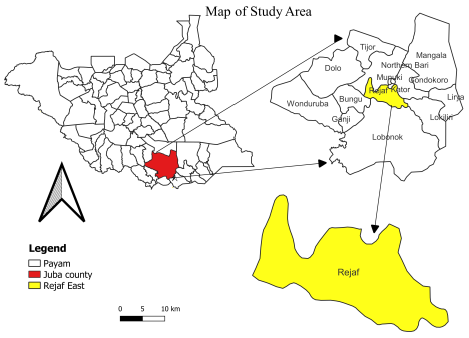
Rejaf East is one of the Payam (sub-county) of Juba County in Central Equatoria State on the west bank of the White Nile. It borders Juba, the capital and largest city of the Republic of South Sudan (Figure 1). It is located at the latitude 4.74952 and longitude 31.59034. Since the signing of the Comprehensive Peace Agreement (CPA), Rejaf East Payam has been a refuge for many former internal displaced persons (IDPs), returning residents, and even foreigners who seek safety, improved livelihoods, and business opportunities. It is also notable that it is a major trading center for local agricultural goods . In Rejaf East Payam, the study was conducted in Kadoro, Highland, and Jebel Amianin cattle camps. In each cattle camp, 80 milk handlers were interviewed, and 25 raw milk samples were taken for analyses of physicochemical parameters and microbial quality.
Figure 1. Study area map.
2.2. Research Design
The study used both qualitative and quantitative methods. The study also applied a cross-sectional survey that involved a qualitative method and a descriptive survey based on a questionnaire and observation through a checklist adapted from the Food Standard Agency to identify methods of raw milk handling practices in the three cattle camps; Furthermore, the quantitative method involved laboratory tests of physicochemical parameters and microbial contamination of raw milk collected from the cattle camps were employed. The analyses of physicochemical parameters of raw milk were conducted in Animal production minilab, University of Juba. Furthermore, an analysis of bacterial contamination of raw milk was conducted at a national public health laboratory, (Juba Teaching Hospital).
2.3. Determination of Sample Size
The exact household population at the cattle camps around Rejaf East Payam is unknown since no survey has been conducted; therefore, the sample size was determined using the Cochran formula .
n =p(1-p)z^2e^2
n =(0.1)(1-0.1)(2.582)0.05^2= 240
where n = sample size, p = the population proportion (p = 0.1), and e = acceptable sampling error (e = 0.05).
A total of 240 cattle camp households were selected from the three cattle camps around Rejaf East Payam at random to participate in the study to gather information about raw milk handling practices. In the cattle camps, equal random sampling was applied since the population was unknown; therefore, 80 households were randomly selected from each cattle camp. For statistical inference, 75 raw milk samples were collected from the subpopulation (240 households) of the three cattle camps [Highland n = 25], [Jebel Amianin n = 25], and [Kadoro n = 25] by stratified sampling for analysis of physicochemical parameters and bacterial contamination.
2.4. Data Collection
2.4.1. Milk Handling Practices
The developed questionnaire was used to obtain information about raw milk handling practices at the sites with milk handlers. The observation method was also used to evaluate factors such as cow cleanliness, hygiene during milking procedures, the time taken to deliver milk to the markets, the frequency of milking, the type of utensil used for the storage of milk at cattle camps, equipment maintenance, and cleaning.
2.4.2. Physicochemical Parameters of the Raw Milk
The physicochemical parameters of the raw milk were determined by a proximate method using a milk analyzer (Lacto Scan). The parameters determined included fat, SNF, protein, lactose, total solids, pH, freezing point, and density. The raw milk sample was poured into the sample holder of the analyzer and then the sample holder was placed in the recess of the analyzer and the enter button was pressed. The analyzer sucked the milk and performed the measurements. When the measurement is finished, the sample returns to the sample holder and the results are displayed .
2.4.3. Microbiological Contamination of Raw Milk
Approximately 1 ml of the sample of milk was transferred into 9 ml of sterile peptone water solution and mixed thoroughly to make a 10−1 dilution. From the first serial dilutions, 1 ml was put into another 9 ml test tube sterilized to make 10−2. This procedure was repeated to make six dilutions (10−1 to10−6). Using a sterile tip, 1 ml from each of the serial dilutions was aseptically transferred into sterile plates, followed by the addition of 10–15 ml of the differential media (Plate Count Agar, MacConkey, and mannitol salt Agar).
(i). Determination of Total Viable Count
For the analysis of total viable count (TVC),75 raw milk samples were collected from the three cattle camps. To determine the TVC, plate count agar (PCA) was prepared, and 1 ml from each of serial dilutions was aseptically transferred into sterile plates, followed by the addition of 10–15 ml of the PCA, then mixed well, and allowed to solidify. The plate was incubated at 37°C for 24-48 hours. The enumeration of the TVC was performed according to the Houghtby method . The plates with colonies ranging from 30 to 300 were selected for counting. The number of colonies in each dilution was multiplied by the reciprocal of the dilution and recorded as colony-forming units (CFU/ml).
(ii). Determination of Total Coliform Count and Total Staphylococcus Count
The total coliform count (TCC) and total Staphylococcus count (TSC) were also determined following the same method used for the total viable count (TVC) except for the agar . For the determination of the total coliform count (TCC), MacConkey agar was used, and for the determination of the total Staphylococcus count (TSC), mannitol salt agar was used.
2.5. Data Analysis
Milk handling practices were analyzed and presented as frequencies and percentages. The milk quality measurements were analyzed by descriptive statistics and are presented as the mean ± SD. The normality of the data was tested using the Anderson‒Darling test. Variations in the physicochemical composition of the raw milk samples were tested using correlation, principal component analysis, and one-way ANOVA (analysis of variance). Variations in microbial contamination of the raw milk from the three cattle camps (Highland, Jebel Amianin, and Kadoro) were tested using one-way ANOVA followed by Fisher pairwise comparison tests at p ≤ 0.05. The data are presented in the form of tables and graphs using Excel version 2016 . All the statistical analyses were performed using Minitab19 Statistical Software and SPSS Statistic 25 for the analysis of the data at the 5% level of significance.
3. Results
3.1. Raw Milk Handling Practices by Pastoral Communities
3.1.1. Demographic Characteristics
The results of this study in Table 1 indicated that the majority of the milk handlers at Rejaf East Payam cattle camps were females (82.5%). The majority of the milk handlers (43.8%) were in the age range of 30 – 40 years. The findings showed that most of the households (47.9%) in the cattle camps had informal education. Furthermore, the majority of the family size (57.9%) was in the range of 1–5 individuals. The majority of the households (58.3%) in the cattle camps had lived for 1–5 years (Table 1).
Table 1. General information of the respondents.

Variable

Highland (n = 80)

Kadoro (n = 80)

Jebel amianin (n = 80)

Overall (n = 240)

Sex

Male

23 (28.7)

9 (11.3)

12 (15)

42 (17.5)

Female

57 (71.3)

71 (88.7)

68 (85)

198 (82.5)

Age of the respondent

15 – 20

7 (8.8)

2 (2.5)

3 (3.5)

12 (5)

20 – 30

6 (7.5)

8 (10.0)

6 (7.5)

20 (8.3)

30 – 40

38 (47.5)

35 (43.8)

32 (40)

105 (43.8)

40 – 50

22 (27.5)

27 (33.8)

24 (30)

73 (30.4)

50 – 60

7 (8.8)

6 (7.5)

15 (18.8)

28 (11.7)

60 +

0

2 (2.5)

0

2 (0.8)

Education level

Informal

35 (43.8)

37 (46.3)

43 (53.8)

115 (47.9)

Primary

25 (31.3)

33 (41.3)

28 (35.0)

86 (35.8)

Secondary

20 (25.0)

9 (11.3)

9 (11.3)

38 (15.8)

Tertiary

1 (1.3)

1 (0.4)

Family size

1 – 5

49 (61.3)

46 (57.5)

44 (55.0)

139 (57.9)

5 – 10

22 (27.5)

21 (26.3)

26 (32.5)

69 (28.8)

>10

9 (11.3)

13 (16.3)

10 (12.5)

32 (13.3)

Duration of stay

1 – 5 Years

47 (58.8)

43 (53.8)

50 (62.5)

140 (58.3)

6 – 10 Years

25 (31.3)

27 (33.8)

23 (28.7)

75 (31.3)

More Than 10 Years

8 (10.0)

10 (12.5)

7 (8.8)

25 (10. 4)

The number in the bracket is the percentage of respondents from the three locations. n = number of respondents
3.1.2. Milk Handling and Hygienic Practices
The results of this study in Table 2 showed that the majority of households in Rejaf East Payam cattle camps (52.5%), clean their homestead. The findings also indicated that milk handlers (100%) at the camps wash their hands before milking cows. In which majority of them wash hands with water only (71.2%). Furthermore, after handwashing, the milk handlers (100%) never dry their hands with any material such as a towel or a piece of cloth to avoid milk contamination through wet hands. The result of the study demonstrated that udder washing (100%) before milking was not practiced.
Table 2. Milking and sanitary practices at the Rejaf East Payam cattle camps.

Parameters for sanitary conditions measurement

Highland (n = 80)

Kadoro (n = 80)

Jebel Amianin (n = 80)

Overall (n = 240)

Cleanliness of the milking place

Very dirty

1 (1.3)

2 (2.5)

1 (1.3)

4 (1.7)

Dirty

5 (6.3)

3 (3.8)

5 (6.3)

13 (5.4)

Moderate

32 (40)

37 (44.9)

28 (35)

97 (40.4)

Clean

42 (52.5)

38 (48.8)

46 (57.5)

126 (52.5)

Hand washing before milking a cow

Yes

80 (100)

80 (100)

80 (100)

240 (100)

Handwashing and milking containers

Water & soap/detergent

17 (21.3)

24 (30)

28 (35)

69 (28.8)

Water

63 (78.7)

56 (70)

52 (65)

171 (71.2)

Material used to dry hands after washing hand

No drying

80 (100)

80 (100)

80 (100)

240 (100)

Washing of udder or teat before milking

No

80 (100)

80 (100)

80 (100)

240 (100)

The number in the bracket is the percentage of the respondents from the three locations. n = number of respondents

According to Table 3, the findings of the study indicated that milking containers at the three cattle camps of Rejaf East Payam (99.2%), were properly cleaned. Most of the households at the cattle camps in Rejaf East Payam (93.4%) used plastic containers for milking and storage of milk. The main source of water used at the cattle camps for the milking process was from rivers (47.9%) and tap water (43.8%). The majority of the households (95%) in Rejaf East Payam used to clean milking containers twice a day (Table 3). The highest percentage (90.8%) of the cattle keepers at the camps consumed unboiled raw milk. The findings of the present study (Table 3) also indicated that there was no access to a cooling system (100%) for the three cattle camps. Furthermore, all of the cattle keepers (100%) never knew any means of preserving milk in the cattle camps; therefore, they did not preserve (100%) their milk.
Table 3. Milk handling equipment and hygienic practices at Rejaf East Payam cattle camps.

Variable

Highland (n = 80)

Kadoro (n = 80)

Jebel Amianin (n = 80)

Overall (n =240)

Cleanliness of the milking containers

Moderate

1 (1.3)

1 (1.3)

0 (0)

2 (0.8)

Clean

79 (98.7)

79 (98.7)

80 (100)

238 (99.2)

Equipment used for milking and storage of milk

Aluminum

3 (3.8)

5 (6.3)

6 (7.5)

14 (5.8)

Plastic

75 (93.8)

75 (93.7)

74 (92.5)

224 (93.4)

Tradition utensil (gourd)

2 (2.5)

0 (0)

0 (0)

2 (0.8)

Frequency of cleaning containers

Twice

74 (92.5)

76 (95)

78 (97.5)

228 (95)

Thrice and above

6 (7.5)

4 (5)

2 (2.5)

12 (5)

Source of water for washing

Tap

7 (8.8)

7 (8.8)

6 (7.5)

20 (8.3)

River

28 (35)

35 (43.8)

52 (65)

115 (47.9)

River and tap

45 (56.2)

38 (47.4)

22 (27.5)

105 (43.8)

Consumption of unboiling raw milk

Yes

80 (100)

67 (83.8)

71 (88.8)

218 (90.8)

No

0 (0)

13 (16.2)

9 (11.2)

22 (9.2)

Access to milk cooling system

No

80 (100)

80 (100)

80 (100)

240 (100)

Know the means of preserving milk

No

80 (100)

80 (100)

80 (100)

240 (100)

Preservation of milk

No

80 (100)

80 (100)

80 (100)

240 (100)

The number in the bracket is the percentage of the respondents from the three locations, n = number of respondents.

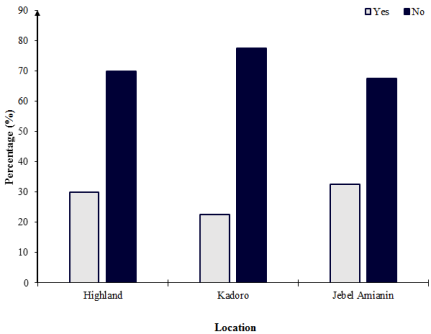
Figure 2. Awareness of milk-borne diseases.
3.1.3. Awareness and Training of Cattle Keepers
The results of this study, shown in Figure 2, revealed that the majority of the households in the Highland (70%), Kadoro (77.5%), and Jebel Amianin (67.5%) hear milk-borne diseases.
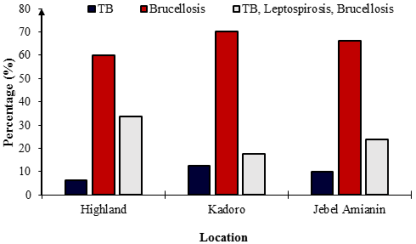
Figure 3. Common milk-borne diseases.
The results of this study, shown in Figure 3, indicated that, in Rejaf East Payam cattle camps, the common milk-borne diseases known by the cattle keepers are TB, brucellosis, and leptospirosis. The majority of the cattle keepers at the cattle camps in Highland (60%), Kadoro (70%), and Jebel Amianin (66.3%) mentioned brucellosis as one of the most common milk-borne diseases in these areas.
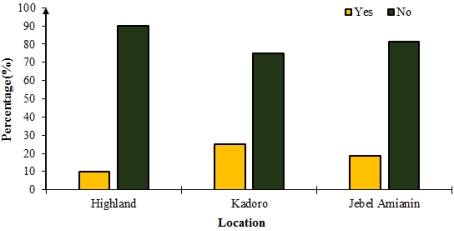
Figure 4. Awareness and training.
The results of this study in Figure 4 showed that the majority of the households in Highland (90%), Kadoro (75%), and Jebel Amianin (81.2%) of Rejaf East Payam cattle camps did not receive awareness or training on milk-borne diseases. The few households in Highland (10%), Kadoro (25%), and Jebel Amianin (18.8%) cattle camps received awareness and training.
The results of this study, shown in Table 4, indicated that, regarding training at the cattle camp, the majority of the households were trained on milk handling and hygiene (99.2%), and few were trained on milk spoilage (0.8%). Furthermore, the results of the study indicated that, in the three cattle camps, no training was conducted on fodder versus milk production and fodder enhancement.
Table 4. Training on milk handling practices at Rejaf East Payam cattle camps.

Training item

Highland (n = 80)

Kadoro (n = 80)

Jebel Amianin (n = 80)

Overall (n = 240)

Milk handling and hygiene

79 (98.7)

79 (98.7)

80 (100)

238 (99.2)

Milk spoilage

1 (1.3)

1 (1.3)

0 (0)

2 (0.8)

The number in the bracket is the percentage of the respondents from the three locations. n= number of respondents.

3.1.4. Milk Marketing
The results of this study in Table 5 revealed that almost all the households in Highland (91.3%), Kadoro (93.8%), and Jebel Amianin (91.3%) of Rejaf East Payam cattle camps sell their milk. However, milk sold is not subjected to quality tests before sale to the consumers, as indicated by 100% of the respondents in the cattle camps. The findings of the results also indicated that 10% of the households in the study area experienced milk rejection at the sale point due to spoilage.
Table 5. Milk Marketing.

Practice

Highland (n = 80)

Kadoro (n = 80)

Jebel Amianin(n = 80)

Overall (n = 240)

Sell of milk

Yes

73 (91.3)

75 (93.8)

73 (91.3)

221 (92.1)

No

7 (8.7)

5 (6.2)

7 (8.7)

19 (7.9)

Subjected milk to quality test before selling

No

80 (100)

80 (100)

80 (100)

240 (100)

Experienced milk rejection

Yes

4 (5)

3 (3.8)

1 (1.3)

8 (10)

No

76 (95)

77 (96.2)

79 (98.7)

232 (90)

The number in the bracket is the percentage of the respondents from the three locations. n = number of respondents

3.2. Physicochemical Composition of Raw Milk from Rejaf East Payam Cattle Camps
3.2.1. Milk Fat
The results of this study (Table 6) indicated a variation in the milk fat content at three cattle camps of Rejaf East Payam. The highest milk fat content was recorded in milk from Jebel Amianin cattle camp (8.72 ± 1.52%), while the lowest was recorded in milk from the Kadoro cattle camp (6.83 ± 1.23%). One-way ANOVA indicated a significant difference (p=0.000008) in the fat content of the milk from the three locations. However, the overall mean value of the milk fat in the study area was 7.76 ± 1.47%. Compared to the East African standards, the results showed that the mean milk fat content of milk from the three locations was above the set standard of not less than 3.25%, which indicated that on average, the milk conformed to the standard. Individual sample analysis indicated that all the milk samples (100%) from the Rejaf East Payam cattle camps conformed to the standard of milk fat content (Table 7). Considering the cattle breeds, the results indicated that there was no significant variation (p=0.150) in the milk fat content between the cattle breeds in the Rejaf East Payam (Table 6).
3.2.2. Solid-non-Fat (SNF)
The results of this study indicated that there was no variation in the milk SNF content in the three cattle camps of Rejaf East Payam (Table 6). However, the highest SNF content was recorded in milk from Jebel Amianin cattle camp (7.73 ± 0.23%), while the lowest was recorded in Highland cattle camp (7.63 ± 0.36%). One-way ANOVA indicated that there was no significant difference (p=0.379) in the milk SNF content among the three locations. The overall mean SNF in the study area was 7.68 ± 0.26%. When compared to the East African standards, the results showed that the mean SNF content of milk from the three locations was less than the set standard of not less than 8.5%, which indicated that on average, the SNF content of milk does not conform to the standard. Individual sample analysis indicated that 100% of the milk samples from Rejaf East Payam did not conform to the standard SNF content (Table 7). Considering the cattle breeds, the results indicated that there was no significant variation (p=0.077) in the SNF content of the milk between cattle breeds in Rejaf East Payam (Table 6).
3.2.3. Milk Density
The results of this study indicated that there was no variation in milk density among the Highland, Kadoro, and Jebel Amianin cattle camps (Table 6). The milk density recorded in the three locations was the same (1.03 ± 0.0 g/ml). One-way ANOVA indicated that there was no significant difference (p=0.353) in the milk density among the three locations. However, the overall mean value of the milk density in the study area was 1.03 ± 0.00 g/ml. When compared to the East African standards, the results showed that the mean milk density from the three locations was within the set standard range (1.028 – 1.036 g/ml), which indicated that on average, the milk density conforms to the standard density. Individual sample analysis indicated that only 38.7% of the milk samples from the region of Rejaf East Payam conform to the standard (Table 7). Considering the cattle breeds, the results indicated that there was no significant variation (p=0.173) in the milk density between the cattle breeds in the Rejaf East Payam (Table 6).
Table 6. Variation in the physicochemical quality of milk according to location.

Physicochemical parameters

Location

Breed

Overall mean

EAC Standard

Highland (n=25)

Kadoro (n=25)

Jebel Amianin (n=25)

Lugbara (n=32)

Nilotic (n=42)

Fat (%)

7.72±1.00a

6.83±1.23b

8.72±1.52c

8.06±1.56a

7.61±1.42a

7.76±1.47

≥3.25

SNF (%)

7.63 ± 0.36a*

7.68±0.15a*

7.73±0.23a*

7.64±0.28a

7.70±0.25a

7.68±0.26

≥8.50

Density (g/ml)

1.03±0.0a

1.03±0.00a

1.03±0.00a

1.03±0.00a

1.03±0.00a

1.03±0.00

1.028 – 1.036

Lactose (%)

4.18 ± 0.20a

4.21 ± 0.09a

4.21±0.09a

4.18±0.16a

4.22±0.14a

4.21±0.15

-

Protein (%)

2.79 ± 0.12a

2.80±0.06a

2.82±0.08a

2.79±0.10a

2.81±0.08a

2.81±0.09

-

Freezing point (°C)

-0.51±0.03a*

-0.51±0.03a*

-0.52±0.02

-0.51±0.03a

-0.51±0.03a

-0.51±0.03

-0.52 to -0.55

pH

6.55±0.21a

6.61±0.21a

6.63±0.21a

6.59±0.21a

6.60±0.21a

6.60±0.21

6.6 – 6.9

Table 7. Conformance to the East African Standard.

Physicochemical parameter

Highland (n=25)

Kadoro (n=25)

Jebel Amianin (n=25)

Overall (%)

Conform (%)

Not conform (%)

Conform (%)

Not conform (%)

Conform (%)

Not conform (%)

Conform (%)

Not conform (%)

Fat (%)

100

0

100

0

100

0

100

0

SNF (%)

0

100

0

100

0

100

0

100

Density (g/ml)

32

68

40

60

44

56

38.7

61.3

Lactose (%)

-

-

-

-

-

-

-

-

Protein (%)

-

-

-

-

-

-

-

-

Freezing point (°C)

36

64

32

68

60

40

36

64

pH

52

48

56

44

48

52

52

48

3.2.4. Lactose Contents
The results of this study indicated that there was no variation in the lactose content of milk from the three cattle camps of the Rejaf East Payam cattle camp (Table 6). The lactose content in the milk recorded from Kadoro and Jebel Amianin cattle camps was the same (4.21 ± 0.09%), except for that from Highland cattle camp (4.18 ± 0.20%). One-way ANOVA indicated that there was no significant difference (p=0.462) in the lactose content of milk from the three locations. However, the overall mean value of the milk lactose content in the study area was 4.21 ± 0.15%. Considering the cattle breeds, the results indicated that there was no significant variation (p=0.076) in the lactose concentration between the cattle breeds in Rejaf East Payam (Table 6).
3.2.5. Milk Protein
The results of this study indicated that there was no variation in milk protein content among the Rejaf East Payam cattle camps (Table 6). The milk protein concentrations recorded in Highland, Kadoro, and Jebel Amianin cattle camps were 2.79 ± 0.12%, 2.80±0.06%, and 2.82±0.08%, respectively. One-way ANOVA indicated that there was no significant difference (p=0.457) in the protein content of the milk from the three locations. However, the overall mean value of the milk protein in the study area was 2.81±0.09%.
3.2.6. Freezing Point
The results of this study indicated that there was variation in the milk freezing point at three cattle camps of Rejaf East Payam (Table 6). The highest milk freezing point was recorded in the milk samples from Jebel Amianin cattle camp (-0.52 ± 0.02°C), while the lowest freezing points were recorded in those from Highland (-0.51 ± 0.03°C) and Kadoro cattle camp (-0.51 ± 0.03°C). One-way ANOVA indicated that there was no significant difference (p=0.335) in the freezing point of the milk from the three locations. However, the overall mean value of the milk freezing point in the study area was -0.51 ± 0.03°C. Compared to the East African standards, the results showed that the mean freezing point of milk from the three cattle camps in some milk samples was below the set standard range (-0.52 to -0.55°C), which indicated that, on average, the freezing point of milk does not conform to the standard. Individual sample analysis indicated that 64% of the milk samples from Rejaf East Payam did not conform to the standard (Table 7). Considering the cattle breeds, the results indicated that there was no significant variation (p=0.273) in the freezing point of the milk between the cattle breeds in Rejaf East Payam (Table 6).
3.2.7. Milk pH
The results of this study indicated that there was no variation in the milk pH at three cattle camps of Rejaf East Payam (Table 6). The highest milk pH was recorded for the milk from Jebel Amianin cattle camp (6.63 ± 0.21), while the lowest was recorded for the milk from Highland cattle camp (6.55 ± 0.21). One-way ANOVA indicated that there was no significant difference (p=0.335) in the milk pH among the three locations. However, the overall mean value of the milk pH in the study area was 6.60 ± 0.21. When compared to the East African standards, the results showed that the mean milk pH from the three locations of milk samples fell within the set standard range (6.6 – 6.9), which indicated that, on average, the pH of the milk samples conformed to the standard. Individual sample analysis indicated that 52% of the milk samples from Rejaf East Payam conform to the standard (Table 7). Considering the cattle breeds, the results indicated that there was no significant variation (p=0.664) in the freezing point of the milk between the cattle breeds in Rejaf East Payam (Table 6).
3.2.8. Variation in Raw Milk Physicochemical Parameters
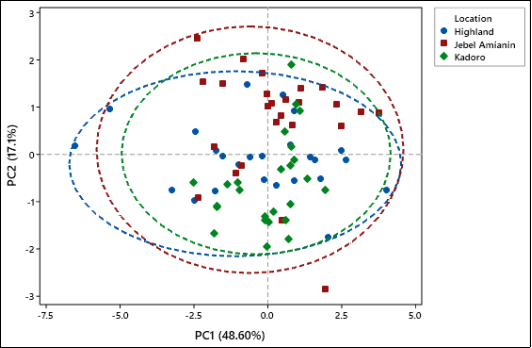
In this study, Principal component analysis revealed three locations (Highland, Jebel Amianin, and Kadoro cattle camp). As the first three PCs generated from this analysis had eigenvalues > 1 and accounted for 81.4% of the total variance in the dataset, these three PCs were retained.
These three PCs were then subjected to varimax rotation to bring them into closer alignment with the original variables. The varimax-rotated factor loadings, which represent correlations between PCs and the original variables, are shown in Table 8 (varimax rotated PC factor loadings). Loadings with an absolute value greater than 0.500 (shown in bold type) represent a strong influence. PC1 was strongly correlated with the following “raw milk” physicochemical parameters: SNF, lactose, and protein. PC2 was strongly positively correlated with fat. PC3 is positively correlated with pH. The results of the principal component analysis generally indicated that there was no variation in the physicochemical quality of the milk from the three locations, i.e., Highland, Jebel Amianin, and Kadoro locations, based on the physicochemical parameters.
Table 8. Varimax-rotated principal component factor loading for raw milk physicochemical parameters.

Variable

PC1

PC2

PC3

Fat (%)

-0.085

0.799

-0.286

SNF (%)

0.529

-0.033

0.052

Density (g/ml)

0.200

-0.313

-0.495

Lactose (%)

0.529

-0.065

0.045

Protein (%)

0.503

-0.001

0.095

Freezing point (°C)

0.363

0.442

-0.259

pH

0.090

0.251

0.770

Loadings with an absolute value greater than 0.500 are shown in bold type.

Figure 5. Variation in the physicochemical quality of milk from the different locations.
3.2.9. Relationship Between the Physicochemical Parameters of Raw Milk
The results of this study, shown in Table 9, indicated that there was a negative weak correlation between SNF and Fat (-0.182). The correlation between SNF and fat was not statistically significant (p=0.118).
The findings showed that density exhibited a weak negative correlation with fat (-0.084), but this correlation was not statistically significant (p=0.473). Additionally, density exhibited a weakly positive correlation with SNF (0.208), and the correlation was statistically significant (p=0.009).
As shown in Table 9, lactose was weakly negatively correlated with fat (-0.208); however, the correlation was not statistically significant (p=0.073). The results showed that lactose content was weakly positively correlated with density (0.298). The correlation was statistically significant (p=0.000). Furthermore, lactose had a strong positive correlation with SNF (0.987), and the correlation was statistically significant (p=0.009).
Table 9. Correlation between raw milk physicochemical parameters.

Fat (%)

SNF (%)

Density (g/ml)

Lactose (%)

Protein (%)

Freezing point (°C)

SNF (%)

-0.182

Density (g/ml)

-0.084

0.298**

Lactose (%)

-0.208

0.987**

0.298**

Protein (%)

-0.136

0.891**

0.233*

0.908**

Freezing point (°C)

0.231*

0.583**

0.144

0.562**

0.512**

pH

0.029

0.157

-0.111

0.129

0.170

0.010

*. Correlation is significant at the 0.05 level (2-tailed).

**. Correlation is significant at the 0.01 level (2-tailed).

The results of this study indicated that protein levels were weakly negatively correlated with fat (-0.136) but not significantly correlated with fat (p=0.246). Protein was weakly positively correlated with density (0.233) but was strongly positively correlated with SNF (0.891) and lactose (0.908). The correlations between protein and density, SNF, and lactose were statistically significant at the respective p values (p=0.000, p=0.044, and p=0.000).
The results of this study in Table 9 indicated that the freezing point was weakly related to fat (0.231) and density (0.144). The correlation between the freezing point and fat density was statistically significant (p=0.046) but not statistically significant (p=0.217). The freezing point was moderately positively correlated with SNF (0.583), lactose (0.562), and protein (0.512). Therefore, the correlation was statistically significant (p < 0.05) between the freezing point and the SNF, protein, or lactose concentration.
The results of this study in Table 9 showed that pH was weakly positively correlated with fat (0.029), SNF (0.157), lactose (0.129), protein (0.170), and freezing point (0.010) but weakly negatively correlated with density (-0.111). However, the correlation was not statistically significant (p>0.05).
3.3. Microbial Contamination of Raw Milk at the Cattle Camps
3.3.1. Variation in the Microbial Quality of Milk According to Location
This study revealed the presence of bacteria in the milk samples from Rejaf East Payam cattle camps. These findings indicated that there was no variation in the TVC of the milk samples from the three cattle camps of Rejaf East Payam (Table 10). The highest TVC was recorded in milk samples from Highland (5.83 ± 0.92 log CFU/ml), while the lowest was recorded in Kadoro cattle camp (5.67 ± 0.44 log CFU/ml). One-way ANOVA indicated that there was no significant difference (p=0.686) in the TVC of milk samples from the three locations. The results of this study showed that there was no variation in the TCC of milk samples from three cattle camps of the Rejaf East Payam (Table 10). The highest TCC was recorded in milk from Kadoro (4.64 ± 0.213 log CFU/ml), while the lowest was recorded in milk from Highland cattle camp (4.54 ± 0.42 log CFU/ml). One-way ANOVA indicated that there was no significant difference (p=0.491) in the TCC among the three locations.
Table 10. Variation in microbial quality (Mean ± SD) of milk according to location.

Microbial parameter

Location

Overall

Highland

Kadoro

Jebel Amianin

TVC (log CFU/ml)

5.83±0.92a

5.67±0.44a

5.81±0.51a

5.77±0.65

TCC (log CFU/ml)

4.54±0.42a

4.64±0.21a

4.62±0.13a

4.60±0.27

TSC (log CFU/ml)

2.53±0.31a

2.502±0.48a

2.43±0.55a

2.49±0.44

In the respective rows, the means that share a letter are not significantly different (p>0.05)

TVC = Total Viable Count, TCC = Total Coliform Count, and TSC = Total Staphylococcus Count

The results of this study indicated that there was no variation in the TSC of milk samples from the cattle camps of the Rejaf East Payam (Table 10). The highest TSC in the milk sample was recorded in milk from Highland cattle camp (2.53 ± 0.31 log CFU/ml), while the lowest was recorded in Jebel Amianin cattle camp (2.43 ± 0.55 log CFU/ml). One-way ANOVA indicated that there was no significant difference (p=0.926) in the TSC among the three locations.
3.3.2. Variation in TVC Grade, TCC Grade and TSC with Location
Milk in the study area was classified into three grades based on the TVC and TCC grade stipulated in the East African Standards, i.e., Grade I, very good; Grade II, good milk; and Grade III, bad milk. The results of this study, shown in Table 11, revealed that milk samples from Kadoro cattle camp had the highest percentage (19%) of grade I milk based on the TVC. The lowest TVC grade I percentage (12.5%) was recorded for Jebel Amianin cattle camp. Highland cattle camp had the highest percentage (75%) of TVC grade II milk, and the lowest percentage (52.3%) of TVC grade II milk was recorded in Kadoro cattle camp. Among those with a milk TVC grade III, the highest percentage (28.7%) was recorded in Kadoro cattle camp. The lowest percentage (10%) of TVC grade III was recorded in Highland cattle camp.
The results of this study, shown in Table 11, indicated that none of the milk samples from Jebel Amianin fall in the category of TCC very good grade milk according to the East African raw milk standards. Highland and Kadoro cattle camps had TCC very good grades of raw milk (5% and 4.9%, respectively). Highland and Jebel Amianin cattle camps had the highest percentage (75%) of TCC good-grade milk, and the lowest percentage (57.1%) of TCC good-grade milk was recorded in Kadoro cattle camp. For TCC bad-grade milk, the highest percentage (38%) was recorded in Kadoro cattle camp, while the lowest percentage (20%) was recorded in Highland cattle camp.
Table 11. Variation in TVC and TCC grade with the location.

Milk grade

Location

Highland

Kadoro

Jebel Amianin

Overall (%)

TVC (CFU/ml)

<200000

I

15

19

12.5

15.5

200000 -1000000

II

75

52.3

66.7

65.7

>1000000

III

10

28.7

20.8

19.8

Total

100

TCC (CFU/ml)

<1000

Very good

5

4.9

0

3.3

1000-50000

Good

75

57.1

75

69.0

>50000

Bad

20

38

25

27.7

Total

100

TSC

Presence

20

28

24

24

Absence

80

72

76

76

Total

100

TVC = Total Viable Count, TCC = Total Coliform Count, and TSC = Total Staphylococcus Count

The results of this study in Table 11 indicated Kadoro cattle camp had the highest percentage (28%) of TSC present in the milk samples. The lowest percentage (20%) of TSC was recorded in a milk sample from the Highland cattle camp.
3.3.3. Effect of Handling Practices on Microbial Quality of Milk
(i). TVC Grade of Milk in Relation to Handling Practices and Demographics
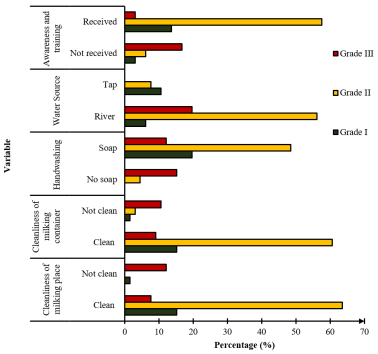
The findings in Figure 6 indicate that milk samples collected from the clean milking places had the highest TVC grade I (15.2%) compared with the milk samples obtained from unclean milking places (1.5%). On the other hand, milk samples obtained from unclean milking places had the highest percentage of TVC grade III (12.1%).
Considering the level of cleanliness of the milking containers used at the cattle camps, the findings in Figure 6 revealed that the milk samples obtained from the clean containers had the highest TVC grade I (15.2%) compared with the milk samples obtained from improperly clean containers (1.5%). On the other hand, milk samples in improper clean containers had the highest percentage of TVC grade III (10.6%) milk.
Figure 6. TVC grade of milk in relation to handling practices and demographics.
Regarding handwashing practices before miAlking a cow, the findings in Figure 6 show that milk samples obtained from households that washed hands with soap and water had the highest TVC grade I (19.7%) compared with the milk samples obtained from households that washed hands with water only without soap (0%). On the other hand, milk samples obtained from households that had their hands washed with water only without soap had the highest percentage of TVC grade III (15.2%) milk.
The results concerning the source of water indicated in Figure 6 showed that the milk samples from the containers washed with tap water had the highest TVC grade I (7.6%) compared with the milk samples from the containers washed with water collected from the river (6.1%). On the other hand, milk samples from the containers washed with water from the river had the highest percentage of TVC grade III (19.7%) milk.
Considering the awareness and training conducted on milk handling practices at the cattle camps, the findings in Figure 6 show that the milk samples from those who had received awareness and training had the highest TVC grade I (13.6%), compared with the milk samples obtained from those who did not receive awareness and training (3%). On the other hand, milk samples obtained from households that did not receive awareness and training had the highest percentage of TVC grade III (16.7%) milk.
(ii). TCC Grade of Milk in Relation to Handling Practices and Demographics
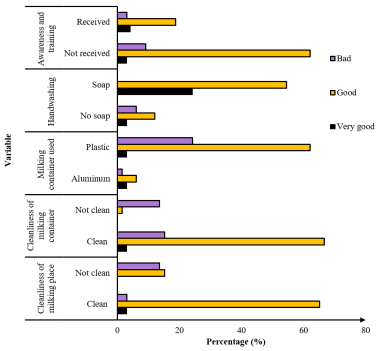
The finding of the study in Figure 7 indicated that milk samples from the clean milking places had the highest TCC very good grade (3%), compared with the milk samples obtained from unclean milking places (0%). On the other hand, milk samples obtained from unclean milking places had the highest TCC bad grade (15.2%).
Considering the cleanliness of the milking containers, the findings in Figure 7 indicate that the milk samples obtained from the clean containers had the highest TCC very good grade (3%) compared with the milk samples obtained from improperly clean containers. On the other hand, milk samples from the improperly clean containers had the highest TCC bad grade (13.6%).
The findings about milking and storage containers used at the cattle camps in Figure 7 indicated that milk samples from the aluminum containers had the highest TCC very good grade (6.1%), compared with the milk samples from the plastic containers (3%). On the other hand, milk samples from plastic containers had the highest TCC bad-grade (24.2%) milk.
Regarding handwashing practices before milking a cow, the findings in Figure 7 show that milk samples obtained from households that washed hands with soap and water had the highest TCC very good grade (24.2%) compared with the milk samples obtained from households that washed hands with water only (3%). On the other hand, milk samples obtained from households that had their hands washed with water had the highest TCC bad grade (6.1%).
The findings of awareness and training conducted at the cattle camps, as shown in Figure 7, indicated that milk samples from those who received awareness and training had the highest TCC very good grade (4.1%) compared with the milk samples obtained from those who did not receive awareness and training (3%). On the other hand, milk samples obtained from those who did not receive awareness and training had the highest TCC bad grade (9.1%).
Figure 7. Grade of TCC in milk in relation to handling practices and demographics.
4. Discussion
4.1. Raw Milk Handling Practices by Pastoral Communities
4.1.1. Demographic Characteristics
The finding in Table 1 shows that there were more females than males involved in milk handling practices in the cattle camps of Rejaf East Payam. The cattle camps are occupied by the Dinka ethnic group. According to Dinka culture, milking cows is considered domestic work, and most of the domestic work is done by women. Men drive the cows into the fields during the day and return them to the camp before sunset. The children cleaned the ground of the camp every morning by collecting the dung and burning it at sunset. The finding is in line with those of Tasnier, et al. , who reported that more females go to cattle camps to support children and elderly people, and Adugna et al. , who reported that milking practices are carried out by females rather than males.
The majority of the population of cattle camps were in the age range of 30–40 years. This group of strongly young people can protect cattle from cattle raiders. Cattle raiding has been a traditional practice among pastoral communities in the region, notably among the Nuer, Dinka, and Murle tribes . Many factors have contributed to this and are becoming more intense, involving greater violence, which is occurring on a far larger scale in South Sudan. Cattle raiding is also spurred by rising bride wealth rates, which are usually paid in cattle, without which young men cannot marry .
The findings also demonstrated that there were more family members at the primary level of education than at the secondary and tertiary levels. Most of the cattle keepers think that there is no need to go to school when they have a good number of herds. This finding is consistent with that of , who reported that the majority of the respondents never completed formal education.
Most family sizes at the cattle camp ranged from 1–5. In cattle camps, most people depend on milk. Due to the seasonality of food production, milk is a critical food at specific times of the year when other foods, e.g., cereals, are not readily available . Cows are unable to produce enough milk to satisfy the demands of their family; therefore, some family members stay at home without going to the cattle camps.
It was also observed that the majority of the cattle camp household members stayed in the camps for 1–5 years (Table 1). This is because cattle keepers move to higher lands in search of better grazing grounds and remain there for the rest of the rainy season (Marchot, 1983).
4.1.2. Milk Handling and Hygienic Practices
The results of this study in Table 2 showed that the majority of households in Rejaf East Payam cattle camps, clean their homestead. The findings also indicated that milk handlers at the camps wash their hands before milking cows. In which majority of them wash hands with water only. Furthermore, after handwashing, the milk handlers never dry their hands with any material such as a towel or a piece of cloth to avoid milk contamination through wet hands. Washing of hands before milking shows conscious awareness regarding proper hygiene practices. Milk is contaminated by microorganisms when not handled properly. Handwashing by all milk handlers in the study areas was due to the availability of water and the presence of awareness of milk-handling practices in the locations. Washing hands and milking containers with soap and water, and drying hands with clean pieces of cloth, tissue paper, or clean towel before milking a cow are some of the proper milk handling practices (Yohannis, et al., 2015). Soap, as a detergent, is effective at removing dirt, grime, and microorganisms. Thus, preventing milk contamination by pathogenic microbes on the hands during milking. Contaminated milk, results in health risks for consumers as well as milk spoilage. This finding is similar to that of Bekele et al. , who reported that most milk producers in Dangila town in the western Amhara region washed their hands before milking.
The result of the study demonstrated that udder washing before milking was not practiced. They merely allowed their calves to suckle before milking. It is considered that the calves remove the dirt from the teats and facilitate the letdown of milk. Cleaning and washing the udder of cows before milking is vital for hygienic practices involving milk. The washing of the udder removes the dirty materials from the udder. This is because the udder of a cow has direct contact with dirty materials such as urine and dung and feed refusal . When the udders and teats of cows are not washed before milking, pathogenic and non-pathogenic microbes enter the milk during milking, leading to milk contamination and spoilage, which are associated with health risks of the consumers .
According to Table 3, the findings of the study indicated that milking containers at the three cattle camps of Rejaf East Payam, were properly cleaned. Hygienic practices related to cleaning milking equipment and the frequency of cleaning are among the major factors affecting the quality of milk and milk products. Milking and milk storage utensils should be properly cleaned and maintained if not it can spoil milk and milk products easily since milk is a perishable product . Therefore, cleaning and draining equipment after each milking is important for reducing microbial contamination in milk. Milk handlers should pay particular attention to the type as well as cleanliness of the milking equipment they use for milking.
Most of the households at the cattle camps in Rejaf East Payam used plastic containers for milking and storage of milk. Food-grade containers approved should always be used for milking and storage, e.g., aluminum, and stainless steel. Food-grade plastic jerry cans are intended for single use only. Metal containers are better because they are easy to clean and disinfect . Therefore, they should be cleaned after each milking to reduce bacterial contamination before the next milking. This protects consumers’ health from milk-borne diseases and reduces milk spoilage. These findings are in line with reports from the Ezrha district of the Gurage Zone, where all of the respondents used plastic containers as milking materials .
The main source of water used at the cattle camps for the milking process was from rivers and tap water. The majority of the households in Rejaf East Payam used to clean milking containers twice a day (Table 3). The level of water used and the frequency of cleaning reduce contamination and spoilage of milk from milking containers. When a milk container is not cleaned and disinfected effectively, it can become wholly contaminated from bacteria in the containers . This result is similar to that of Saba , who reported that the majority of the respondents in Ejerie district cleaned milking containers twice a day.
The highest percentage of the cattle keepers at the camps consumed unboiled raw milk. The findings of the present study (Table 3) also indicated that there was no access to a cooling system for the three cattle camps. Furthermore, all of the cattle keepers never knew any means of preserving milk in the cattle camps; therefore, they did not preserve their milk. Milk can be preserved either through pasteurization, ultra-high-temperature heat (UHT), sterilization as well as cooling and refrigeration. It is important to note that boiling milk kills pathogenic microorganisms and helps preserve it for later use. Cooling and refrigeration slow down the growth of spoilage microorganisms in milk. Therefore, pastoral communities in Rejaf East Payam consume unboiled raw milk which exposes them to milk-borne diseases such as brucellosis, campylobacteriosis, cryptosporidiosis, listeriosis, and salmonellosis .
4.1.3. Awareness and Training of Cattle Keepers
The results of this study, shown in Figure 2, revealed that the majority of the households in the Highland, Kadoro, and Jebel Amianin hear milk-borne diseases. The results of this study, shown in Figure 3, indicated that, in Rejaf East Payam cattle camps, the common milk-borne diseases known by the cattle keepers are TB, brucellosis, and leptospirosis. The majority of the cattle keepers at the cattle camps in Highland, Kadoro, and Jebel Amianin mentioned brucellosis as one of the most common milk-borne diseases in these areas. The results of this study in Figure 4 showed that the majority of the households in Highland, Kadoro, and Jebel Amianin of Rejaf East Payam cattle camps did not receive awareness or training on milk-borne diseases. The few households in Highland, Kadoro, and Jebel Amianin cattle camps received awareness and training. The results of this study, shown in Table 4, indicated that, regarding training at the cattle camp, the majority of the households were trained on milk handling and hygiene, and few were trained on milk spoilage. Furthermore, the results of the study indicated that, in the three cattle camps, no training was conducted on fodder versus milk production and fodder enhancement.
Awareness of milk-borne diseases is important in cattle camps because it allows milk handlers to adopt safe measures and hygienic practices, including handwashing before milking, washing udder and teats, using clean milking containers, and drinking boiled raw milk . Awareness and training on milk handling practices are protective measures that should be taken constantly. This may improve the quality of milk and make it safe for consumption. In contrast, Weldekidan et al. reported that half of the respondents described tuberculosis as one of the most common milk-borne diseases among the farmers of the Mendefera Dairy Cooperative Union, Eritrea.
4.1.4. Milk Marketing
The results of this study in Table 5 revealed that almost all the households in Highland, Kadoro, and Jebel Amianin of Rejaf East Payam cattle camps sell their milk. However, milk sold is not subjected to quality tests before sale to the consumers, as indicated by all of the respondents in the cattle camps. The findings of the results also indicated that few of the households in the study area experienced milk rejection at the sale point due to spoilage.
When the milk is spoiled, the households in the cattle camp either pour it out or give it to the dog. The rejection of milk during the sale is due to milk contamination, which may be attributed to improper milk handling practices, such as not washing udder, unclean milking containers, or unclean environments . Milk produced under nonhygienic conditions may lead to a high microbial load, which may lead to milk spoilage and thus milk rejection.
4.2. Physicochemical Composition of Raw Milk from Rejaf East Payam Cattle Camps
The results of this study demonstrated that there were no significant differences in SNF, density, lactose content, protein content, freezing point, or milk pH except for the milk fat content in the three cattle camps from the Rejaf East Payam (Table 6). Rather than being a direct consequence of the type or quantity of protein in the diet, changes in milk yield translate into changes in fat percentage. Due to insufficient ruminal ammonia for optimal microbial digestion of fiber and other feed ingredients, low levels of rumen-degradable protein may result in lower milk fat percentages .
When the physicochemical parameters of the milk samples were compared to the East African standards for raw milk, the fat content, density, and pH on average conformed to the standards. Considering the cattle breeds, the results indicated that there was no significant variation in the milk fat content, SNF, density, lactose, protein, freezing point, and pH between the cattle breeds in the Rejaf East Payam (Table 6). This may be attributed to the feeding regime. Underfeeding reduces SNF as it is more sensitive to feeding than fat content. The SNF content can decrease if a cow is fed a low-energy diet but is not greatly influenced by protein deficiency unless the deficiency is acute .
These findings are similar to those of Wangalwa in Mbarara district, Southwestern Uganda, who reported that milk fat and milk pH conformed with the standard except for SNF.
The findings of the present study indicated that the milk pH in the study area was within the range of the East African standard. According to East African standards, the normal milk pH of a cow ranges from 6.6 to 6.9. The pH is used to determine the acidity and alkalinity of milk. The increase in acidity in milk is due to infection, which reduces the pH. A cow suffering from mastitis has a pH value greater than 7.0, which results in alkaline milk. In normal cow’s milk, the pH is less than 6.9 .
The SNF and freezing points of milk did not conform to the East African standards for cow’s raw milk (Table 6 and Table 7). Factors that attributed to the variation in the East African standards of raw cow milk may be due to feeding regime, season, and stage of lactation as well as adulteration. Forage quality and quantity may affect milk SNF. Increasing the intake of roughage such as grass and sorghum silage usually reduces SNF and milk production. The decrease is largely due to reduced energy or dry matter intake. The content of SNF is usually highest during the first 2 to 3 weeks, after which it decreases slightly . Milk from cows that do not have access to adequate feed or water may show a different freezing point . When it has been adulterated the freezing point rises nearer to that of water. Due to the lack of conformance with the East African Standards, cattle keepers should be trained on animal feeding practices that can improve the SNF milk content. If the common market is established for East African communities. The milk produced within the country will not be accepted in the common market, resulting in economic loss to the milk producers and traders as well as in the income tax for South Sudan.
The results of the principal component analysis (Figure 5) generally indicated that there was no variation in the physicochemical quality of milk from the three locations, i.e., Highland, Jebel Amianin, and Kadoro cattle camp, based on the physicochemical parameters. This may be attributed to the fact that Rejaf East Payam cattle camps have the same breed as well as the same feeding regime. The results of this study are shown in Table 9. Protein expression was strongly positively correlated with SNF and lactose. This demonstrated that an increase in one of the corresponding parameters led to an increase in the other parameter, and a decrease in the other parameter led to a decrease in the other parameter. This difference may be attributed to the strong positive genetic correlation between lactose yield and protein yield .
4.3. Microbial Contamination of Raw Milk at the Cattle Camps
The results of this study indicated that there was a high load of viable bacteria and coliform bacteria in the milk samples from the three sampling sites. The presence of TVC and TCC microbial load in milk samples (Table 10) indicates that the milk has been contaminated as a result of poor hygiene, the use of milking containers that are not properly cleaned, and unsanitary milking practices, . The microbial loads recorded in this study are higher than the TVC and TCC values reported by Shija , in the Lushoto and Handeni districts of Tanzania.
The results of this study also indicated the presence of high loads of Staphylococcus aureus (TSC) in the milk samples (Tables 10 and 11). The high levels of contamination probably originated from the cows’ udder since all households never washed the udders or teats of cows before milking, and Staphylococcus aureus is found within the environment and is carried by approximately half of the human population. The lack of cooling facilities in the cattle camps is another factor that might increase the abundance of Staphylococcus aureus in milk . When milk is not refrigerated, enterotoxigenic Staphylococcus aureus strains can grow and produce enterotoxin. The high count of Staphylococcus aureus is due to poor personal hygiene practices . The presence of Staphylococcus aureus may lead to health risks from milk-borne diseases as well as milk spoilage
The results (Figures 6 and 7) showed that, when proper milk handling practices were observed, milk samples had better TVC and TCC grades, unlike improper milk handling practices, where milk samples had bad TVC and TCC grades. Milk produced under unhygienic conditions leads to a high microbial load, thus resulting in health risks to consumers. The study results (Figures 6 and 7), on the relationship between training and the microbial quality of milk at the three cattle camps of Rejaf East Payam, indicated that milk samples obtained from the households who had received training on milk handling had improved milk quality of TVC and TCC grades than milk samples obtained from the households who had never received awareness and training where milk samples had bad TVC and TCC grades. Awareness and training improved the microbial safety and quality of the milk.
The results in Figure 6, on microbial quality versus the source of water used for cleaning the milking container revealed that milk samples in the containers washed with water obtained from the tap had better TVC grades than milk samples in the containers washed with water from rivers that had bad TVC grades. This showed that river water was most likely contaminated by fecal matter from humans or animals. Therefore, this calls for the provision of safe and clean water to pastoral communities of Rejaf East Payam. The finding in Figure 7, on the milking container used indicated that the milk samples from the aluminum containers had better microbial quality (TCC grade). On the other hand, the milk samples in the plastic containers had poor microbial quality (TCC grade). This is attributed to the fact that it is easy to clean and disinfect aluminum and stainless food containers .
5. Conclusion
The findings of the study concluded that raw milk handling practices by pastoral communities at the cattle camps in Rejaf East Payam used traditional methods of milking. Milk handling practices in cattle camps were characterized by hygienic and unhygienic practices. The hygienic milk handling practices at the cattle camps included cleaning milking places and cleaning milking containers. On the other hand, unhygienic milk handling practices at cattle camps include never drying hands after washing, not washing udder or teats from a cow, and consuming unboiled raw milk. It is also concluded that no access to cooling systems and milk quality tests in the cattle camps.
From this study, it can be concluded that the physicochemical qualities of milk are affected by diseases, feeds, and milk-handling practices. Therefore, only the milk fat content, density, and pH conformed to the East African standards for raw cow milk.
It can be concluded that the microbial loads in the milk samples are not within the standard. Furthermore, when proper milk handling practices such as washing using soap, and cleaning milk containers, or milking areas were observed, the milk samples had improved microbial quality.
6. Recommendations
This study generates the following recommendations:
i. The findings of the present study indicated that raw milk handling practices by pastoral communities are characterized by some unhygienic practices. Therefore, there is a need to establish relevant authority to establish guidelines on milk handling practices and provision of adequate awareness and training to improve milk quality and reduce milk contamination at the cattle camp level.
ii. The findings of the study indicated that household members at cattle camps never perform quality tests or controls before milk is sold. Therefore, there is a need for quality tests and controls to avoid milk loss and rejection during sale.
iii. The study showed that the households at the cattle camps had no access to milk cooling facilities. Therefore, there is a need for the government of South Sudan to establish central cooling facilities in cattle camps to allow cattle keepers to extend their milk shelf life.
iv. The findings of the study indicated that there are insufficient veterinary services at the cattle camps. Therefore, the relevant authority needs to extend veterinary services to cattle camps.
v. Further studies on mycotoxins, pesticides, and antibiotic residues in raw milk from cattle camps are recommended.
Abbreviations

ANOVA

Analysis of Varaince

CFU

Coliform Units

CPA

Comprehensive Peace Agreement

FAO

Food Agriculture Organization

FSA

Food Standard Agency

SPSS

Statistical Package for Social Sciences

IDPs

Internal Displaced Persons

ml

Mililiter

PCA

Plate Count Agar

pH

Potential of Hydrogen

SD

Standard Deviation

SNF

Solid-Non-Fat

TCC

Total Coliform Count

TSC

Total Staphyloccus Count

TVC

Total Viable Count

Conflicts of Interest
The authors declare no conflicts of interest.
References
[1] Abdalla, M., M. O. M. and E. F. M. (2011). The impact of applying some hygienic practices on raw milk quality in Khartoum State, Sudan. Research Journal of Agriculture and Biological Sciences. 7: 169-173.
[2] Abebe Bereda, Z. Y. and A. N. (2012). Hygienic and microbial quality of raw whole cow’s milk produced in Ezha district of the Gurage zone, Southern Ethiopia. Journal of Agricultural Research, 1(11), 459–465.
[3] Adugna, C., & Eshetu, M. (2021). Hygienic practice, microbial quality and physco-chemical properties of milk collected from farmers and market chains in Eastern Wollega zone of Sibu Sire districts, Ethiopia. 7, 125–132.
[4] Amenu, K., Wieland, B., Szonyi, B., & Grace, D. (2019). Milk handling practices and consumption behavior among Borana pastoralists in southern Ethiopia. Journal of Health, Population, and Nutrition, 38(1), 6.
[5] Andreoletti O., Budka H., Buncic S., Colin P., C., J. D., Koeijer A. De. Griffin J., Havelaar A., Hope J., K., G., Kruse H., Magnino S., Lopez M., M. J., Nguyen-The C., Noeckler K., Noerrung B., M., & M. P., Roberts T., V. I. and V. E. (2009). Assessment of the Public Health significance of meticillin resistant Staphylococcus aureus (MRSA) in animals and foods: Scientific Opinion of the Panel on Biological Hazards. The Andreoletti Journal. 993: 1-73.
[6] Barnard, S. E. (1977). Freezing Points and Milk Adulteration. Journal of Food Protection Vol. 40, No. 4, Pages 272-273.
[7] Bekele, A. D., Beuving, J., and Ruben, R. (2015). “How African Households Shop? Evidence from Dairy Chains in Ethiopia,” European Journal of Development Research 46: 1–21.
[8] Catley, A. (2018). Livestock and livelihoods in South. December.
[9] Cochran, W. G. (1977). Sampling techniques. 3rd Ed. New York: John Wiley & Sons.
[10] Cortes, C. (2010). Milk composition and microbiology. Milk Composition and Microbiology, 3–11.
[11] EAS, 67. (2006). East African Standard. Raw Cow Milk Specification.
[12] FAO. (2005). Project milk and Dairy products: Post-harvest losses and Food Safety in Sub-Saharan Africa and Near East (PFL).
[13] FAO. (2013). Milk and dairy products in human nutrition.
[14] Frelich, J., Šlachta, M., Hanuš, O., Špička, J., & Samková, E., Węglarz, A., Zapletal, P. (2012). Seasonal variation in the fatty acid composition of cow milk in relation to the feeding system, Animal Science Papers and Reports., 30(3), 219-229.
[15] FSA. (2012). Chapter 2.9 Dairy Hygiene Inspection. Food Standard Agency, 1–99.
[16] Gobena, E. N., Nurfeta, A., & Gebreslase, H. W. (2014). Milk handling practices and its challenges in Borana Pastoral Community, Ethiopia. April.
[17] Guide. (2021). Excel 2016 Basic Quick Reference Guide.
[18] Haile-Mariam, M., & Pryce, J. E. (2017). Genetic parameters for lactose and its correlation with other milk production traits and fitness traits in pasture-based production systems. Journal of Dairy Science, 100(5), 3754–3766.
[19] Harris, B., & Bachman, K. (2003). Nutritional and Management Factors Affecting Solids-Not-Fat, Acidity and Freezing Point of Milk. University of Florida - IFAS EXTENSION, 1–5.
[20] Houghtby A.G., Maturin L. J. and Koenig K.E. 1992. Microbiological count methods. In: Marshal, R.T. (Ed.). Standard methods for the examination of dairy products. 16th Edn. American Public Health Association, Washington, D C, USA. 213-246.
[21] ISO. (1995). International Organization for Standardization. Recommendation of the meeting of the ISO of meat and meat products. ISO/TC-34/SC.6. The Netherlands., 10–18.
[22] Jusupović, F., & Šljivo, E. (2017). Impact of boiling on raw milk – food safety aspects. 11(1), 47–54.
[23] Kuorwel, K.K., Lumori, C.S. and Andrew, A. K. (2018). Review of South Sudan’s food safety status in relation to chemical contaminants. MOJ Food Processing & Technology, 6(1), 113–120.
[24] Lado, D., Maina, N., Lado, M., Abade, A., Amwayi, S., Omolo, J., & Oundo, J. (2012). Brucellosis in Terekeka County, Central Equatoria State,. 89(1), 28–33.
[25] M. A. McGuire, D. E. B. (2002). Milk biosysthesis and secretion: Milk fat. In Encyclopedia of Dairy Science.
[26] Marchot. (1983). Cattle keeping among the Dinka from Southern Sudan.
[27] Martin, E., Mosel, I., Charles, J. T., Christopher, B. N., Choro, V. F., Lusos, J. C., & Dokolo, R. A. (2011). City limits: urbanisation and vulnerability in Sudan Juba case study. January.
[28] Milkotronic, L. (2019). Lactoscan sa. MILK ANALYZER Operation Manual.
[29] Mogessie, A. (1990). Microbiological Quality of Ayib, A Traditional Ethiopian Cottage Cheese. Int. J.Food Microbiol, 10: 263-268.
[30] Popescu, A., & Angel, E. (2019). Cow Raw Milk Quality and Its Factors of Influence in Relationship With Milk Price. Scientific Papers Series Management, Economic Engineering in Agriculture and Rural Development, 19(1), 421–440.
[31] Saba, H. (2015). Quality assessment of cattle milk in AdeaBerga and Ejerie districts of west shoa zone, Ethiopia. M Sc Thesis, Haramaya University, Ethiopia.
[32] Shija, F. (2013). Assessment of milk handling practices and bacterial contamination along the diary value chain in Lushoto and Handeni district, Tanzania. 33–34.
[33] Tasnier, B. F. and A.-F. (2021). Cattle culture of south sudan: In Africa geographic stories.
[34] Wangalwa, R. (2016). On Farm Milk Handling Practices and Quality of Raw Milkin Mbarara District, Southwestern Uganda.
[35] Weldekidan, M. W., Semere, M., Tesfaldet, L., Tesfamariam, N., Ygzaw, F., & Rezene, A. (2019). Milk Handling Practice and Awareness on Milk-Borne Diseases among Farmers of Mendefera Dairy Cooperative Union, Eritrea 2019. 5(4), 13–21.
[36] Yilma, Z. (2012). Microbial Properties of Ethiopian Marketed Milk and Milk Products and Associated Critical Points of Contamination: An Epidemiological Perspective. Epidemiology Insights, May.
[37] Yohannis Abera and Mesfin Angaw. (2015). Handling Practice and Microbial Quality of Raw Cow’s Milk Produced and Marketed In Adigrat Town, North Eastern Tigray. Journal of Biology, Agriculture and Healthcare, 5(15), 160–170.
Cite This Article
  • APA Style

    Aguer, E. M. K., Wangalwa, R., Jeninah, A., Augustino, S. M. A. (2025). Microbiological Safety and Quality of Raw Milk at Pastoral Community Cattle Campsites in Rejaf East Payam, South Sudan. Journal of Food and Nutrition Sciences, 13(1), 28-47. https://doi.org/10.11648/j.jfns.20251301.14

    Copy | Download

    ACS Style

    Aguer, E. M. K.; Wangalwa, R.; Jeninah, A.; Augustino, S. M. A. Microbiological Safety and Quality of Raw Milk at Pastoral Community Cattle Campsites in Rejaf East Payam, South Sudan. J. Food Nutr. Sci. 2025, 13(1), 28-47. doi: 10.11648/j.jfns.20251301.14

    Copy | Download

    AMA Style

    Aguer EMK, Wangalwa R, Jeninah A, Augustino SMA. Microbiological Safety and Quality of Raw Milk at Pastoral Community Cattle Campsites in Rejaf East Payam, South Sudan. J Food Nutr Sci. 2025;13(1):28-47. doi: 10.11648/j.jfns.20251301.14

    Copy | Download

  • @article{10.11648/j.jfns.20251301.14,
      author = {Elijah Majok Kiir Aguer and Rapheal Wangalwa and Atwebembeire Jeninah and Serafino Musa Abdelkarim Augustino},
      title = {Microbiological Safety and Quality of Raw Milk at Pastoral Community Cattle Campsites in Rejaf East Payam, South Sudan
    },
      journal = {Journal of Food and Nutrition Sciences},
      volume = {13},
      number = {1},
      pages = {28-47},
      doi = {10.11648/j.jfns.20251301.14},
      url = {https://doi.org/10.11648/j.jfns.20251301.14},
      eprint = {https://article.sciencepublishinggroup.com/pdf/10.11648.j.jfns.20251301.14},
      abstract = {The safety of dairy products concerning foodborne diseases is a major concern worldwide. This is particularly true in developing countries, where milk and various dairy products are produced under unhygienic conditions and poor production practices. Milk is one of the food products consumed in South Sudan, however, there is limited information regarding its handling and safety, especially among the pastoral communities. Therefore, this study assessed raw milk's microbiological safety and quality at pastoral communities’ cattle campsites in Rejaf East Payam, South Sudan. A total of 240 households and 75 raw milk samples were selected at random. The findings revealed that the milking handling practices at cattle camps are characterized by hygienic and unhygienic practices. The pastoral communities had no access to a cooling system for milk storage. Additionally, 90.8% of the households in cattle camps consumed unboiled raw milk, and 10% of the households experienced milk rejection at the point of milk sale. The overall means of physicochemical parameters of milk samples were; fat = 7.76±1.47%, SNF = 7.68±0.26%, density = 1.03±0.00g/ml, lactose = 4.21±0.15%, protein = 2.81±0.09%, and pH 6.60±0.21. The result of the microbiological quality of raw milk indicated that the highest TVC (5.81 ± 0.51logCFU/ml) was recorded in Jebel Amianin cattle camp, on the other hand, the highest TCC (4.64 ± 0.21 logCFU/ml) was recorded in Kadoro cattle camp and TSC (2.53 ± 0.31logCFU/ml) recorded in Highland cattle camp. Furthermore, the study shows that the microbiological quality of raw milk samples is not within the standard and therefore there is a need to improve hygiene practices in milk production.
    },
     year = {2025}
    }
    

    Copy | Download

  • TY  - JOUR
    T1  - Microbiological Safety and Quality of Raw Milk at Pastoral Community Cattle Campsites in Rejaf East Payam, South Sudan
    
    AU  - Elijah Majok Kiir Aguer
    AU  - Rapheal Wangalwa
    AU  - Atwebembeire Jeninah
    AU  - Serafino Musa Abdelkarim Augustino
    Y1  - 2025/02/07
    PY  - 2025
    N1  - https://doi.org/10.11648/j.jfns.20251301.14
    DO  - 10.11648/j.jfns.20251301.14
    T2  - Journal of Food and Nutrition Sciences
    JF  - Journal of Food and Nutrition Sciences
    JO  - Journal of Food and Nutrition Sciences
    SP  - 28
    EP  - 47
    PB  - Science Publishing Group
    SN  - 2330-7293
    UR  - https://doi.org/10.11648/j.jfns.20251301.14
    AB  - The safety of dairy products concerning foodborne diseases is a major concern worldwide. This is particularly true in developing countries, where milk and various dairy products are produced under unhygienic conditions and poor production practices. Milk is one of the food products consumed in South Sudan, however, there is limited information regarding its handling and safety, especially among the pastoral communities. Therefore, this study assessed raw milk's microbiological safety and quality at pastoral communities’ cattle campsites in Rejaf East Payam, South Sudan. A total of 240 households and 75 raw milk samples were selected at random. The findings revealed that the milking handling practices at cattle camps are characterized by hygienic and unhygienic practices. The pastoral communities had no access to a cooling system for milk storage. Additionally, 90.8% of the households in cattle camps consumed unboiled raw milk, and 10% of the households experienced milk rejection at the point of milk sale. The overall means of physicochemical parameters of milk samples were; fat = 7.76±1.47%, SNF = 7.68±0.26%, density = 1.03±0.00g/ml, lactose = 4.21±0.15%, protein = 2.81±0.09%, and pH 6.60±0.21. The result of the microbiological quality of raw milk indicated that the highest TVC (5.81 ± 0.51logCFU/ml) was recorded in Jebel Amianin cattle camp, on the other hand, the highest TCC (4.64 ± 0.21 logCFU/ml) was recorded in Kadoro cattle camp and TSC (2.53 ± 0.31logCFU/ml) recorded in Highland cattle camp. Furthermore, the study shows that the microbiological quality of raw milk samples is not within the standard and therefore there is a need to improve hygiene practices in milk production.
    
    VL  - 13
    IS  - 1
    ER  - 

    Copy | Download

Author Information
  • Department of Biology, Upper Nile University, Juba, South Sudan
  • Department of Biology, Mbarara University of Science and Technology, Mbarara, Uganda

  • Department of Biology, Mbarara University of Science and Technology, Mbarara, Uganda

  • Department of Animal Production, University of Juba, Juba, South Sudan

  • Abstract
  • Keywords
  • Document Sections

    1. 1. Introduction
    2. 2. Materials and Methods
    3. 3. Results
    4. 4. Discussion
    5. 5. Conclusion
    6. 6. Recommendations
    Show Full Outline
  • Abbreviations
  • Conflicts of Interest
  • References
  • Cite This Article
  • Author Information