Research Article | | Peer-Reviewed

Assessing Microbiological Quality and Safety of Fresh Fruits Sold at Nekemte Town, Western Ethiopia

Received: 29 March 2024     Accepted: 13 April 2024     Published: 7 December 2024
Views:       Downloads:
Abstract

There is ample evidence that eating fresh fruits has numerous health and nutritional advantages, making them an indispensable part of the human diet. They are one of the main causes of food-borne illnesses if they are not properly harvested, processed, stored, and handled. This study aimed to assess the microbial quality and safety of fresh fruits sold in Nekemte town. Sixty samples were collected from open markets and analyzed for their microbial quality and safety. The study found that the highest total viable count was found in avocado, followed by papaya, banana, and orange. The highest ASFBC count was found in banana, while the lowest was in orange. The highest total coliform count was found in banana. The study identified eleven bacterial genera, including Enterobacter spp, Escherichia spp, Klebsella spp, Staphylococcus spp, Aeromonas spp, Bacillus spp, Shigella spp, Proteus spp, Pseudomonas spp, Samonella spp, and Streptococcus spp. The most dominated genera were Staphylococcus spp, Escherichia spp, Streptococcus spp, Shigella spp, Aeromonas spp, and Proteus spp. The results suggest that contamination during fruit harvesting or processing and handling could lead to foodborne illnesses. Regular supervision and training can improve the quality of fresh fruit.

Published in Journal of Food and Nutrition Sciences (Volume 12, Issue 6)
DOI 10.11648/j.jfns.20241206.14
Page(s) 279-286
Creative Commons

This is an Open Access article, distributed under the terms of the Creative Commons Attribution 4.0 International License (http://creativecommons.org/licenses/by/4.0/), which permits unrestricted use, distribution and reproduction in any medium or format, provided the original work is properly cited.

Copyright

Copyright © The Author(s), 2024. Published by Science Publishing Group

Keywords

Antibiotic Susceptibility, Antibiotic, Fresh Fruits, Microbial Quality and Safety, Nekemte Town

1. Introduction
Fruit refers to the mature ovary of a plant, including seeds, covering, and tissue. Fresh fruits are essential for human diet and have health and nutritional benefits . In Ethiopia, fruits like banana, mango, avocado, papa, and orange are produced and exported, with potential fordomestic import and export markets and industrial processing . Fresh fruits are increasingly recognized as crucial for nutrition and health, with increasing consumer demand and global trade leading to increased international fruit trade . Common fruits in Ethiopia include pineapples, bananas, avocados, mangoes, papayas, and grapes. However, post-harvest problems, such as harvesting activities, post-harvest handling, transportation, and storage, can significantly impact the quality and safety of fresh fruit, affecting its potential for domestic and export markets and industrial processing .
Improper handling, inadequate transport, and low storage facilities pose significant problems in the production, marketing, and consumption of fruits. These issues expose fruits to microbial contamination, affecting product safety and quality. Fresh fruits are a significant source of foodborne pathogens, posing a potential health risk. Poor handling can damage fresh produce, making it susceptible to spoilage and pathogenic microorganisms. Damaged surfaces also allow microorganisms to enter plant tissues.
In Nekemte town, markets often sell supplementary fruits like papaya, banana, mango, and avocado. However, these fruits are obtained from various farmlands without proper handling practices. Poor market conditions, such as poor hygiene, unsafe containers, and unsanitary marketing environments, contribute to contamination. This study investigates the microbiological quality and safety of fresh fruits sold online in Nekemte town.
2. Material and Methods
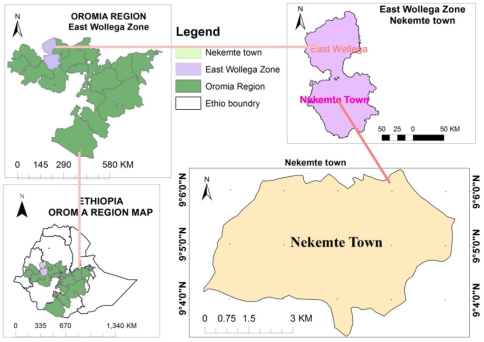
The study was conducted in Nekemte town, the capital of the East Wollega Zone, Ethiopia, from June 2018 to August 2018. The area is known for its coffee production and warm, temperate climate, with an average annual temperature of 21°C and rainfall of 1497 mm (Figure 1).
Figure 1. Map of the study area (Nekemte town).
2.1. Study Design
The study utilized experimental methods for the isolation and characterization of indicator organisms, pathogens, and dominant flora, followed by standard isolation methods, morphological, biochemical, and microscopic examination tests.
2.2. Isolation and Characterization
About 500mg of fresh fruits were collected and homogenized using laboratory tools. Diluted samples were transferred to sterilized water, homogenized, and serial dilutions prepared. The diluted samples were then spread on nutrient agar and incubated at 32-37°C for 24-48 hours.
2.3. Microbiological Analysis
The study used plate count agar to perform total colony count of bacteria. The total microbial count was recorded as colony forming units per milliliter (cfu ml-1). Total coliform count (TCC) was obtained using the MPN technique, inoculating dilution tubes into Lactose Broth (LB) tubes and incubating at 35°C for 48 hours. Fecal coliform count was calculated using the MPN method, inoculating tubes into EC broth and incubating at 45.5°C. Staphylococci count (SCC) was performed by transferring dilutions into sterile Petri dishes and incubating them in Mannitol salt agar medium. The colonies were enumerated and tested by coagulase test after overnight sub-culturing in nutrient agar plates.
2.4. Detection of Major Bacterial Pathogens from Fresh Fruits
The FDA's guidelines were followed for pathogen detection, using a juice sample mixed with saline solution and incubated at 37℃ for 24 hours, then streaked on various culture media .
2.5. Identification of Micro-Flora
The study involved determining the bacterial load, randomly selecting four colonies from countable plates, purifying them, and identifying dominant aerobic viable bacteria through morphological and biochemical tests .
2.6. Antimicrobial Susceptibility Testing
The study used an in-vitro test to confirm the susceptibility of isolates to antimicrobial agents or detect resistance in a human pathogen. The test involved adjusting suspensions, using sterile cotton swabs, and using ten antibiotic discs. The zone of inhibition was measured and categorized as susceptible, intermediate, or resistant .
2.7. Data Analysis
Data from questionnaires were verified, filtered, and recorded in MS-Excel. TVC, TCC, and FCC values were log transformed for symmetrical frequency distribution. Statistical analysis was performed using SPSS software, determining bacterial counts among fruit juice and vegetable salad samples.
3. Result and Discussion
A total of 60 fresh fruit samples from four markets in Nekemte town were analyzed for total viable bacterial count. The highest total viable count was found in avocado (7.09 log cfu/ml), followed by papaya, mango, banana, and orange. The mean bacterial count showed significant differences. The study found that all fruit samples had higher viable bacterial counts than permitted, with the mean total aerobic viable bacterial counts above Gulf standards (Table 1). This contradicts a previous study by Rahman et al. , which found higher total viable bacterial counts in fresh fruits compared to commercially packed juice samples. These variations in bacterial counts could be attributed to differences in sampling techniques, storage conditions, or geographical locations. The study found lower total bacteria count in mango compared to the author's findings. Factors like geographical variation, pH, seasonal variation, hygiene, incubation time, and storage may contribute to the difference. Microbes in food can be linked to improper handling, contaminated water, cross-contamination, and dirty processing utensils. Contamination is mainly due to poor water quality, unhygienic conditions, and vendor personal hygiene (Table 2).
Table 1. Total viable bacterial count (mean <i></i>SD (log cfu/ml) of fresh fruits, 2020.

Samples

TVBC

TTC

TFC

TSC

TASFBC

Avocado

7.090.71a

3.293.47c

4.692.86c

4.872.42c

5.452.58ab

Mango

5.992.86b

4.433.29b

6.680.64a

4.232.66c

5.572.64ab

Papaya

4.763.53bc

5.182.47ab

5.841.93b

6.271.18a

6.082.02a

Banana

5.443.32bc

5.831.90a

2.643.27de

4.682.95c

6.280.61a

Orange

6.152.06b

5.751.90a

5.143.14bc

4.133.16c

3.383.56d

Total

5.882.72bc

4.902.77b

5.002.83c

4.842.60c

5.352.61ab

Data represent mean ± standard deviation, a, b, c, d= mean within column with the same letter for same count are not significantly different (P<0.05.
Key note: TVBC (Total Viable Bacterial Counts), SD (standard deviation), TTC (Total Coliform Counts), TFC (Total Fecal Coliform Counts), TSC (Total Staphylococci Counts), TASBC (Total Aerobic Spore Forming Bacterial Counts).
Table 2. Total viable bacterial count (mean <i></i>SD (log cfu/ml) of fresh fruits, Nekemte town, 2020.

Sites

Samples

TVBC

TTC

TFC

TSC

TASFBC

Kebele 03

Avocado

6.910.75

6.39±0.63

5.89±0.50

5.89±0.50

4.48±0.89

Mango

7.110.87

6.34±0.39

6.89±0.72

6.89±0.72

4.34±0.79

Papaya

4.700.10

6.13±0.45

6.60±0.69

6.60±0.69

4.18±0.64

Banana

4.650.04

6.52±0.62

4.19±3.64

4.19±3.64

6.57±0.67

Orange

4.480.90

6.01±0.72

6.85±0.79

6.85±0.79

0.000.00

Total

5.572.93

6.28±0.52

6.08±1.80

6.08±1.80

3.910.33

Kebele 04

Avocado

7.260.88

0.00±0.00

4.27±3.72

3.563.11

6.600.53

Mango

6.870.81

0.00±0.00

6.59±0.57

3.483.04

6.460.34

Papaya

4.750.13

6.40±0.68

5.84±0.67

6.321.44

6.990.85

Banana

5.070.40

6.19±0.23

0.00±0.00

6.541.10

6.000.83

Orange

6.130.75

4.12±3.58

6.93±0.85

6.311.48

6.570.69

Total

6.022.55

3.34±3.25

4.73±3.01

5.242.37

6.520.66

Kebele 05

Avocado

7.040.79

6.80±0.83

6.41±0.64

3.643.17

6.500.58

Mango

4.920.28

6.80±0.62

6.83±0.85

3.623.17

4.740.12

Papaya

4.800.17

2.20±3.81

4.45±3.87

6.181.09

6.430.79

Banana

7.020.86

4.60±4.00

6.37±0.70

2.414.19

6.140.62

Orange

6.860.77

6.67±0.69

6.76±0.54

3.773.28

0.000.00

Total

6.132.56

5.41±2.85

6.17±1.80

3.922.95

4.760.02

Kebele 07

Avocado

7.140.86

0.00±0.00

2.20±3.81

6.190.81

4.240.70

Mango

5.040.39

4.58±3.98

6.41±0.71

6.271.35

6.750.64

Papaya

4.800.17

6.01±0.71

6.46±0.58

6.251.73

6.720.73

Banana

5.030.37

6.03±0.62

0.00±0.00

5.971.31

6.400.51

Orange

7.120.79

6.20±0.79

0.00±0.00

0.000.00

6.970.80

Total

5.823.06

4.56±2.90

3.01±3.36

5.242.37

6.221.82

Data represent mean ± standard deviation, a, b, c, d= mean within column with the same letter for same count are not significantly different (P<0.05). Key notes: TVBC (Total Viable Bacterial Counts), SD (standard deviation), TTC (Total Coliform Counts), TFC (Total Fecal Coliform Counts), TSC (Total Staphylococci Counts), TASBC (Total Aerobic Spore Forming Bacterial Counts).
The study found that all fresh fruits had a mean ASFBC of 5.35 log cfu/ml, with banana having the highest count (6.28 log cfu/ml). All samples were contaminated with aerobic spore-forming bacteria, possibly due to poor handling or heat-resistant spore formation. Spore-forming bacteria in foods are crucial for resistance to heat, freezing, and chemicals during processing. Inline to this stud, in Dhaka, Bangladesh, a study found that 64.91% of samples had Bacillus cereus, indicating a higher prevalence of these bacteria than the current study .
A study of 60 fresh fruits revealed a mean total coliform count of 4.90 log cfu/ml, with banana having the highest mean (5.83 log cfu). This study found that the mean total coliform count was higher in banana than in papaya, mango, and orange. The variations may be due to poor sanitation practices, inappropriate storage conditions, contamination rate of raw material, growing area, geographical location, and hygienic practices. The study's findings contradict previous studies.
The mean count of total coliform in all samples, which included sixty fresh fruits collected and analyzed for the purpose of determining the total coliform count (TCC), was 4.90 log cfu/ml. Similarly, bananas had the highest mean (5.83 log cfu) compared to papaya, mango, and oranges, which had 5.18, 4.43, and 5.75 log cfu, respectively. There was a significant difference in the mean total coliform counts (P<0.001). The highest TCC was found in avocados, which were found to have higher TCCs than those found in prior studies conducted in Hawassa (3.3.98±1.23 log cfu/ml) and Nagpur city (4 log cfu/ml) . The research's TCCs, however, were lower than those of a related study conducted in Bahir Dar . These variations may be due to poor sanitation practices, improper storage conditions, and contamination rate of raw material, growing area, geographical location, and hygienic practices.
The study found that all fresh fruits were contaminated with fecal coliforms, with the highest mean count recorded from avocado. In Bangladesh, most fresh fruits samples showed equal or slightly higher fecal counts than permitted, making them unfavorable for consumption Fecal coliform counts are efficient indicators of sanitization, but detection does not indicate the presence of pathogens. Potential causes of fecal contamination include exposure to feces during growth, poor water quality, unhygienic conditions, inadequate storage, and personal hygiene of vendors.
The study found that all fresh fruit samples showed colonial growth on mannitol salt agar (MSA) for staphylococcus species. The mean count of all types of fresh fruits was 4.84 log cfu/ml, with papaya having the highest count at 6.27 log cfu/ml. The presence of staphylococci indicates contamination from food handlers, inadequately cleaned equipment, or raw animal products. The study found that papaya had the highest number of staphylococcal species (Table 3). This finding is consistent with previous research, which found the highest number of staphylococcus species in avocado in Jimma and Nigeria . Out of 60 fresh fruits, 35% of E. coli was detected in avocado, while S. aureus was the most common in papaya, while Salmonella and Shigella were detected in a few percentages.
Table 3. Frequency of some bacterial pathogens detected from fresh fruits, Nekemte 2020.

Sample types

Sample

E.coli

S.aurues

Salmonella species

Shigella species

Avocado

12.00

7(35%)

3(15%)

1(5%)

2(10%)

Mango

12.00

4(20%)

1(5%)

2(10)

3(15%)

Papaya

12.00

3(15%)

4(20%)

1(5%)

4(20%)

Banana

12.00

2(10%)

3(15%)

3(15%)

1(5%)

Orange

12.00

3(15%)

2(10%)

2(10%)

1(5%)

The study found that Salmonella species and Shigella spp. were present in 1-20% of fruit samples, slightly lower than previous reports. In Bangladesh, 7.89% of fresh fruits were found to have Salmonella species, while in India, 50% of fruit and vegetables were positive .
In Amravati city, E.coli, Salmonella spp., and S. aureus were found in 40%, 16%, and 6% of street-vended fruit samples . The incidence of bacterial pathogens was less than 35%. E. coli was found in 35% of samples, indicating cross-contamination and possibly due to poor hygienic practices. Factors such as geographical variation, pre-harvest and post-harvest practices, sanitary habits of juice makers, population demography, and high urbanization may contribute to the low incidence of salmonella in Ethiopia.
The study found that eleven bacterial genera were detected in fresh fruit, including Enterobacter spp, Escherichia spp, Klebsella spp, Staphylococcus spp, Aeromonas spp, Bacillus spp, Shigella spp, Proteus spp, Pseudomonas spp, Samonella spp, and Streptococcus spp. Staphylococcus spp was the dominant organism, followed by Escherichia spp and Streptococcus spp (Table 4). Similar studies have been reported the same results with this study . In Sudan, a study found Bacillus (17%) as the third most dominant genus in vegetable salad, following Staphylococcus, Entrobacteriaceae (25%), and Bacillus in fruit juices.
Table 4. Dominant bacterial pathogens isolated from fresh fruits collected from Nekemte town.

Isolated pathogens

Fruits

Total sample

Frequency

Percentages

Staphylococcus spp.

Avocado

12

3

5%

Papaya

12

2

3.33%

Banana

12

2

3.33%

Orange

12

1

1.67%

Total

60

8

13.3%

Escherichia spp.

Avocado

12

3

5%

Papaya

12

1

1.67%

Orange

12

2

3.33%

Total

60

6

10%

Bacillus spp.

Mango

12

3

5%

Papaya

12

1

1.67%

Orange

12

1

1.67%

Total

60

5

8.33%

Pseudomonas spp.

Mango

12

1

1.67%

Papaya

12

2

3.33%

Banana

12

1

1.67%

Orange

12

1

1.67%

Total

60

5

8.33%

Enterobacter spp.

Total

60

3

5%

Klebsella spp.

Total

60

3

5%

Salmonella spp

Total

60

3

5%

Streptococcus spp.

Total

60

2

3.33%

Shigella spp

Total

60

2

3.33%

Aeromonas spp.

Total

60

2

3.33%

Proteus spp.

Total

60

1

1.67%

Four bacteria were tested for antibiotic susceptibility against eight common antibiotics: Amoxicillin, Ampicillin, Ciprofloxacin, Chloramphenicol, Erythromycin, Gentamicin, Tetracycline, and Vancomycin, determining resistance, intermediate, and susceptibility based on zone of inhibition (Table 5).
Table 5. Antimicrobial susceptibility patterns of pathogenic bacterial isolates from fresh fruits samples (frequency).

Antibiotics

Bacterial isolates

Escherichia spp (N=6)

Staphylococcus (N=8)

Salmonella spp (N=3)

Shigella spp (N=2)

R

I

S

R

I

S

R

I

S

R

I

S

Amox. (30μg)

0

0

6

4

2

2

1

1

0

2

0

0

Amp.(30μg)

1

4

1

5

1

2

3

0

0

2

0

0

Cipro. (5μg),

0

2

4

0

2

6

0

0

3

0

0

2

C. (30μg),

1

1

4

1

1

6

0

0

3

0

0

2

Ery. (15μg),

0

2

4

0

3

5

2

1

3

0

0

2

Gent.(10μg),

0

0

6

0

0

8

0

0

3

0

0

2

Tetra. (30μg)

4

1

1

1

1

6

2

1

0

2

0

0

Vanco.(30μg)

6

0

0

8

0

0

3

0

0

2

0

0

Key notes Amox=Amoxacilin, Amp=Amplcilin, Cipro= Ciprofloxacin, C=Chloramphenicol, Gen=Gentamicin, E=Erythromycin, Te=Tetracycline, Va=Vancomycin, R=resistant, I=intermediate, S=susceptible.
Antimicrobial resistance in bacteria has increased over time, with S. aureus showing resistance to vancomycin, amoxicillin, and ampicillin, while Staphylococcus spp. showed high rates of drug resistance against ampicillin (93% and 92%). E. coli isolates showed high resistance rates to tetracycline and vancomycin, while some were sensitive to gentamycin, amoxicillin, and erythromycin. Salmonella spp. was highly susceptible to ciprofloxacin, gentamicin, chloramphenicol, and vancomycin, while Sallmonela spp. was resistant to erythromycin and tetracycline with over 75%. This finding is consistent with previous reports in Ethiopia and Kenya , but differs from Brooks et al.'s finding that Salmonella isolates in Kenya were resistant to gentamicin. Shigella spp. showed higher susceptibility to almost all antimicrobial drugs, with gentamicin being highly susceptible. This may reflect variations in strain patterns from place to place.
Fresh fruits are essential for human health and nutritional benefits, and their consumption can prevent vitamin C and vitamin A deficiencies and reduce disease risk. A study in Nekemte town found that all fruit samples had higher microbial counts than permitted, reflecting poor hygienic conditions during harvesting, processing, and storage. The study found that eleven different bacterial genera were isolated from the fruits, with most being susceptible to gentamicin, ciprofloxacin, and chloramphenicol, and almost all being resistant to erythromycin and tetracycline. The study suggests that poor hygienic conditions, lack of training on food hygiene, improper storage, and improper handling of fruit may contribute to foodborne infections.
Abbreviations

TTC

Total Coliform Count

SCC

Staphylococci Count

TVC

Total Viable Count

FC

Fecal Coliform Counts

Author Contributions
Desalegn Amenu: Conceptualization, Data curation, Formal Analysis, Funding acquisition, Investigation, Methodology, Project administration, Resources, Software, Supervision, Validation, Visualization, Writing – original draft, Writing – review & editing
Ayantu Nugusa: Conceptualization, Data curation, Formal Analysis, Funding acquisition, Investigation, Methodology, Project administration, Resources, Software, Supervision, Validation, Visualization, Writing – original draft, Writing – review & editing
Ra’el Desalegn: Conceptualization, Data curation, Formal Analysis, Funding acquisition, Investigation, Methodology, Project administration, Resources, Software, Supervision, Validation, Visualization, Writing – original draft, Writing – review & editing
Chimdesa Tolera: Conceptualization, Data curation, Formal Analysis, Funding acquisition, Investigation, Methodology, Project administration, Resources, Software, Supervision, Validation, Visualization, Writing – original draft, Writing – review & editing
Temesgen Tafesse: Conceptualization, Data curation, Formal Analysis, Funding acquisition, Investigation, Methodology, Project administration, Resources, Software, Supervision, Validation, Visualization, Writing – original draft, Writing – review & editing.
Conflicts of Interest
The authors declare no conflicts of interest.
References
[1] Alice, Y. S. (1997). Socio - economic profile of street food vendors and microbiological quality of ready-to-eat salads in Lome. International Journal of Food Safety, 20(1): 65-70.
[2] Beyene, G., Nair, S., Asrat, D., Mengistu, Y., Engers, H., Wain, J. (2011)."Multidrug resistant Salmonella Concord is a major cause of salmonellosis in children in Ethiopia." J. Infect. Dev. Ctries. 5(1): 2333.
[3] Brooks, J. T., Ochieng, J. B., Kumar, L., Okoth, G., Shapiro, R. L., Wells, G. J., Bird, M., Bop, C., Chege, W., Beatty, M. E., Chiller, T., Vulule, J. M., Mintz, E., Slutsker, L. (2006). "Surveillance for bacterial diarrhea and antimicrobial resistance in rural western Kenya, 19972003." Clin. Infect. Dis., (43): 393401.
[4] Eni, A. O., Oluwawemitan, I. A. and Solomon, A. U. (2010). Microbial quables sold ulity of fruits and vegetables sold in Sango Ota, Nigeria. African Journal of Food Science, 4: 291-296.
[5] FDA (2002). Bacteriological Analytical Manual, Enumeration of Escherichia coli and the Coliform Bacteria Online. Chapter 4: 16.
[6] FDA, India (2010). Good manufacturing practice related to Food preparation.
[7] Haidar J, Demise, T. (1999). Mulnutrition and xerophthalmia in rural communities of Ethiopia. East Afr. Med. J. 10: 590-593.
[8] Ketema, T., Gaddisa, T. and Bacha, K. (2008). Microbological safety of fruit juices served in cafes/restaurants, Jimma town, southwest Ethiopia. Ethiopian Journal of Health Science, 18(3): 98-100.
[9] Kindu, G. (2015). Microbiological Safety of Fruit Juices Consumed in Cafes and Restorants of Debre-Markos Town, North Western Ethiopia.
[10] McCance, W., Harrigan, F. and Margaret, E. (1998). Laboratory Methods in Food Microbiology 3rd Edn. London: Acadamic Press.
[11] Osamwonyi, O. U., Obayagbona, O. N., Aborishade, W., Olisaka, E., wadiae. U. and Igiehon, O. N. (2013). Bacteriological Quality of Vegetable Salads Sold at Restaurants Within Okada Tawn, Edo State, Nigeria. African Journal of Basic and Applied science, 5(1): 37-41, 2013.
[12] Rahman T, Hasan S, Noor R. (2011). An Assessment of Microbiological Quality of Some Commercially Packed and Fresh Fruit Juices available in Dhaka City: A Comprehensive Study. Stanford J. Microbiol. 1(1): 13-18.
[13] Shakir M, Ahmed U, Nasreen T, Feroza B and Parveen S. (2009). Microbiological Quality of Local Market vended Freshly Squeezed Fruit Juices in Dhaka City, Bangladesh. Bandladesh Journal of Science and Industrial Research, 44: 421-424.
[14] Tasmina, Sabrina Hasan, and Rashed Noor. (2011). An Assessment of Microbiological Quality of Some Commercially Packed Juice and Fresh Fruit Juice Available in Dhaka city: A Comparative Study. Stamford Journal of Microbiology, PP. 1(1) 13-18.
[15] Tetens, I. and Alinia, S. (2009). The role of fruit consumption in the prevention of obesity. Journal of Horticultural Science & Biotechnology. ISAFRUIT Special Issue 47–51.
[16] Titarmare, A., P. Dabholkar and S. Godbole (2009). Bacteriological analysis of street vended fresh fruit and vegetable juices in Nagpur city, India. Internet J. Food Safety 11: 1-3.
[17] Zeberga, S. (2010). Thesis on the production and quality evaluation of spray dried fruit production, Addis Ababa University, department of chemical engineering.
Cite This Article
  • APA Style

    Amenu, D., Nugusa, A., Desalegn, R., Tolera, C., Tafesse, T. (2024). Assessing Microbiological Quality and Safety of Fresh Fruits Sold at Nekemte Town, Western Ethiopia. Journal of Food and Nutrition Sciences, 12(6), 279-286. https://doi.org/10.11648/j.jfns.20241206.14

    Copy | Download

    ACS Style

    Amenu, D.; Nugusa, A.; Desalegn, R.; Tolera, C.; Tafesse, T. Assessing Microbiological Quality and Safety of Fresh Fruits Sold at Nekemte Town, Western Ethiopia. J. Food Nutr. Sci. 2024, 12(6), 279-286. doi: 10.11648/j.jfns.20241206.14

    Copy | Download

    AMA Style

    Amenu D, Nugusa A, Desalegn R, Tolera C, Tafesse T. Assessing Microbiological Quality and Safety of Fresh Fruits Sold at Nekemte Town, Western Ethiopia. J Food Nutr Sci. 2024;12(6):279-286. doi: 10.11648/j.jfns.20241206.14

    Copy | Download

  • @article{10.11648/j.jfns.20241206.14,
      author = {Desalegn Amenu and Ayantu Nugusa and Ra’el Desalegn and Chimdesa Tolera and Temesgen Tafesse},
      title = {Assessing Microbiological Quality and Safety of Fresh Fruits Sold at Nekemte Town, Western Ethiopia
    },
      journal = {Journal of Food and Nutrition Sciences},
      volume = {12},
      number = {6},
      pages = {279-286},
      doi = {10.11648/j.jfns.20241206.14},
      url = {https://doi.org/10.11648/j.jfns.20241206.14},
      eprint = {https://article.sciencepublishinggroup.com/pdf/10.11648.j.jfns.20241206.14},
      abstract = {There is ample evidence that eating fresh fruits has numerous health and nutritional advantages, making them an indispensable part of the human diet. They are one of the main causes of food-borne illnesses if they are not properly harvested, processed, stored, and handled. This study aimed to assess the microbial quality and safety of fresh fruits sold in Nekemte town. Sixty samples were collected from open markets and analyzed for their microbial quality and safety. The study found that the highest total viable count was found in avocado, followed by papaya, banana, and orange. The highest ASFBC count was found in banana, while the lowest was in orange. The highest total coliform count was found in banana. The study identified eleven bacterial genera, including Enterobacter spp, Escherichia spp, Klebsella spp, Staphylococcus spp, Aeromonas spp, Bacillus spp, Shigella spp, Proteus spp, Pseudomonas spp, Samonella spp, and Streptococcus spp. The most dominated genera were Staphylococcus spp, Escherichia spp, Streptococcus spp, Shigella spp, Aeromonas spp, and Proteus spp. The results suggest that contamination during fruit harvesting or processing and handling could lead to foodborne illnesses. Regular supervision and training can improve the quality of fresh fruit.
    },
     year = {2024}
    }
    

    Copy | Download

  • TY  - JOUR
    T1  - Assessing Microbiological Quality and Safety of Fresh Fruits Sold at Nekemte Town, Western Ethiopia
    
    AU  - Desalegn Amenu
    AU  - Ayantu Nugusa
    AU  - Ra’el Desalegn
    AU  - Chimdesa Tolera
    AU  - Temesgen Tafesse
    Y1  - 2024/12/07
    PY  - 2024
    N1  - https://doi.org/10.11648/j.jfns.20241206.14
    DO  - 10.11648/j.jfns.20241206.14
    T2  - Journal of Food and Nutrition Sciences
    JF  - Journal of Food and Nutrition Sciences
    JO  - Journal of Food and Nutrition Sciences
    SP  - 279
    EP  - 286
    PB  - Science Publishing Group
    SN  - 2330-7293
    UR  - https://doi.org/10.11648/j.jfns.20241206.14
    AB  - There is ample evidence that eating fresh fruits has numerous health and nutritional advantages, making them an indispensable part of the human diet. They are one of the main causes of food-borne illnesses if they are not properly harvested, processed, stored, and handled. This study aimed to assess the microbial quality and safety of fresh fruits sold in Nekemte town. Sixty samples were collected from open markets and analyzed for their microbial quality and safety. The study found that the highest total viable count was found in avocado, followed by papaya, banana, and orange. The highest ASFBC count was found in banana, while the lowest was in orange. The highest total coliform count was found in banana. The study identified eleven bacterial genera, including Enterobacter spp, Escherichia spp, Klebsella spp, Staphylococcus spp, Aeromonas spp, Bacillus spp, Shigella spp, Proteus spp, Pseudomonas spp, Samonella spp, and Streptococcus spp. The most dominated genera were Staphylococcus spp, Escherichia spp, Streptococcus spp, Shigella spp, Aeromonas spp, and Proteus spp. The results suggest that contamination during fruit harvesting or processing and handling could lead to foodborne illnesses. Regular supervision and training can improve the quality of fresh fruit.
    
    VL  - 12
    IS  - 6
    ER  - 

    Copy | Download

Author Information
  • Biology Department, Jimma University, Natural Sciences, Jimma, Ethiopia;Department of Biology, College of Natural and Computational Science, Wollega University, Nekemte, Ethiopia

  • Department of Biology, College of Natural and Computational Science, Wollega University, Nekemte, Ethiopia

  • East Wollega Zonal Health, Nekemte, Ethiopia

  • East Wollega Zonal Health, Nekemte, Ethiopia

  • Armauer Hansen Research Institute, Addis Ababa, Ethiopian

  • Abstract
  • Keywords
  • Document Sections

    1. 1. Introduction
    2. 2. Material and Methods
    3. 3. Result and Discussion
    Show Full Outline
  • Abbreviations
  • Author Contributions
  • Conflicts of Interest
  • References
  • Cite This Article
  • Author Information